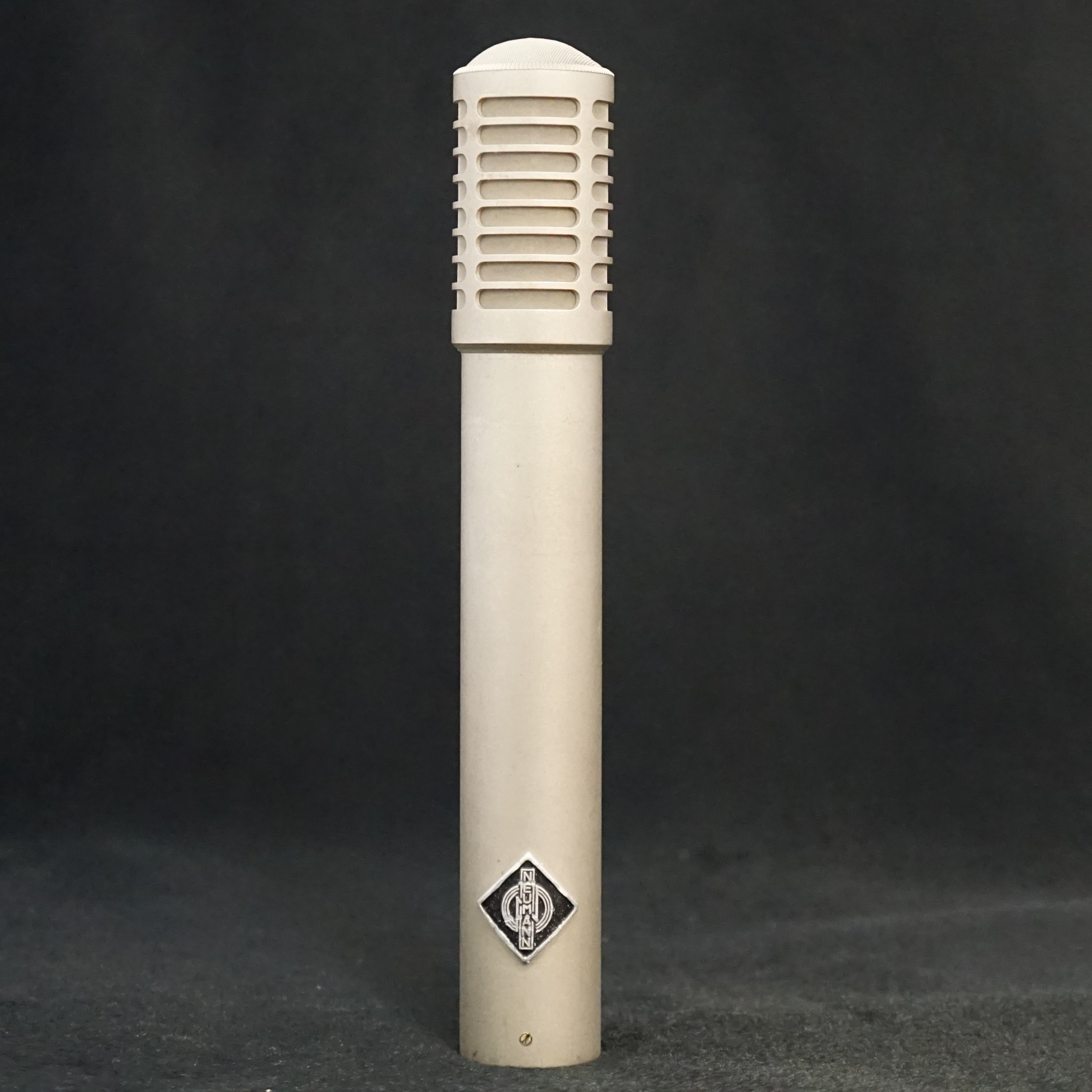
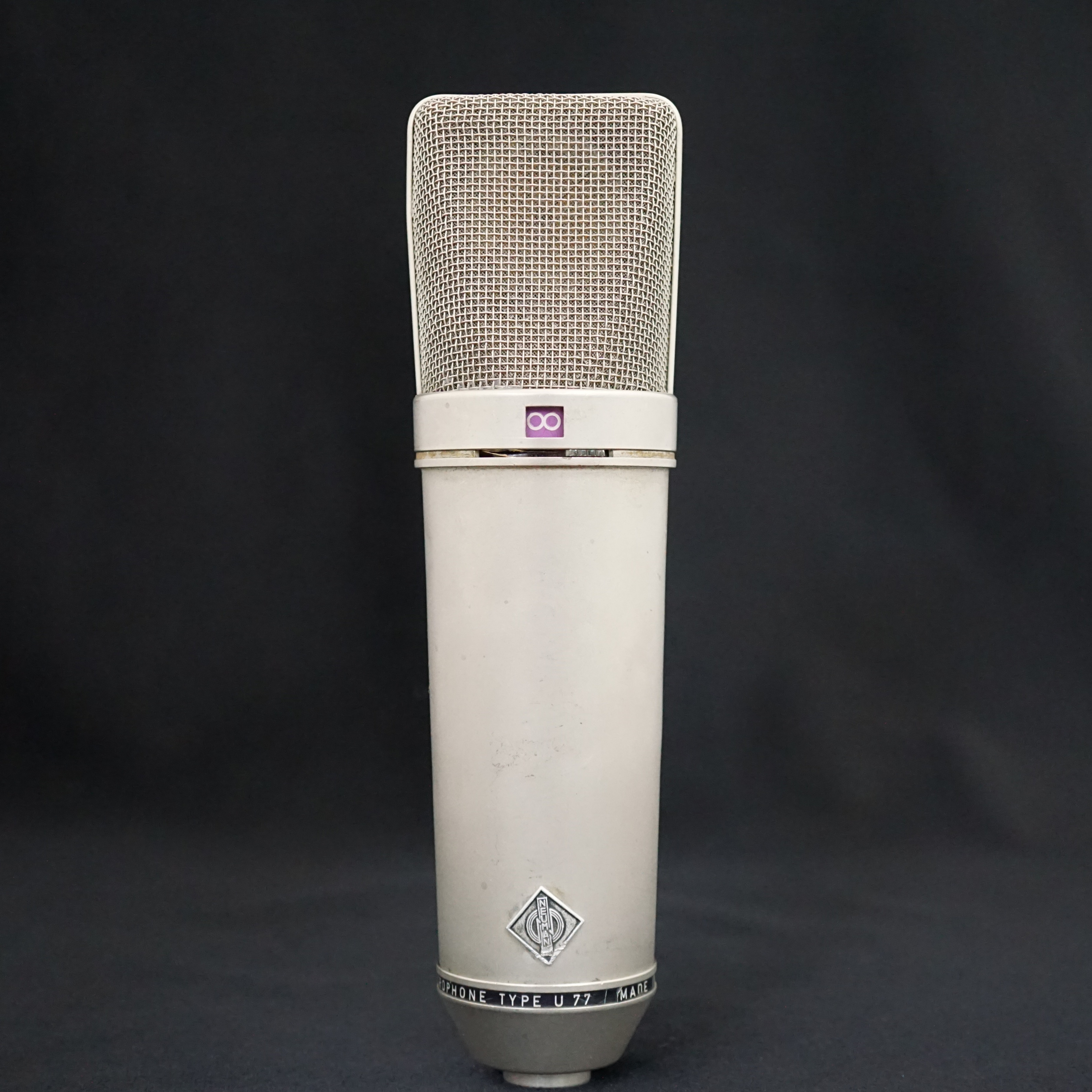
Neumann KM74i
Manufacturer:
NeumannModel:
KM74iCountry of Manufacture:
GermanyMicrophone Type:
CondenserPolar Pattern:
CardioidProduction Start Year:
1966Production End Year:
1976Rarity:
4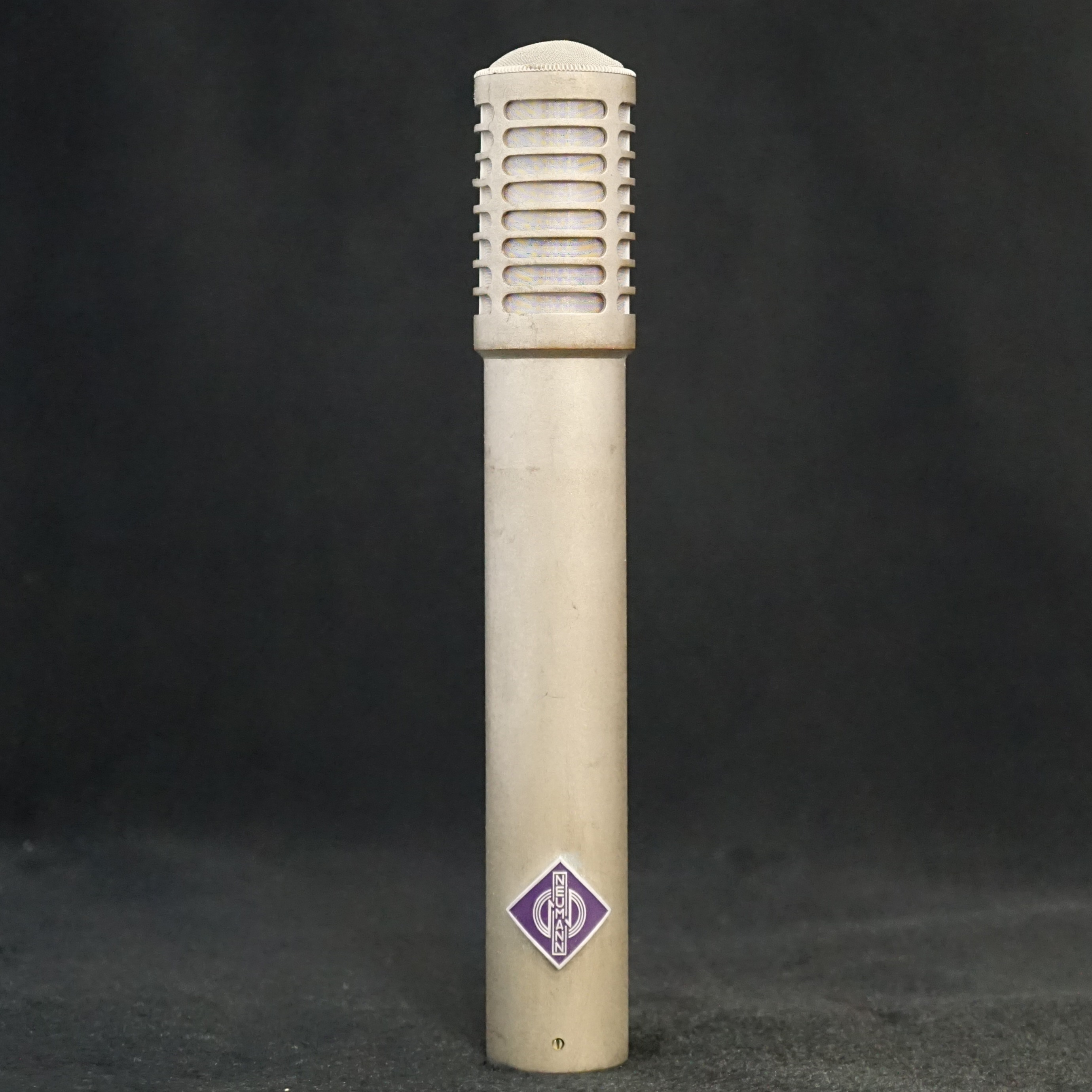
Audio Recording:
Nylon string guitar recorded with a Neumann KM74 condenser microphone.
Multiple quality options available
Microphone History:
Introduced in 1966, the KM74 was part of Neumann’s first series of transistorised microphones (the KM70 series), and succeeded the KTM, Neumann’s first transistorised microphone. Designed to be powered using the T-power system. It replaced earlier tube models like the KM64 while retaining the same cardioid capsule. Its design was later succeeded by the KM84, which offered phantom powered operation and transformer-balanced outputs. The example pictured here is marked KM74 I with the “I” suffix standing for “export” (Internationale). Functionally, it’s the same as KM75 but has an XLR socket rather than the German broadcast standard DIN connector.
MoMics view:
KM is a contraction of the German Klein Mikrofon, which simple means ''Small Microphone". These are beautiful sounding transformerless mics which are normally powered by 12V T-power and have a high output level. They usually have a black diamond Neumann badge. At some point in its life our KM74i specimen has been converted to run on phantom power, and fitted with a purple badge to indicate the change.
A little note about Neumann badges:
The badges on Neumann microphones not only show the maker's mark but also the colour of the badge indicates the type of microphone, and what to plug it into. The colour codes are as follows.
Black = Tube mic or T-powered microphone
Purple = Transformer balanced 48V
Red = transformerless 48V
Blue = digital
Green = dynamic.
In addition, West German microphones have diamond badges, and the East German mics such as the UM57 have circular badges.
Technical Description:
Housed in a slim nickel-plated body, The Neumann KM74 is a small-diaphragm condenser microphone with a fixed cardioid pattern. The KM74 shares its solid-state, transformerless circuit design with the omnidirectional KM73 and operates on 7.5–14 V DC T-power.
Manufacturer Specifications:
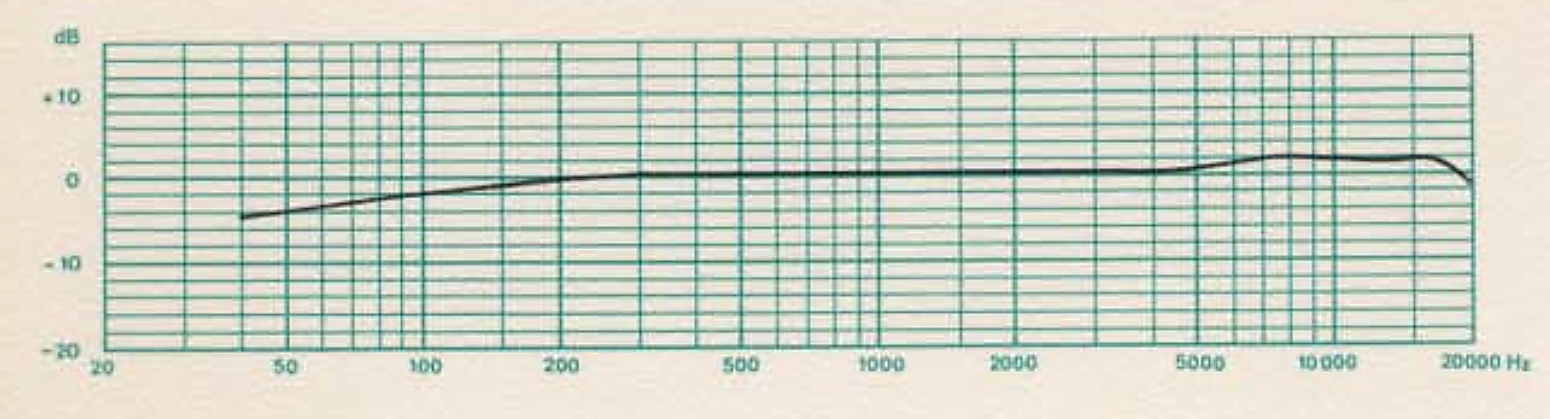
Frequency Response: 40 Hz – 16 kHz
Output Level: Approx. 2.5 mV/μbar (across 1 kΩ)
Source Impedance: ≤ 200 Ω
Recommended Load: ≥ 1000 Ω
Capsule Capacitance: Approx. 34 pF
Weighted Noise Voltage (DIN 45 405): ≤ 12.5 μV (28 dB re 2×10⁻⁵ μbar)
Maximum SPL (0.5% distortion):
≥ 120 dB at 200 μbar (8–13 V DC)
≥ 114 dB at 100 μbar (7.5–14 V DC)
Amplifier Gain (1 kHz): +3 dB
Operating Voltage: 7.5 – 14 V DC (T-power)
Frequency Response:
Further Reading:
The KM74 brochure can be found through Neumann's excellent File Finder website.
An alternative brochure is available at the Echoschall collection.
From the Neumann KM74 brochure:
The small condenser microphone KM 74 has a kidney-shaped directional pattern. It is characterised by the almost frequency-independent direction and the upward extended transmission range. The small design makes it particularly suitable for inconspicuous use in film and television studios.
The microphone has a capsule that operates as a pressure gradient receiver with an acoustic delay element. The diaphragm is made of heat-resistant polyester and is gold-coated. The frequency response extends from 40 Hz to 20 kHz. A slight roll-off at 40 Hz makes the microphone suitable for sound reinforcement at shorter distances and compensates for the low-frequency boost that occurs with close-miking pressure gradient microphones. In the upper frequency range, the frequency response has a rise of approximately 2 dB.
During the development of this microphone it was a main concern to make the form of the guideline as much as possible independent of frequency. The frequency responses valid for angles of incidence of ±135 degrees run approximately parallel to the 0º frequency response curve. The cancellation at 135 degrees is between 100 Hz and 18 kHz is approx. 15 dB. This ensures that a sound event that moves in a three-quarter circle around the microphone is transmitted with different volumes, but without changing the sound image. This happens, for example, when an actor changes his location during the recording, or when the interlocutors discuss the microphone from different directions during reports, or when recording a single instrument in an orchestra.
Another application is in the dubbing studio, where sound image changes can already occur by the fact that the speakers speak in a different direction when reading than when looking at the projection screen.