Nevaton MC-47
Manufacturer:
NevatonModel:
MC-47Country of Manufacture:
RussiaMicrophone Type:
CondenserPolar Pattern:
Stereo Multi-PatternProduction Start Year:
2013Rarity:
4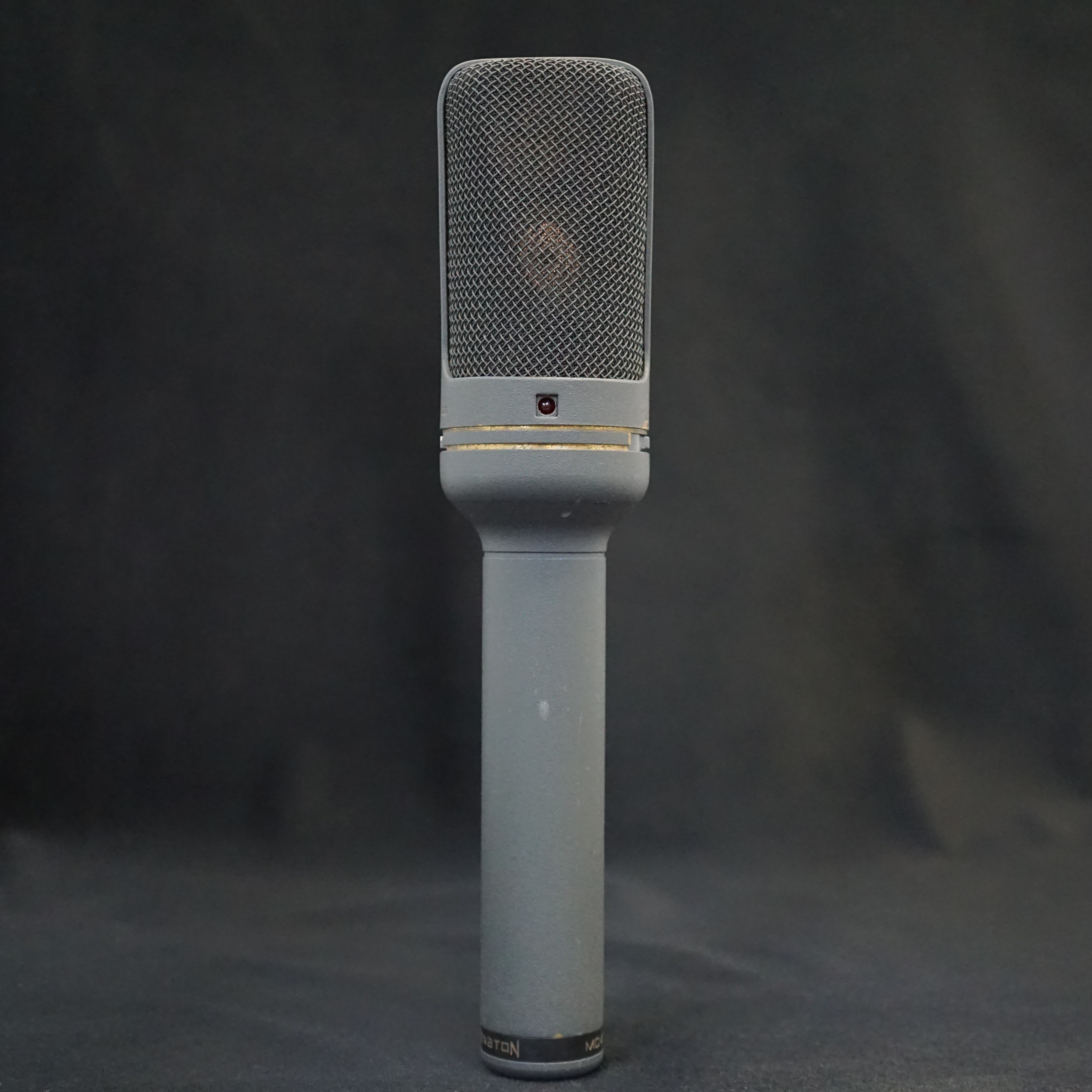
Audio Recording:
Nylon string guitar recorded with the Nevaton MC-47 microphone in stereo position 4 (maximum stereo width).
Multiple quality options available
Microphone History:
Nevaton is a Russian high-end microphone manufacturer with origins in the Soviet film and broadcast industries. Its history is deeply rooted in the Leningrad Optical and Mechanical Association (LOMO).
An acoustic laboratory was established within LOMO in Saint Petersburg, Russia. This lab spent decades researching and developing microphones for the Soviet Union’s state film and broadcasting sectors. One of its most famous designs from this period was the LOMO 19A19, a vintage condenser microphone still highly prized by engineers.
In 1954 , the laboratory became part of the scientific-industrial association EKRAN, continuing its specialised work in audio transmission.
In 1991, Following the collapse of the Soviet Union, former LOMO engineers founded Nevaton LTD as an independent enterprise. They continued the legacy of precision design, hand-assembling microphones that were often compared to high-end Western brands like Neumann.
To strengthen its international profile and presence within the European Union, Nevaton moved its headquarters to Siegendorf, Austria in 2024.
Technical Description:
From the Nevaton manual
Acoustical operating principle: Pressure gradient transducer
Fixed directional pattern, available as: 2x cardioid
Frequency range: 20 - 20000 Hz
Sensitivity at 1 kHz: 12 ±2 mV/Pa
Equivalent SPL DIN/IEC 651 12 dB-A
Recommended load impedance: 1000 ohms
Nominal Impedance: 50 ohms
Maximum SPL for THD 0.5%: 135 dB
Dynamic range: 123 dB
Supply voltage: 48V ± 4 V
Current Consumption: 8 mA
Weight: 500 g
Diameter head: 50mm, body: 30mm
Length: 249 mm
Connector Type: 5 - pin standard XLR - type (male)
Further Reading:
From the Nevaton MC-48 manual
The Nevaton MC 48 is a large diaphragm stereo condenser microphone for all professional studio and off-studio applications using X/Y technique. The MC 48 features two 25-mm capsules, placed one above the other, the angles of which can be simultaneously adjusted giving the possibility of a variable stereo width from 50° up to a maximum of 140°. The excellent transient response of the microphone results from the use of gold coated extremely thin diaphragms. The result is a brilliant, transparent, and faithful reproduction of voices and instruments.
All components of the capsules have passed a special artificial ageing process to guarantee the stability of their parameters. Both capsules are mounted on elastic shock absorbers which protect them from mechanical vibrations and handling noise. Each capsule is connected to an individual transformerless pre-amplifier which is built to the class-A transformerless standard. All used input transistors pass a special selection to guarantee minimal self-noise.
Both pre-amplifiers are equipped with an active filter, blocking sub-audio sound (as it may be caused by mechanical shock or wind). The MC 48 features as well a switchable low-cut filter to reduce low frequency interference, while it maintains a flat frequency response for sound sources at close range, in spite of proximity effect.The MC 48 has an extremely high overload capability (distortion free transmission of signals up to 135 dB), exceptionally low self- noise and a linear frequency characteristic.
A small led indicates the front position and shows when phantom powering is active. The microphone body is made of brass with a dark-grey non-reflective paint finish on an epoxy base. A three-layer metallic grill effectively protects the transducers from mechanical impacts and influences and contamination through microscopic dust particles.A gold-plated 5-pin XLR-connector is used as an output-connector.
A forked break-out cable 5-pin F to 2 x 3-pin M XLR type connector is part of the set. The microphone comes in a fine wooden box. A pop shield for vocal recordings in the studio and a windscreen for open air recordings are recommended.