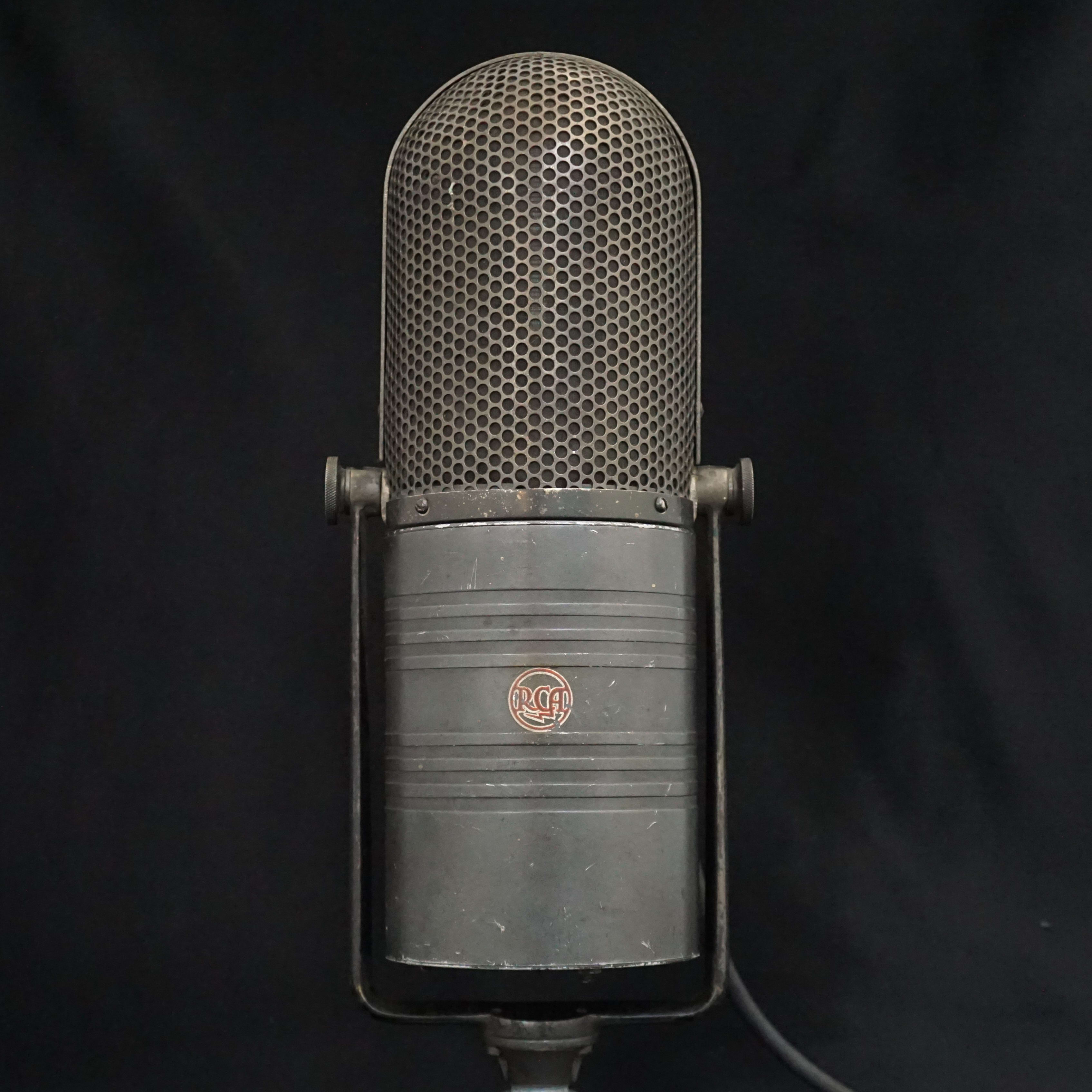
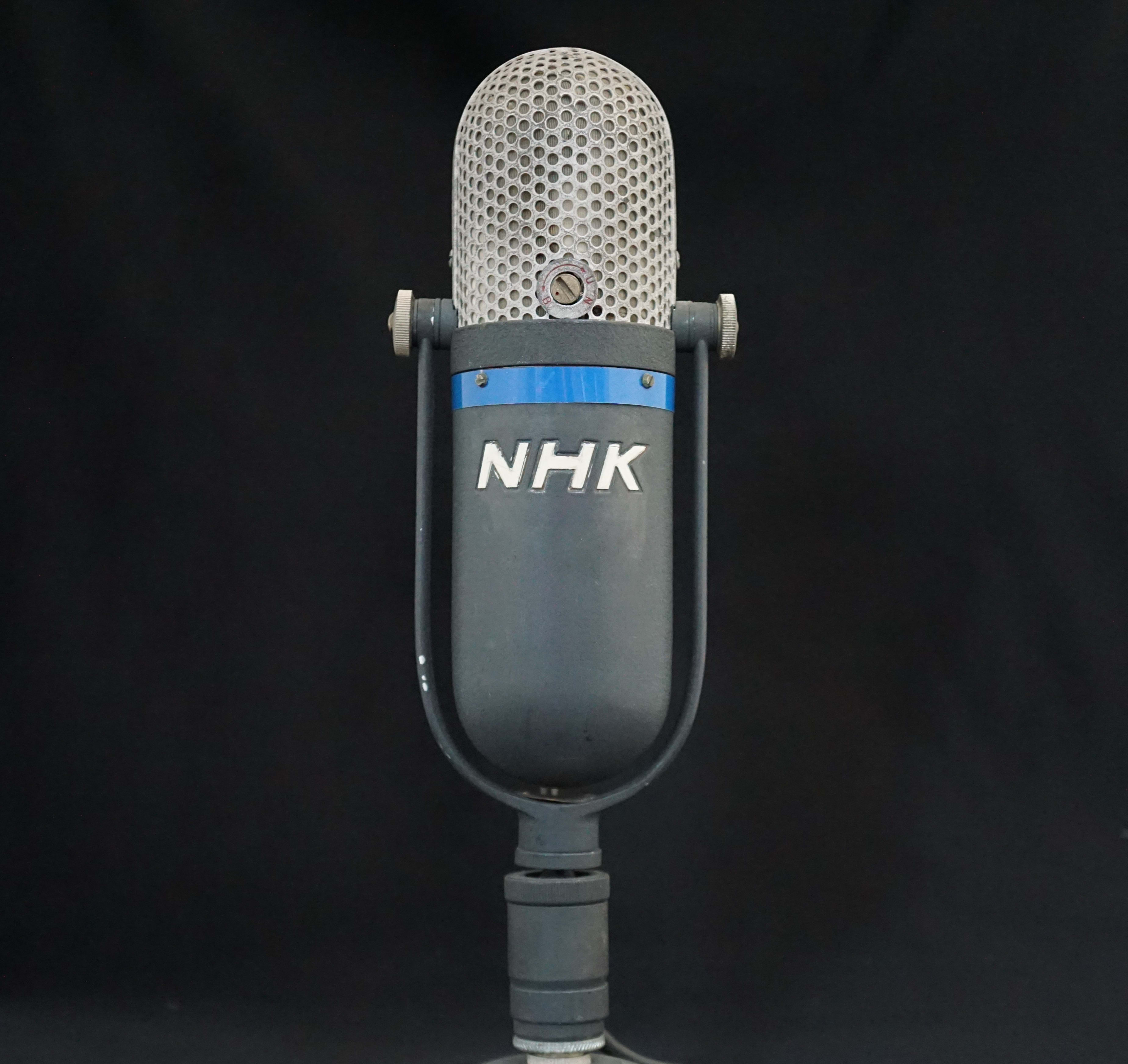
RCA 77-DX
Manufacturer:
RCAModel:
77-DXCountry of Manufacture:
United StatesMicrophone Type:
RibbonPolar Pattern:
Multi-PatternProduction Start Year:
1954Production End Year:
1976Rarity:
2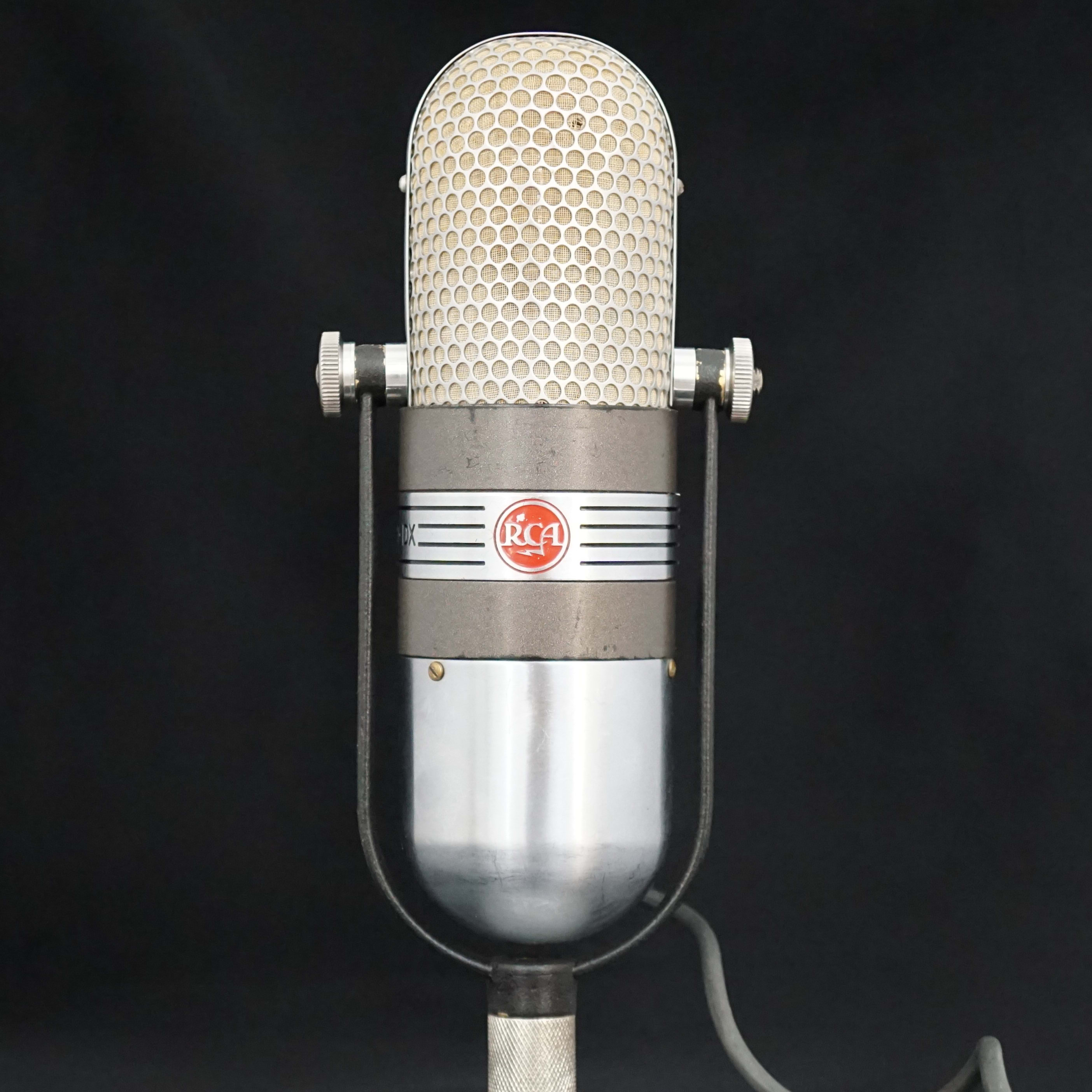
Audio Recording:
Nylon string guitar recorded with the RCA 77DX ribbon microphone in pattern switch position B
Multiple quality options available
Microphone History:
The RCA 77-DX was introduced areound 1954 as an updated, better version of the successful multi-pattern ribbon microphone, the 77-D. The improvements included updates to both the magnet and the transformers, to give a significant improvement in both output level and signal to noise.
From the Radio Engineering handbook, 1959
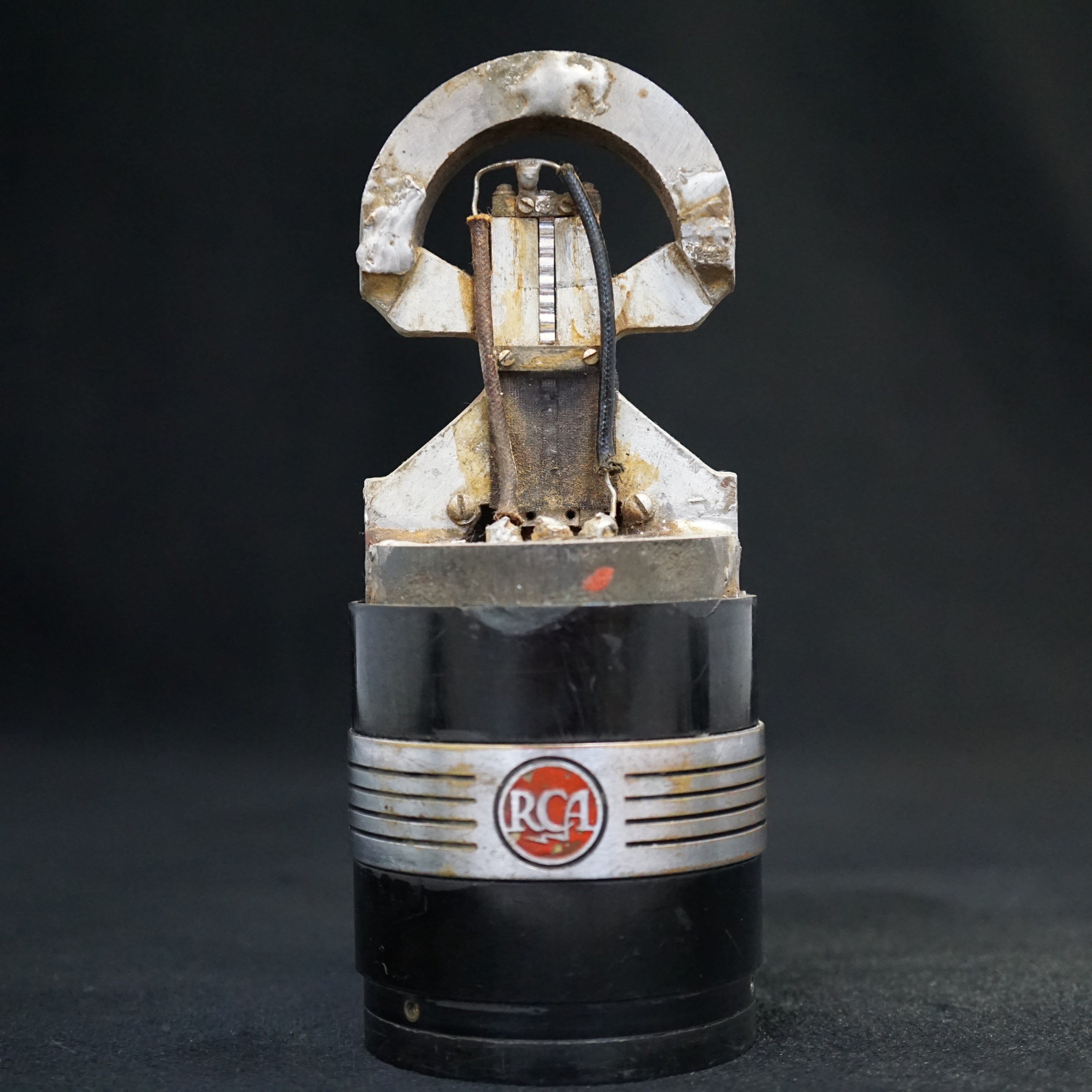
The RCA type 77DX microphone combines the features of the velocity and pressure microphones to provide polydirectional characteristics by means of simple internal adjustments. This microphone is a high-fidelity instrument containing a simple ribbon suspended in an air gap formed by the pole pieces of a permanent magnet. The ribbon is divided into two individual sections, one of which is pressure-operated and the other velocity-operated.
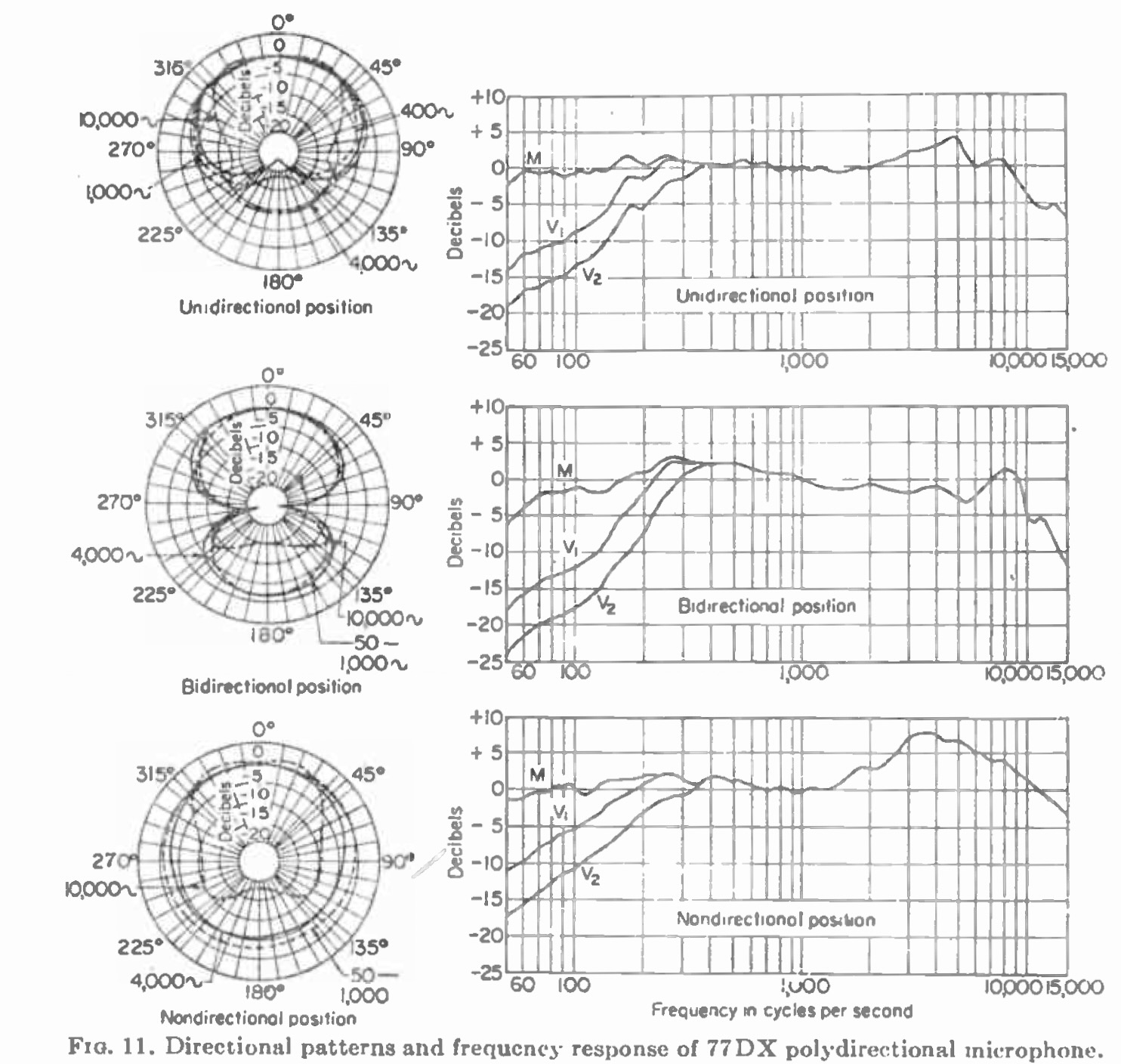
The polydirectional microphone differs from the conventional velocity microphone in that one entire side of the microphone ribbon is covered by a:connector tube which is coupled to a damped pipe or labyrinth. Behind the ribbon in the connector tube an aperture in the form of an adjustable shutter is provided to permit various areas of opening between the ribbon and outside air. When the aperture is completely closed by the shutter, the microphone operates in the same manner as a pressure type. Under these conditions it has non-directional characteristics. When the shutter is in the wide-open position, the ribbon is open to the air in front as well as to the rear and the microphone operates like the velocity type already mentioned.
Under these conditions it has bidirectional characteristics. A common cardioid or uni-directional pattern is secured by an intermediate position of opening of the shutter. Directional patterns of the three types mentioned above are shown in Fig. 11. These are secured by settings of an adjustment screw on the réar of the microphone housing to marked positions.
Technical Description:
Output Impedance: 250 ohms may be changed to 30 or 150 ohms
Load Impedance: Unloaded input transformer
Effective Output Level (all output connections) (Gm = RTMA rating)
- Bi-directional (B) -50 dbm* Gm = -144 db
- Uni-directional (U) -53 dbm* Gm = - 147 db
- Non-directional (N) -56 dbm* Gm = -150 db
- L-1, L-2, L-3, between -50 and -53 dbm
Hum Pick-up Level**: -128 dbm
Dimensions: Length: 11½ inches; Width: 3¾ inches Depth: 2½ inches
Weight: Total — 4½ pounds; Less cable — 3 pounds
Stand Fitting: ½ inch pipe thread
- The polar response is controlled using an internal acoustic labyrinth system and movable baffle, which is actuated with a mechanical switch on the back of the microphone body rather than relying on electronics.
- The microphone body includes a swivel mount for easy positioning, and the transformer is integrated within the lower section of the body.
Frequency Response: