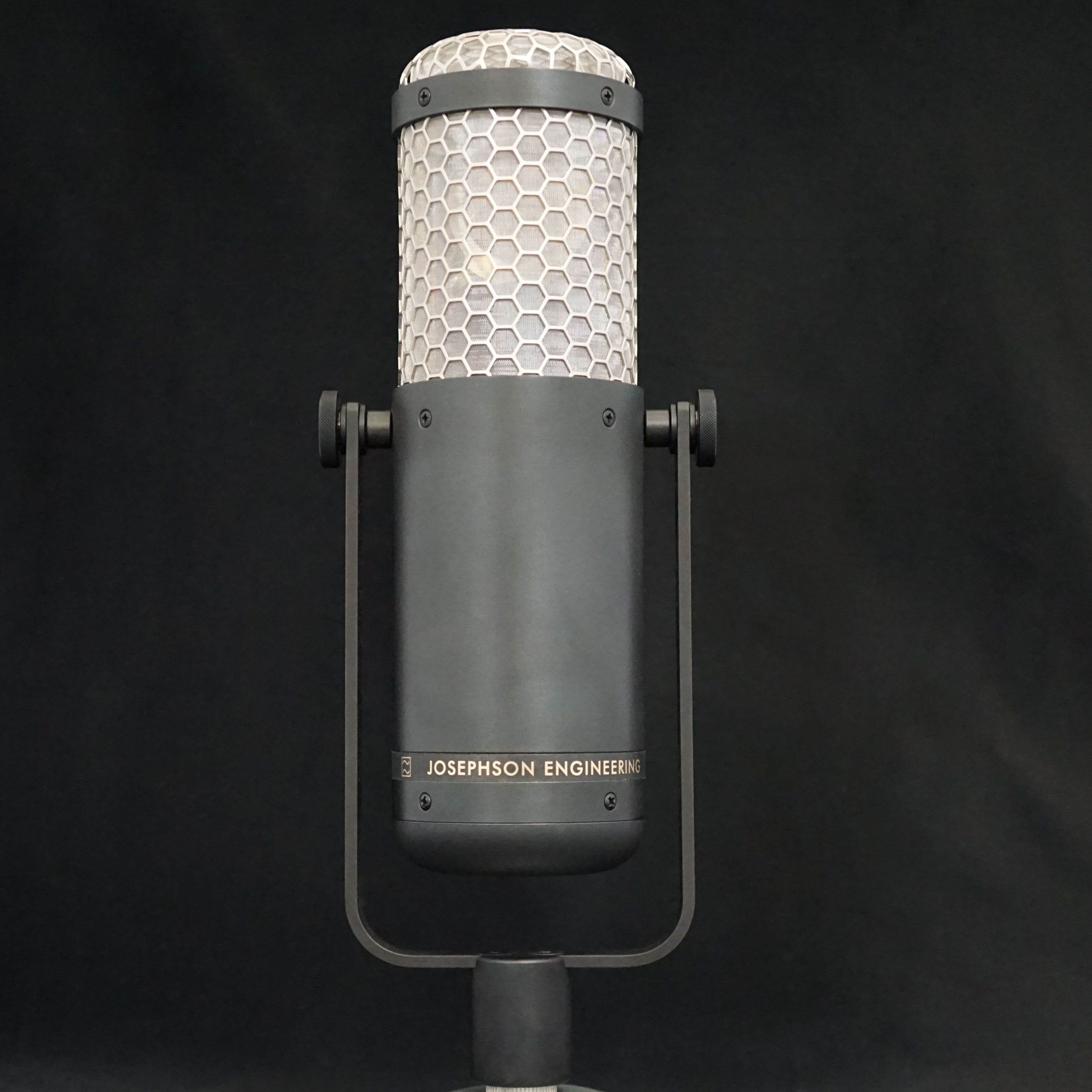
Josephson Engineering C720
Manufacturer:
Josephson EngineeringModel:
C720Country of Manufacture:
United StatesMicrophone Type:
CondenserPolar Pattern:
Multi-PatternProduction Start Year:
2008Production End Year:
2008Rarity:
5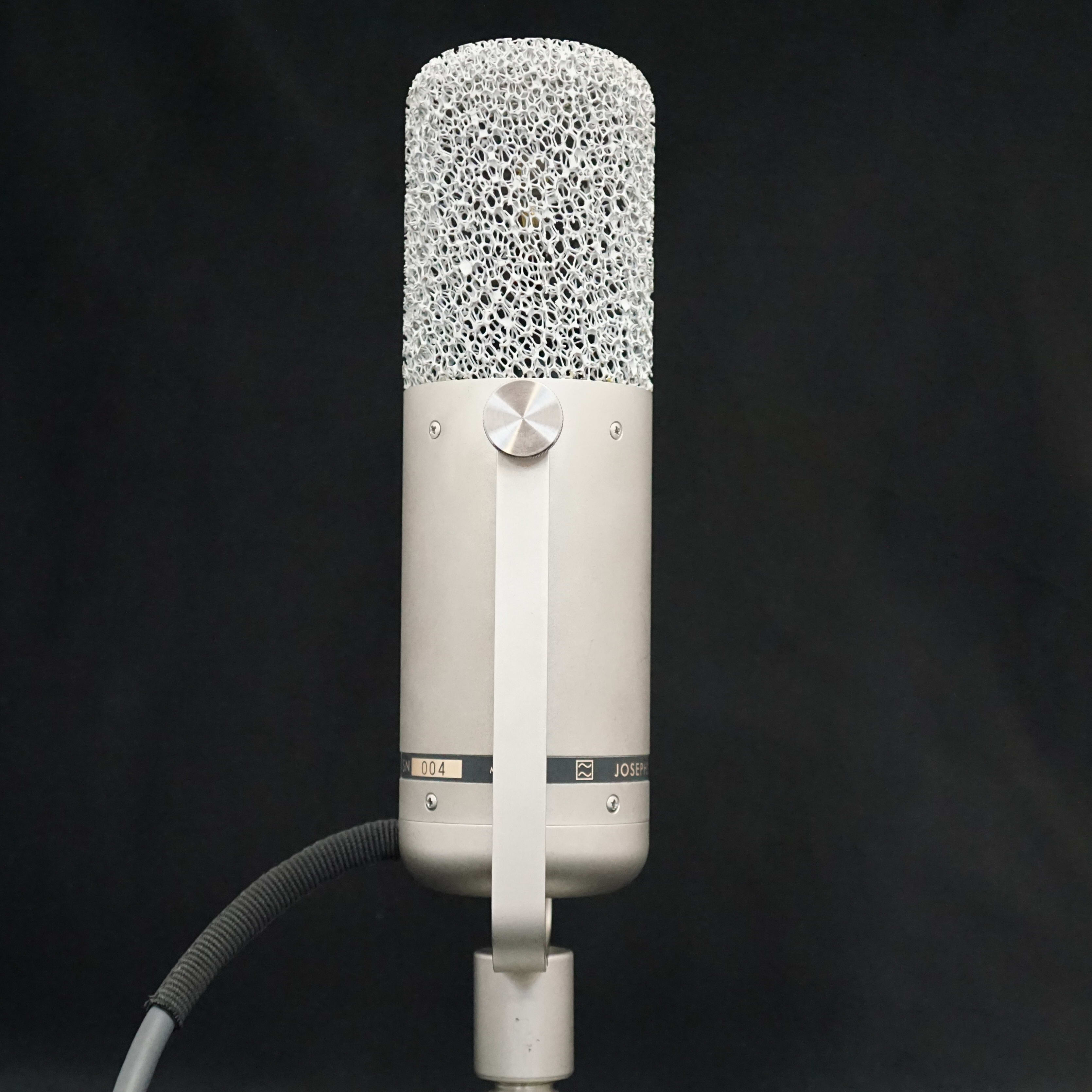
Audio Recordings:
Nylon string guitar recorded with the Josephson C720 microphone. (Birds Flew Over the Spire, composed by Gary Ryan)
Multiple quality options available
Nylon string guitar recorded with the Josephson C720 microphone. (Carlo Domeniconi: Die Rose im Garten)
Multiple quality options available
Microphone History:
The C720 was a limited edition run of 20 microphones to celebrate 20 years of Josephson Microphones. It was succeeded by model C725 which has a similar grill.
The Josephson C720 is the latest in the Series Seven range of large diaphragm side‐address microphones. It uses a dual‐cardioid capsule with separate outputs for the front and back. Dual‐diaphragm microphones since the 1940’s have used a similar principle internally to allow the user to select any desired directional pattern. The C720 allows greater freedom and versatility by providing an output of each capsule half through a discrete impedance converter/preamp stage. Having separate outputs allows each output to be recorded independently, permitting the pattern to be controlled in mixdown rather than at the session. The user can make the pattern choice at another location, or another time.
A unique feature of the C720 is its (patent pending) open cell metal foam basket. Unlike traditional microphone housings made of perforated metal or screen with reflective metal support structures, this highly open material protects the capsule mechanically, provides electrical shielding and some pop and wind screening; no supporting structure is necessary. A fine acoustically transparent screen inside the basket helps protect the capsule from breath moisture when the C720 is used as a vocal mic. We were able to avoid using a traditional support structure because the foam itself is a tough self‐ supporting aluminum alloy. It’s a highly open structure so that sound reflected by the basket is negligible, while the basket still provides full protection for the capsule.
Technical Description:
- Type: Dual electrostatic pressure-gradient transducers, cardioid characteristic
- Marking: In accordance with IEC 61938
- Rated power supply: Phantom 48 ±4 volts, 5 mA per output
- Internal impedance: <100 ohms
- Rated impedance: 200 ohms
- Minimum load impedance: 1k ohms
- Free-field and rated sensitivity: 1.7 mV/Pa
- Frequency Range: 20-20,000 Hz
- Directional characteristics: 2x cardioid
- Overload sound pressure: 136 dB SPL at 1000 Hz
- Equivalent sound pressure due to inherent noise: 14 dB SPL, A-weighted rms in accordance with IEC 60268-1
The output cable of the C720 terminates in a 7‐pin XLR type connector. An adapter is provided to bring front and back outputs to normal 3‐pin XLR connectors. Either the front or the back may be used as a cardioid microphone.
Further Reading:
The manual for the C720 is at the Josephson website.
MoMics' opinion.
This is one of our all time favourite condenser microphones.
So what does it sound like? Possibly because of the lack of head basket comb filtering, and the facility to tune the pattern and proximity effect, this is a very versatile microphone. The one word that sprang to my mind in describing the sound, whichever pattern you pick, is ‘solid’.
Another thing we’ve noticed is it sounds pretty damned good on pretty much anything you can throw at it. Because of it’s ability to handle high sound pressure levels and become a go-to mic for low end stuff, and is rock-solid on bass guitar and front of kick drum, but it’s just as handy on both male and female vocals - especially those with a tendency to get loud when they belt it out. Vocal recordings are up front, sound as they should, but without the top end brightness of, say, a Neumann TLM49.
Furthermore, it can be used for more radical effects by compressing or reverberating one side of the capsule only. For example, I had some interesting results on a male rock vocal by compressing the signal from the front capsule, mixing together with the phase reversed rear capsule, then compressing the sum of these. The effect was that as the vocals push harder, the relative amount of rear capsule included becomes greater giving it more of a hypercardioid pattern, balancing the tendency of the vocalist to step back from the mic when belting it out. With a bit of creativity the possibilities are endless.
Overall this is a brilliant, radical piece of thinking and one of those bits of gear that comes into your life and is there to stay.
(taken in part from Stewart's post at the Xaudia microphone blog).