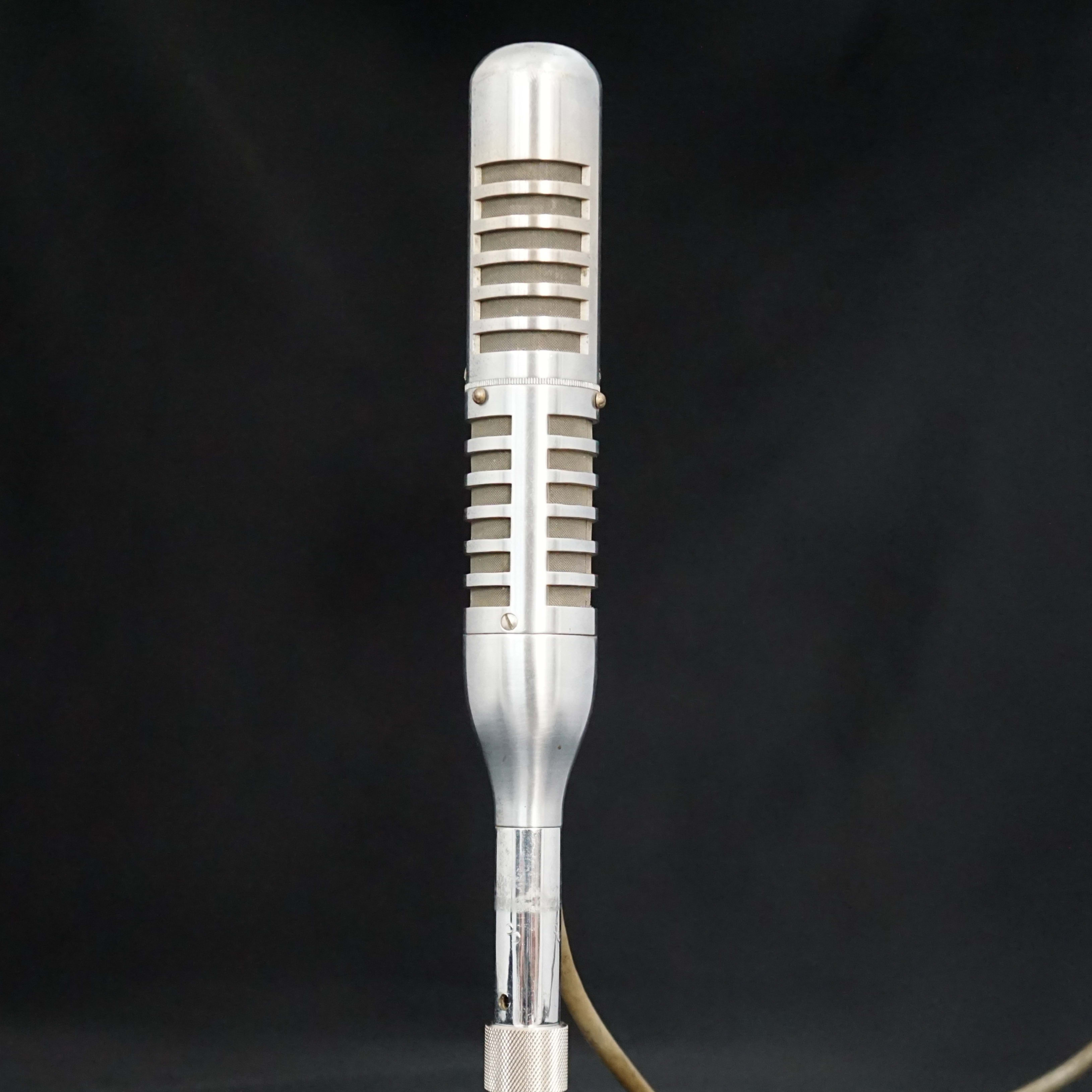
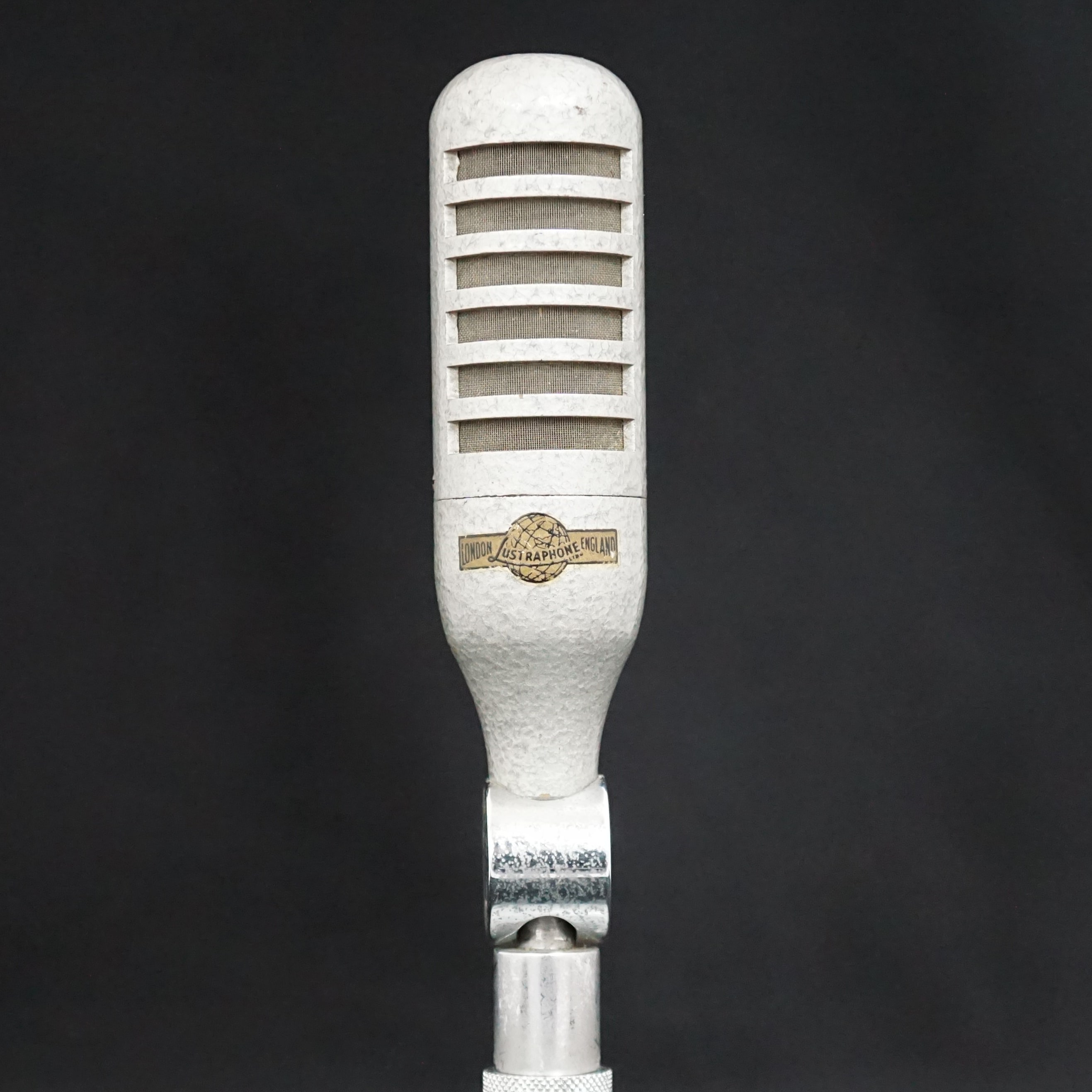
Lustraphone VR53
Manufacturer:
LustraphoneModel:
VR53Country of Manufacture:
United KingdomMicrophone Type:
RibbonPolar Pattern:
Figure 8Production Start Year:
1953Production End Year:
1967Rarity:
1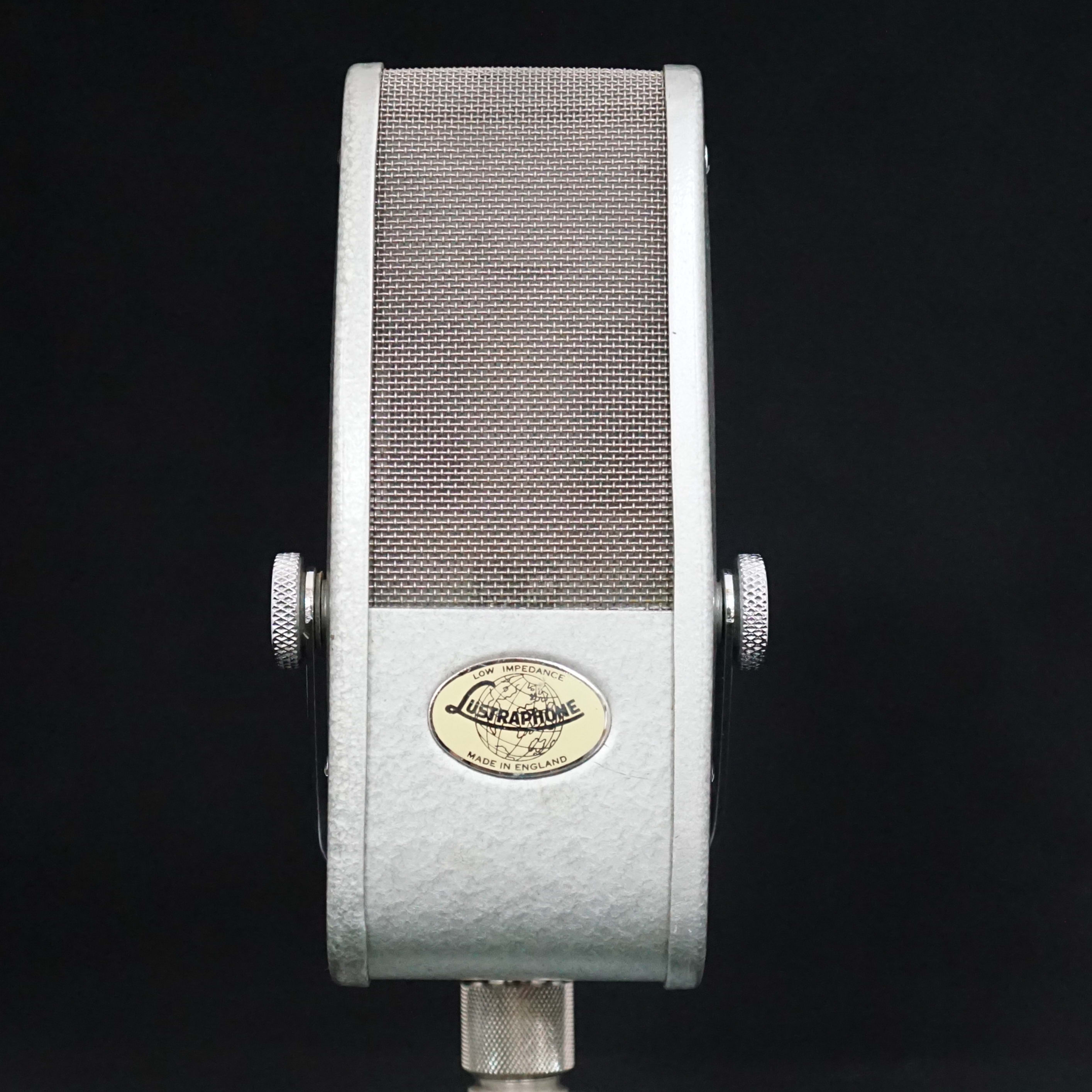
Audio Recording:
Nylon string guitar recorded with a Lustraphone VR53-x ribbon microphone. (This microphone has been fitted with new ribbon and magnets)
Multiple quality options available
Microphone History:
The Lustraphone VR53 was produced in large quantities from 1953 onwards, mainly to the booming home recording and amateur radio markets. The last appearance of the Lustraphone VR53 in Hi-Fi Yearbook was in 1967, by which point it had been completely superseded by the VR64. Lustraphone traded until around 1973.
This mic was available in at least three different impedances, and I have come across 30, 200, and high impedance models. (NOTE: The Lustraphone catalogue offers 20 and 500 ohms models. The Grundig badged models say 200 ohms on the box). Unfortunately the badge often falls off so you don't always know what you are getting! Many of the models I have seen are finished in a bronze hammertone colour, although there some have gorgeous brushed stainless steel finish. Despite the different badges and finishes, the mics are exactly the same on the inside (transformer aside).
One of the ribbon clamps sits on a spring-tensioned screw thread, which allows fine adjustment of the ribbon tension. This makes tuning the ribbon very straight-forward, and allows the owner a little bit of grace if the ribbon becomes a little stretched over time. The magnetic field is supplied by a pair of horseshoe magnets (which unfortunately sometimes age with time, losing their strength).
Connection to the rest of the world is made by a proprietary balanced three-pin plug, which are hard to come by now. The middle pin is ground, with the audio on the outer two pins. It is possible to modify an XLR plug to work as a replacement.
The long ribbon and motor design gives these mics a full bottom end and a pronounced proximity effect. However, they can sound rather dark and lack top end detail.
The Lustraphone VR53 was also sold under the Grundig brand as model number GRM1, alongside their reel to reel tape recorders, as well as with MIMCO and Pamphonic badges.
In 1953 The BBC wrote a technical report about the VR53. Their verdict was as follows...
"There does not seem to be any use for this microphone in the BBC at present, since in every attribute except size it is inferior to the AXBT. For close working on crooners and in public address speech, a bass cut would be very necessary. However, in an emergency, with suitable correction, an acceptable broadcast quality, at least for speech, should be possible."
MoMics note: This seems a little churlish considering that the Lustraphone was a relatively cheap, mass produced microphone designed for the home recording market, whereas the AXBT was the BBC's flagship model, built without compromise and with no expense spared. This seems a little like saying in a posh Received Pronunciation accent 'we don't need a Morris Minor because we have a Bentley already. Judging by the quantities that we see, the VR53 was very popular and well regarded.
Technical Description:
Lustraphone Studio VR 53 (From the manufacturer's catalogue)
- Magnet and Ribbon System: Engineered with a twin magnet system, a high level of sensitivity is attained without sacrifice of performance at the higher frequencies. The ribbon, corrugated aluminium leaf, is individually tuned in manufacture. The complete assembly is suspended internally by anti-vibration mountings, and adequate blast screens are incorporated.
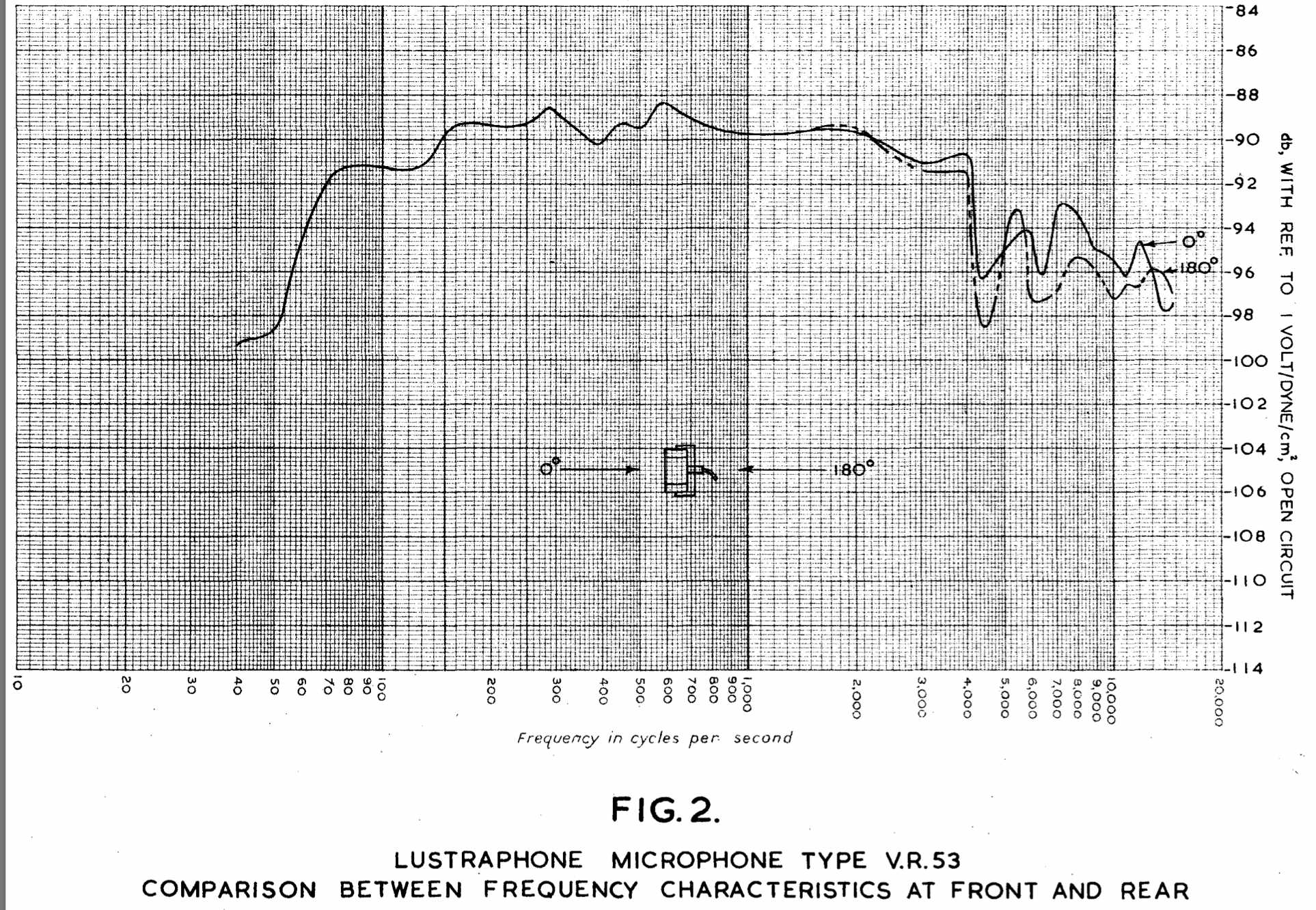
- Response. The frequency response characteristic is arranged to bring the Ribbon resonance below audibility and is substantially maintained up to 14,000 Hz. The high sensitivity level allows the VR/53 to be used with most standard commercial equipment without pre-amplification.
- Impedance. Available in 20 ohms or 500 ohms.
- Output level: 20 ohms Model. 86 db below 1v/dyne/cm2; 500 ohms Model. 72 db below 1v/dyne/cm2
- Dimensions. Height 6" Width 2 ⅝" Depth 1 ⅝" Weight 1.5 Ibs.
- Finish. Metal parts richly finished in satin chrome.
- Connections. Specially designed
- Price : £11. 11s.
Grundig GBM125 (from Hi-Fi Yearbook 1966)
- Ribbon. Response 50 Hz - 15 KHz ± 2 dB.
- Sensitivity: 0.1 mV/microbar and 3 mV/microbar.
- Impedance: 200 ohms and 200K ohms.
- Table stand with standard thread. Price £24. 3s.
Frequency Response:
Impulse Response File:
Impulse Response file of the Lustraphone VR53 ribbon microphone with new ribbon and magnets
Lustraphone_VR53x_IR.wav
Further Reading:
A post at the Xaudia blog about the VR53
Another post about upgrading the magnets in a VR53 to improve the output level and signal to noise. The chart below is from an updated VR53, showing a strong bass proximity effect.