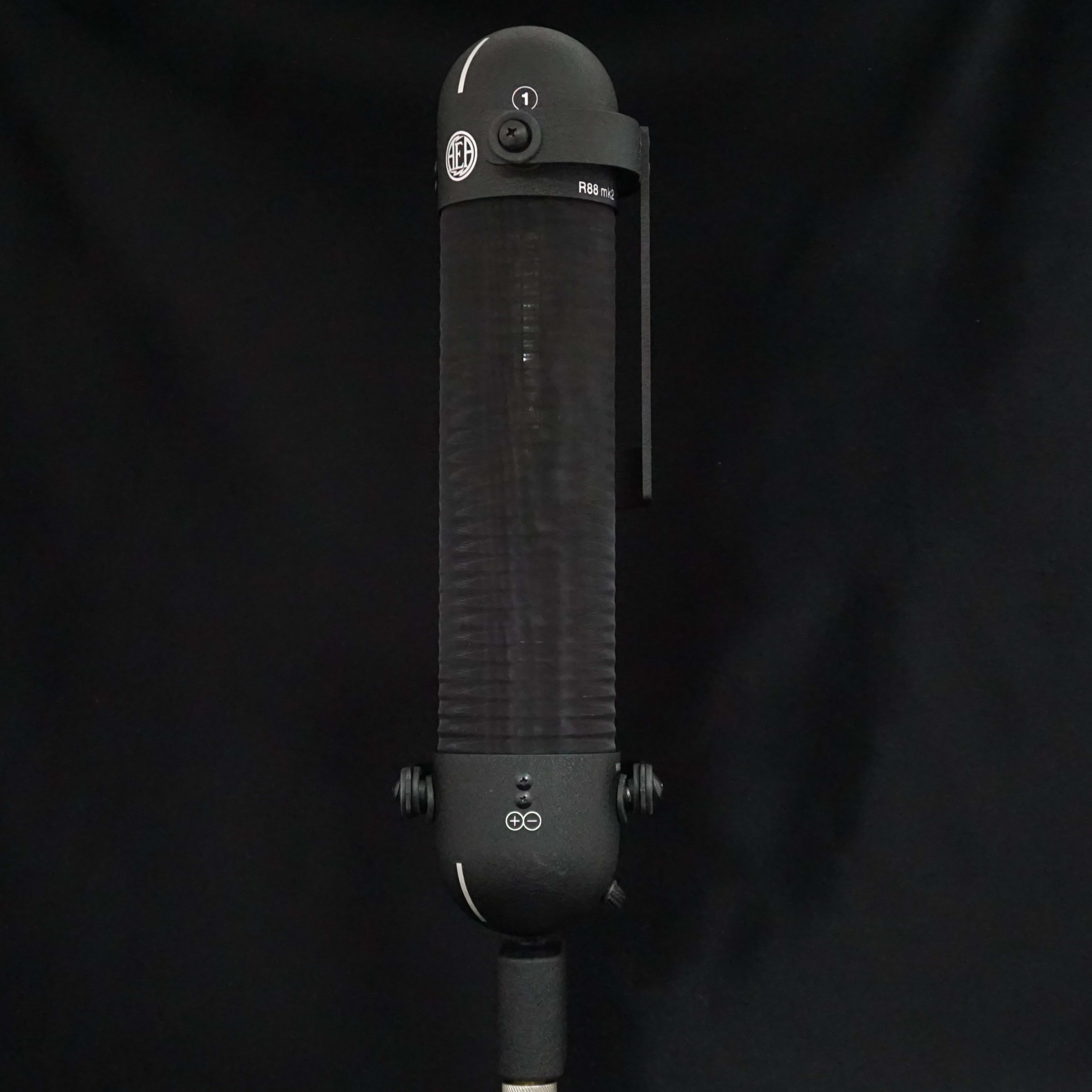
Lustraphone VR65
Manufacturer:
LustraphoneModel:
VR65Country of Manufacture:
United KingdomMicrophone Type:
RibbonPolar Pattern:
Stereo Figure 8Production Start Year:
1959Production End Year:
1970Rarity:
4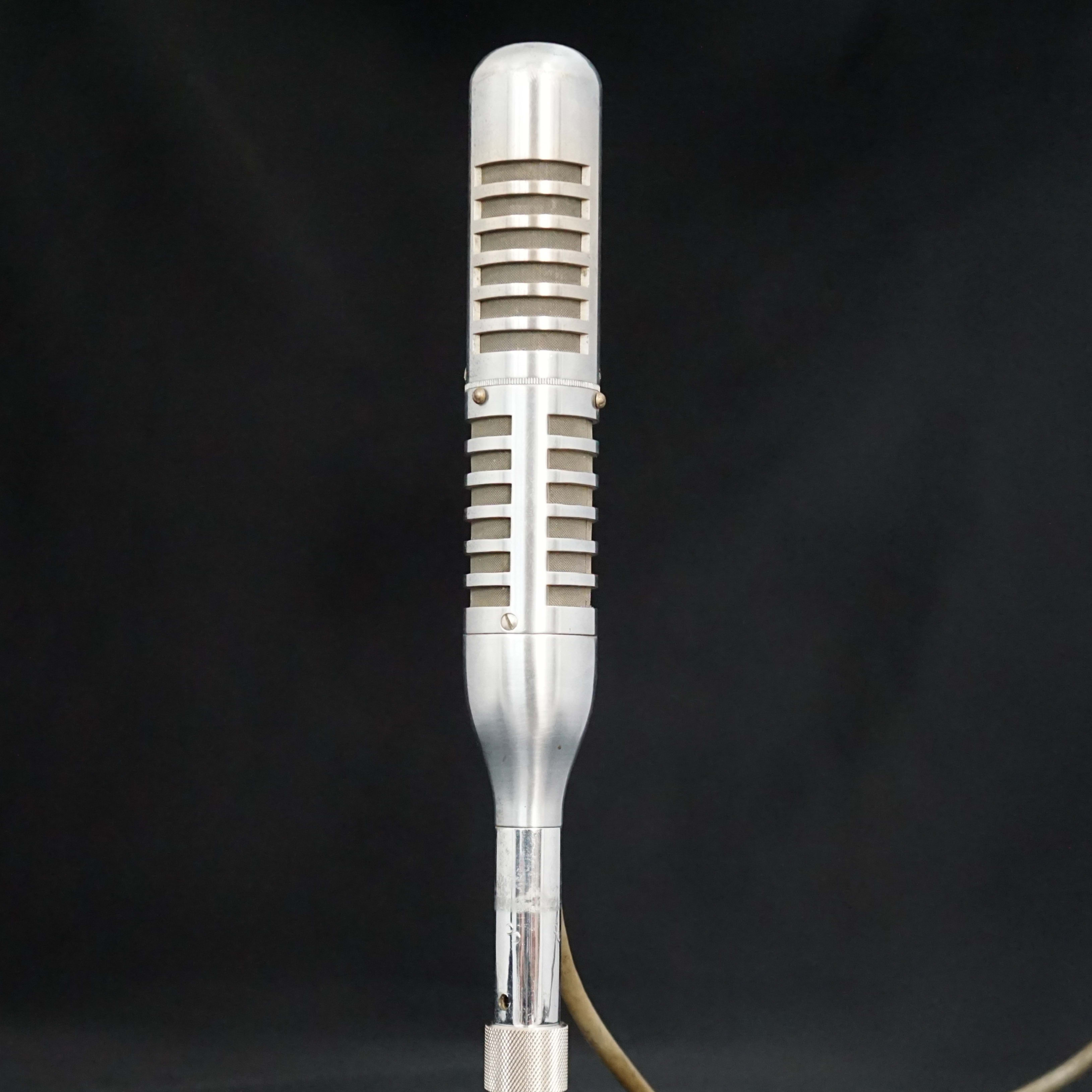
Audio Recordings:
Nylon string guitar recorded with a Lustraphone stereo ribbon microphone.
Multiple quality options available
Drums recorded with a Lustraphone VR65 stereo ribbon microphone (by Mark It Zero Studios*)
Multiple quality options available
Acoustic guitar recorded with a Lustraphone VR65 stereo ribbon microphone (by Mark It Zero Studios*)
Multiple quality options available
Piano recorded with a Lustraphone VR65 stereo ribbon microphone (by Mark It Zero Studios*)
Multiple quality options available
Microphone History:
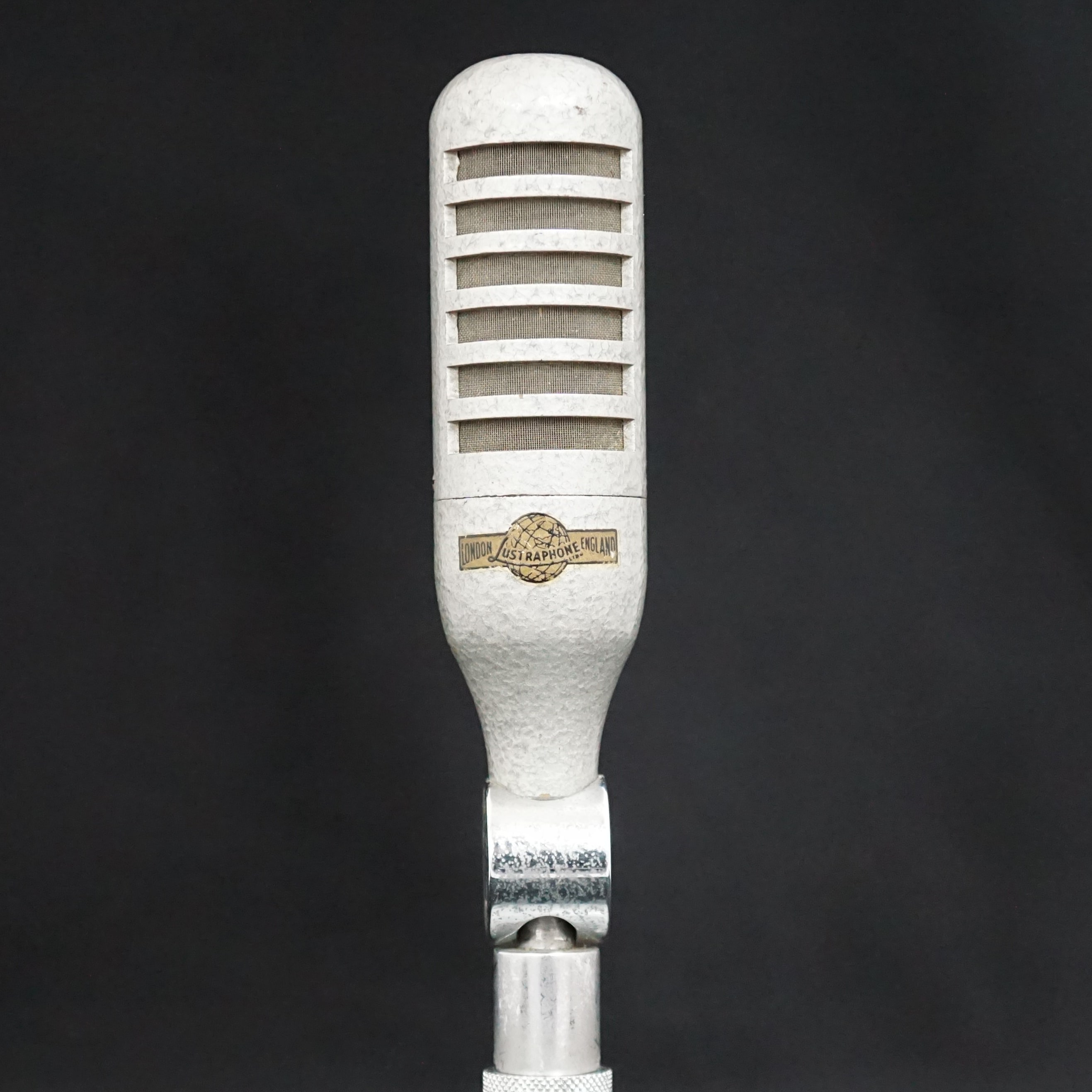
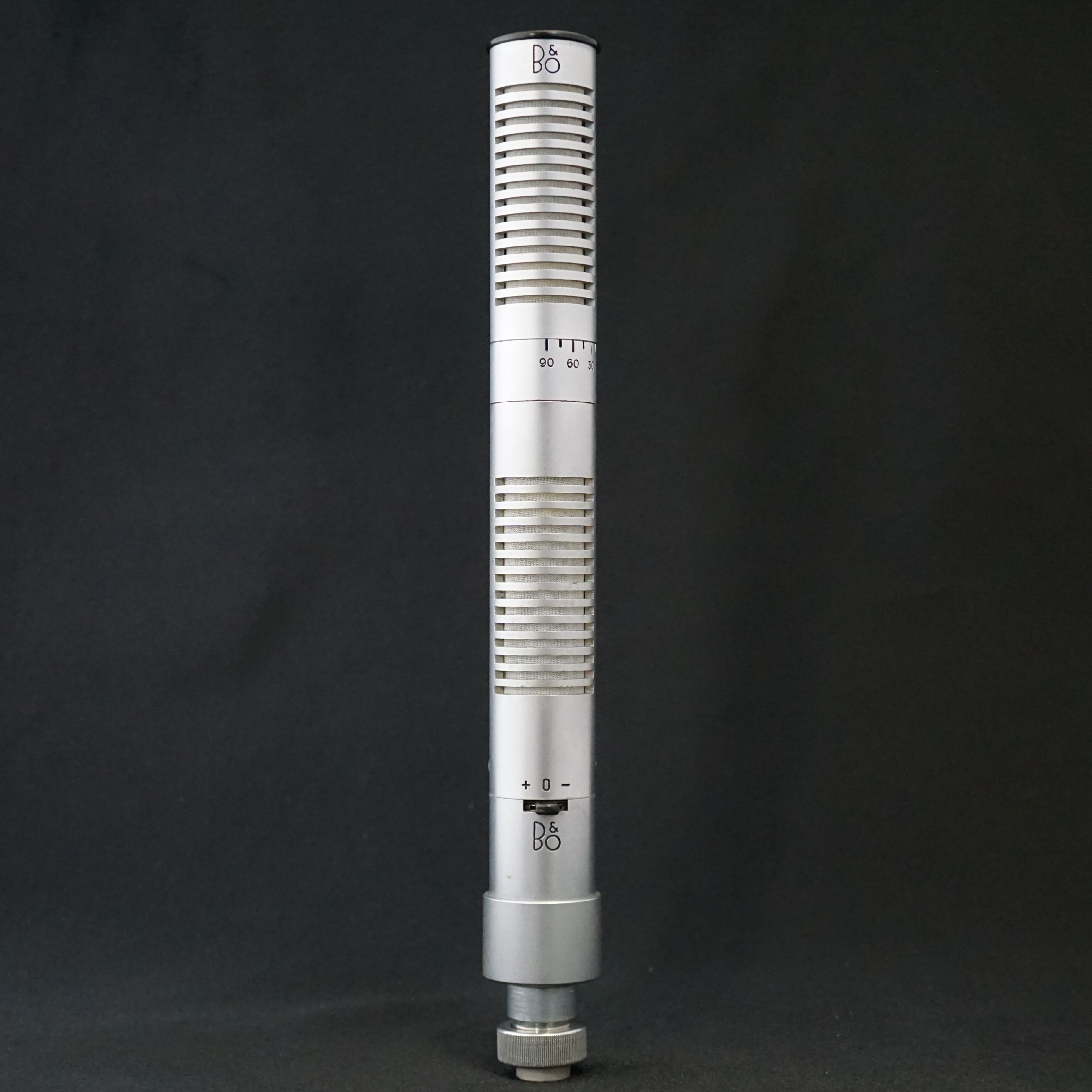
The VR65 stereo ribbon microphone is thought to be the first all-in-one stereo ribbon microphone in production, pre-dating B&O's SM5 by about three years. The ribbon, motor assembly and transformers in the VR65 are the same as those found in the mono VR64 and the two halves of the microphone are joined together with a simple but effective grooved brass ring. Three small screws push through the upper body into the groove, allowing the top half of the microphone to rotate.
Although the VR65 was made and advertised from 1959 until about 1970, they are very scarce compared to the VR64, and we can surmise that few were built. There were two versions - the VR65 and the VR65-S The latter had a removable plug with polarity and stereo-mono switches on the lower body, and is extremely rare. The switches are of the same type that are found on B&O stereo microphones and were also used by AKG on their early 414 models.
Picture of a VR65-S curtesy of Neil Hardie at Rough Slope Studios.
Technical Description:
From Hi-Fi Yearbook 1959
Stereomic VR/65. Dual head ribbon.
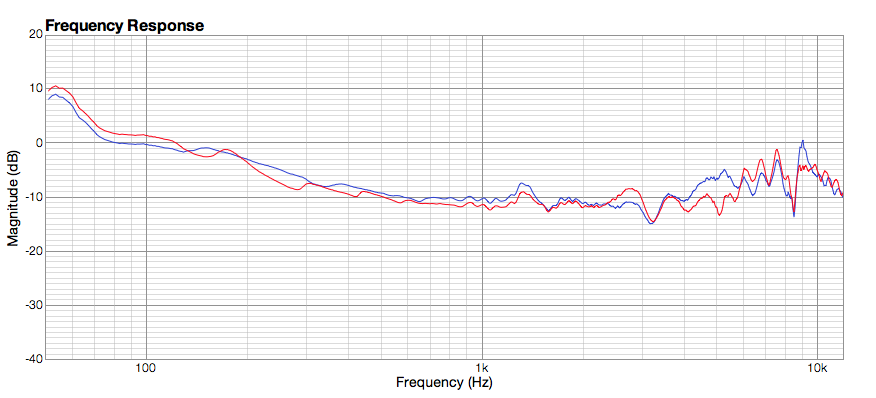
Response: 50- 13,000 Hz.
Sensitivity: Stereo - 90 dB @ 20 ohms.
Source impedance: 2 x 20 ohms or 2 x 300 ohms. Internal transformer.
Price: £31. 10s.
From Wireless World, September 1959, p378
The stereo microphone VR65 is a double- ribbon unit in which the relative angle of the two ribbons is adjustable. A switch allows them to be connected in or out of phase and in series (mono).
"The performance of the three stereophonic types in so far as stereophonic effect was concerned was rather variable. The polar diagrams of the two halves of the Lustraphone VR65/NS were excellently matched figures-of-eight, and in consequence this instrument gave very clear images. Coupled with its excellent frequency response and the fact that it is the cheapest of the three instruments, this is undoubtedly a very good buy."
Frequency Response: