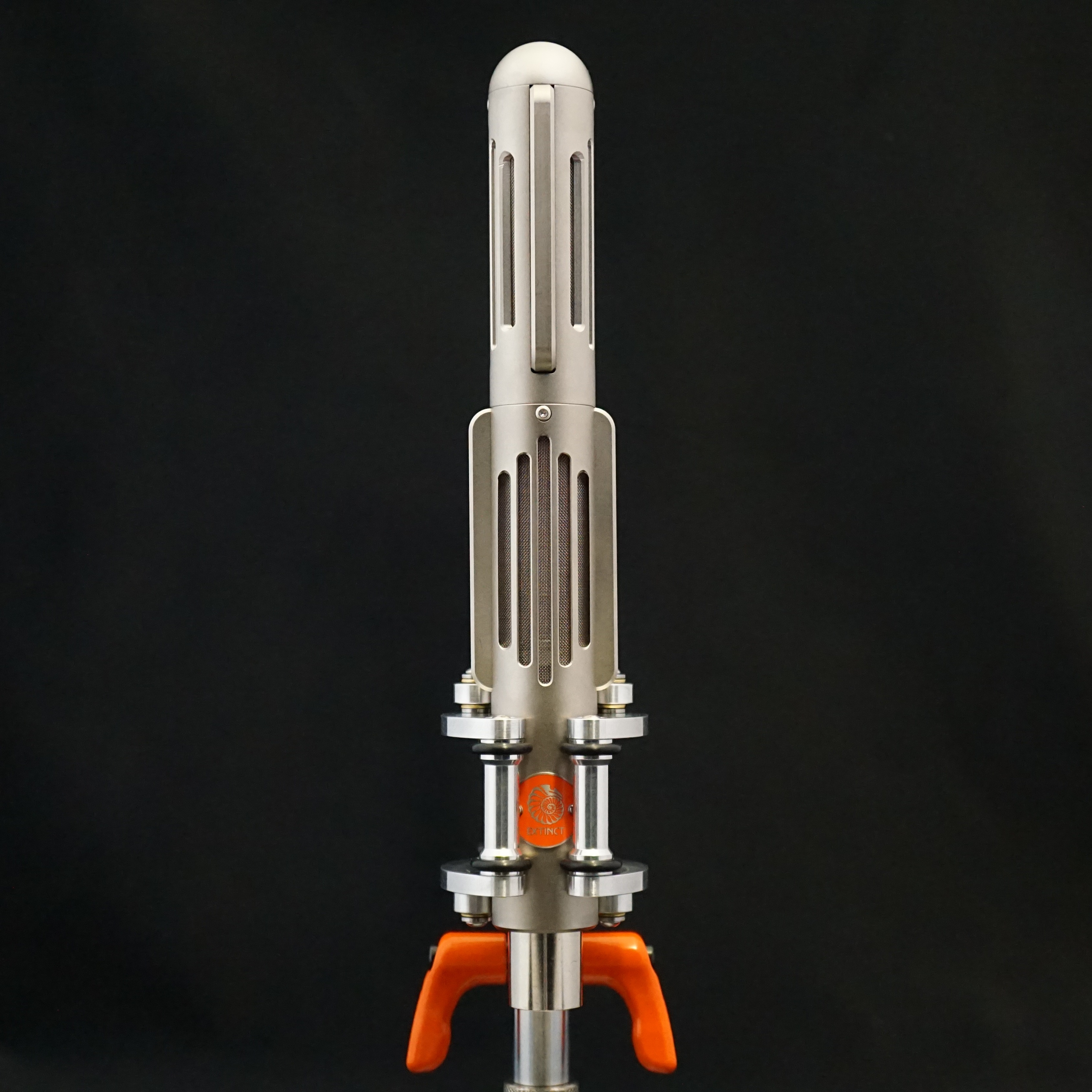
AEA R88
Manufacturer:
AEAModel:
R88Country of Manufacture:
United StatesMicrophone Type:
RibbonPolar Pattern:
Stereo Figure 8Production Start Year:
2004Rarity:
3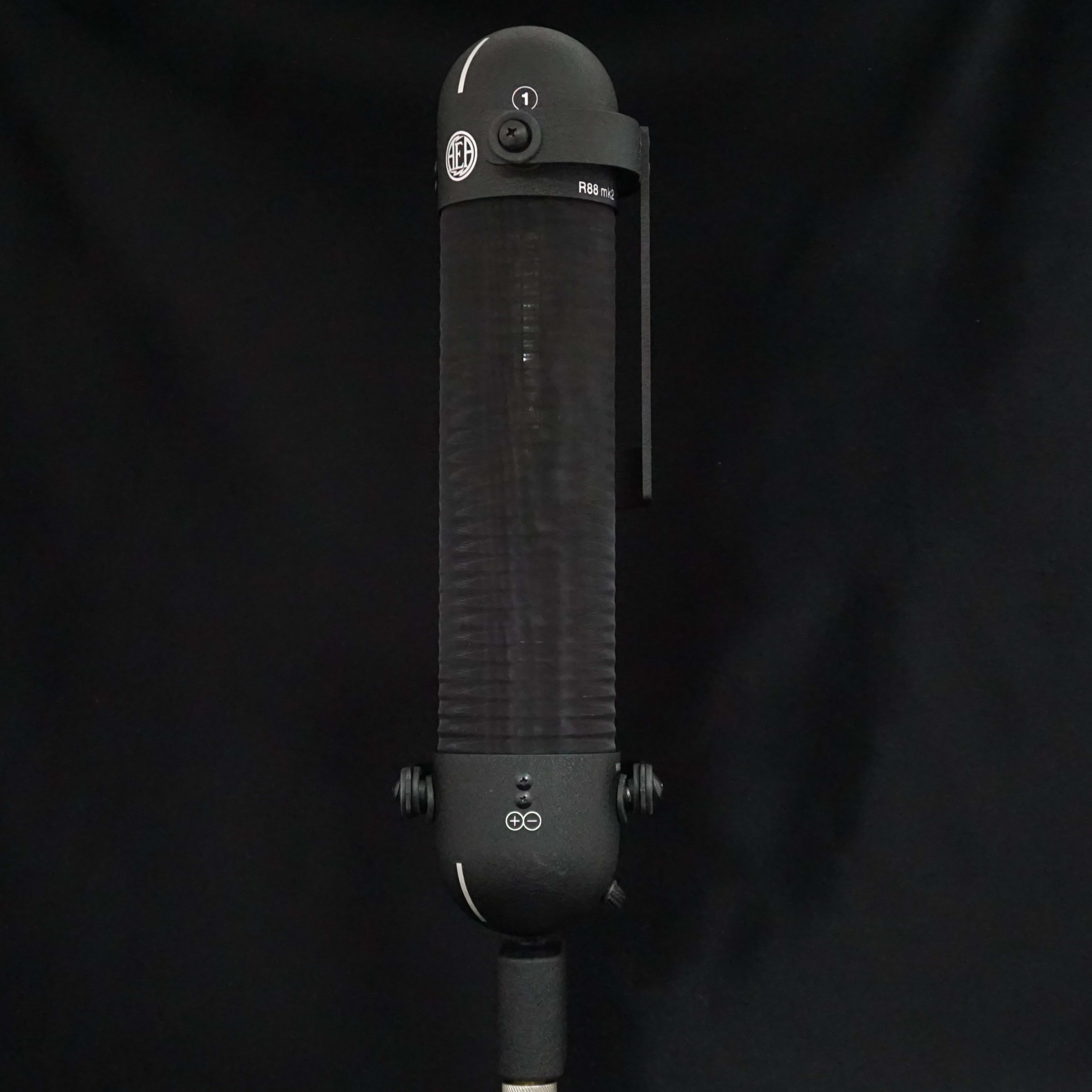
Audio Recording:
Nylon string guitar recorded with an R88 stereo ribbon microphone.
Multiple quality options available
Microphone History:
AEA designed the R88 in order to address the need for simple, compact stereo recording, where mounting other bidirectional ribbon mics in Blumlein is cumbersome. The R88 was originally released in 2004, with the R88 mkII released in 2010 and the R88A released in 2020. The R88 stereo microphone has two bidirectional ribbons mounted in Blumlein configuration. The R88 uses a 5-pin XLR breakout to two 3-pin XLRs that are usually panned left and right for a full stereo image. It can also be used in mid-side configuration. A common misconception is that the R88 is two R84s in one microphone, but this is not true.
The R88 mkII was an external re-design; the motor design, transformer, and overall sound are nearly identical from the original R88 to the mkII. In 2020 AEA launched the R88A, an active version of the R88 mkII, with Lehle 1:110 transformers and unity-gain bufferamp. The R88A has 12dB more output than the R88 mkII. The R88 is most well known for sounding exactly like the source does in the room, particularly on drums overheads, piano, and as a room mic. John Cuniberti has used the R88 as for his acclaimed OneMic recordings, using just one R88 in a room and carefully placing the musicians around the mic for panning and level.
Technical Description:
Operating Principle: Pressure gradient transducer
Directional Pattern: 2 x bidirectional in fixed Blumlein pair
Frequency Range: <20 Hz to >20 kHz
Polarity: Pin 2 and 4 high for positive pressure at the front of the microphone
Maximum SPL: 165 dB SPL (1% third harmonic > 1 kHz)
Sensitivity: 2.5 mV/Pa (-52 dBV) into unloaded circuit
Output Impedance: 270 Ω broadband
Load Impedance: 1.2 kΩ or greater
Phantom Power: Not required or recommended
Off-Axis Response: Horizontal: Level changes with angle, frequency response is consistent, -35dB null at 90º / 270º
Vertical: Level changes with angle, reduced HF response above and below 0º / 180º, -25 dB null at 90º / 270º
Transducer Element Material: Aluminum corrugated ribbon: 1.8 µm thick, 0.185 in (4.7 mm) x 2.35 in (59.7 mm)
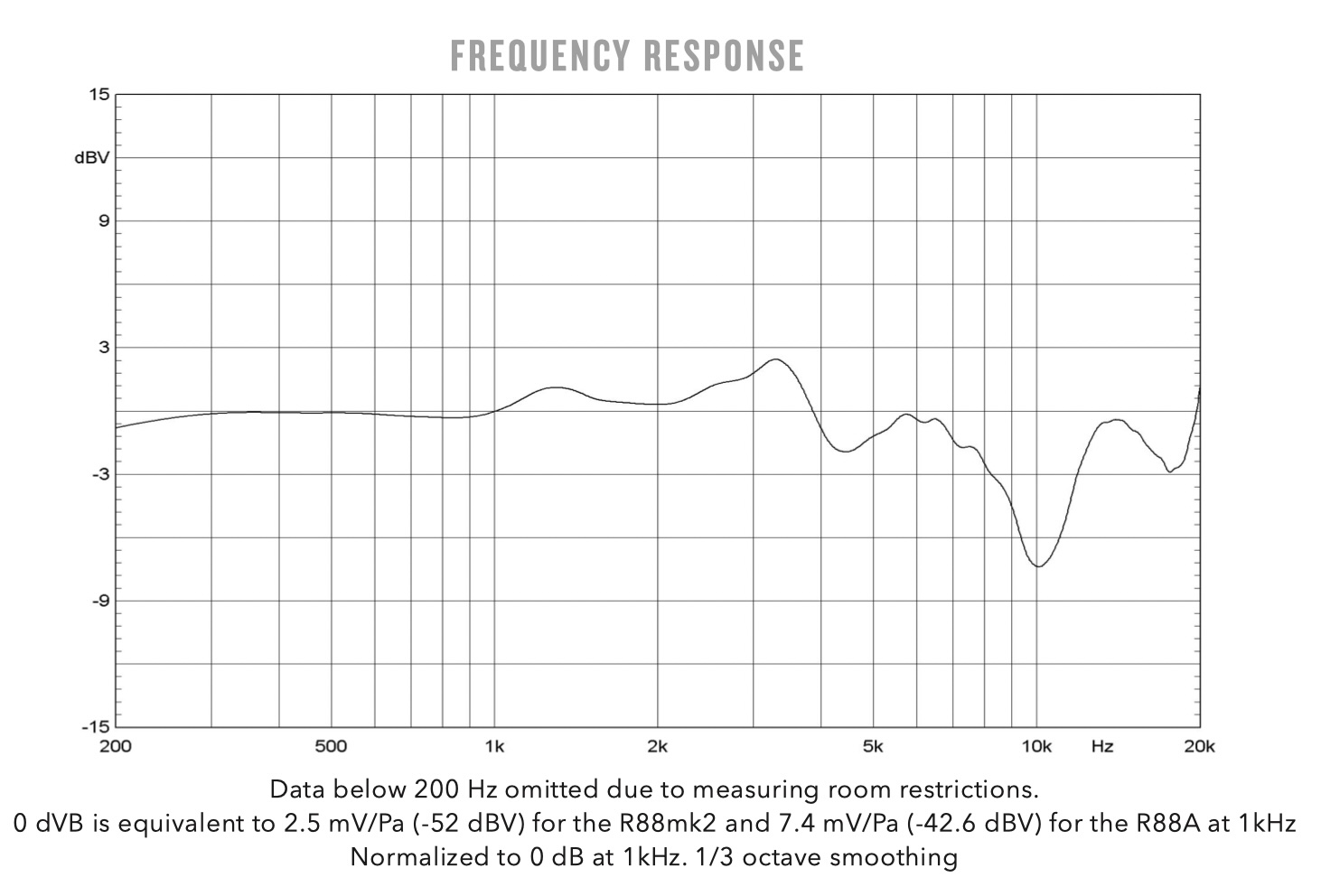
MoMics note: Our own measurement of the R88 response is below:
Frequency Response:
Impulse Response File:
Impulse response of an AEA R88 stereo ribbon microphone.
AEA_R88_IR.wav