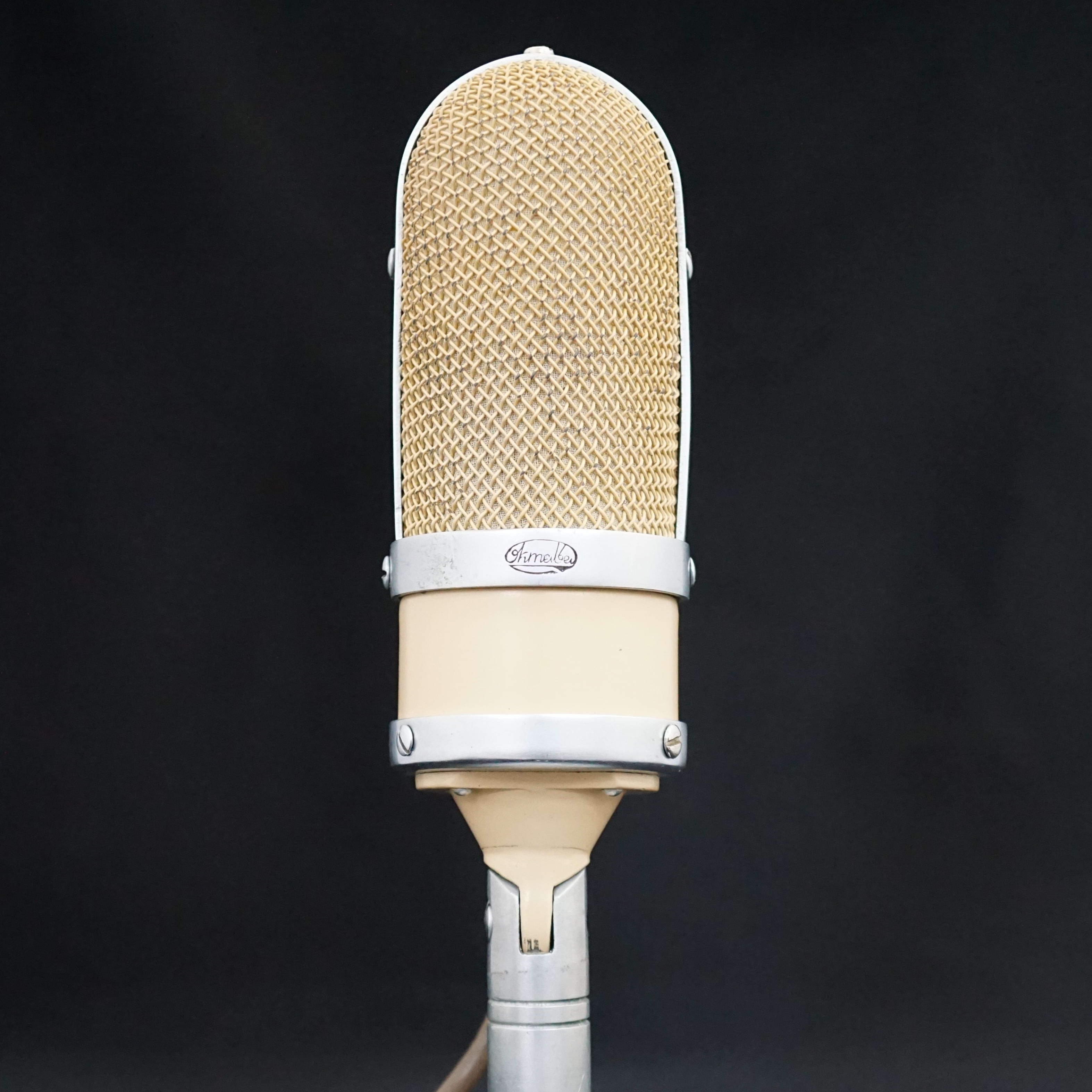
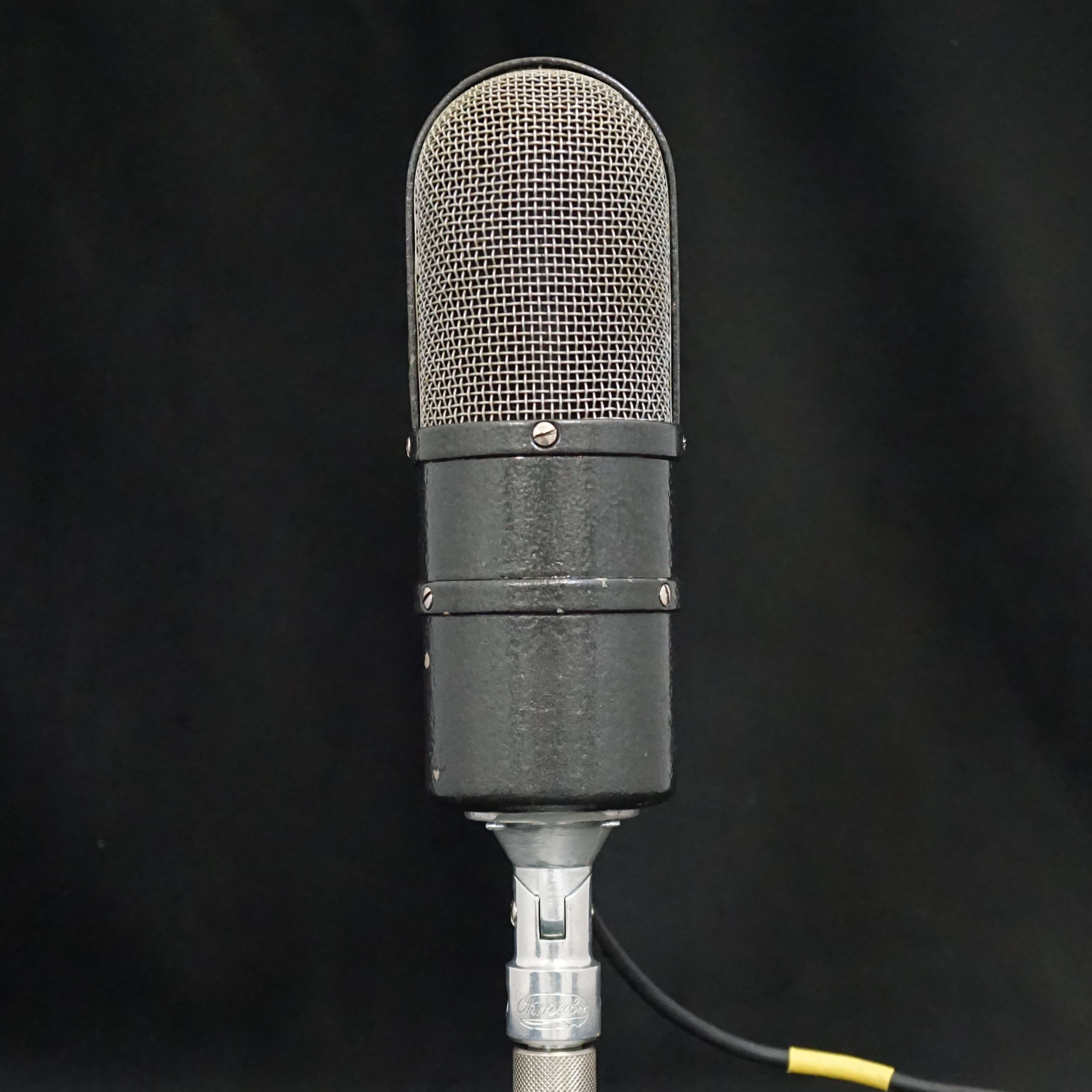
Oktava ML-17
Manufacturer:
OktavaModel:
ML-17Country of Manufacture:
RussiaMicrophone Type:
RibbonPolar Pattern:
CardioidProduction Start Year:
1962Rarity:
3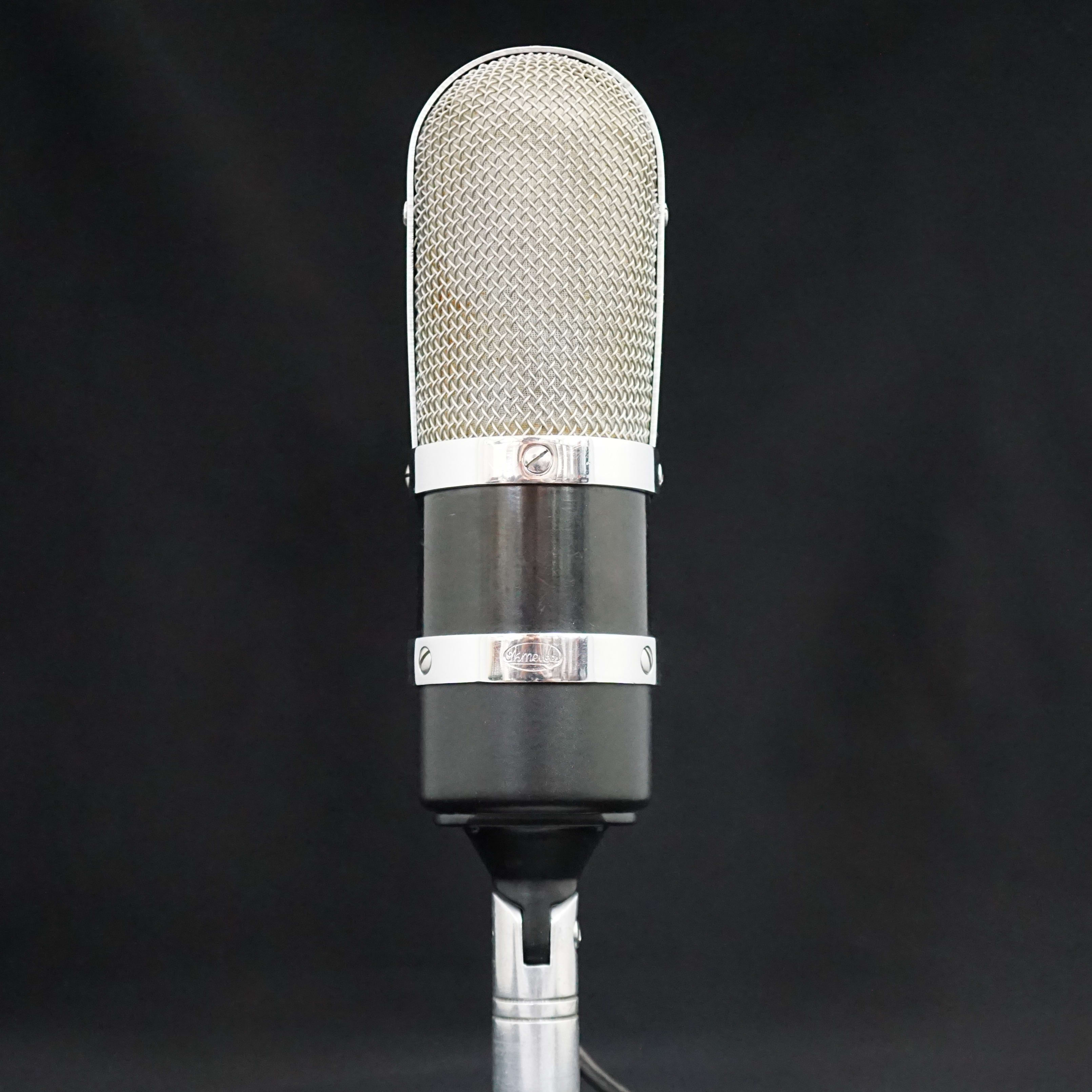
Audio Recording:
Speech (male) recorded with the Oktava ML17 cardioid ribbon microphone.
Multiple quality options available
Microphone History:
Oktava has been a prominent manufacturer of ribbon microphones since the Soviet era, producing models for broadcast and recording studios. These early ribbon mics were influenced by Western models, with some acting as Soviet-era versions of classic designs.
During the Soviet period, Oktava was the sole ribbon microphone manufacturer in Russia for many years.
The company provided equipment for state-controlled facilities, including the Kremlin and the state TV studio. The Russian Oktava factory is located in Tula, about two hundred kilometers south of Moscow, had been making ribbon microphones since the 1950s.
The looks of the ML-17 are clearly inspired by the RCA 77 series, although the Oktava is a fixed cardioid microphone whereas the RCA has a variable pattern mechanism. The ML-17 was made until about the mid-seventies and were intended for radio, TV and film.
Technical Description:
The Oktava ML-17 is a Soviet-era cardioid ribbon microphone produced during the 1960s and 1970s. It was developed as a cardioid companion to the bi-directional (figure-8) Oktava ML-16. Its design and sound are often compared to classic American ribbon microphones like the RCA 77.
Technical details
- Transducer type: Velocity Ribbon.
- Polar pattern: Cardioid (unidirectional).
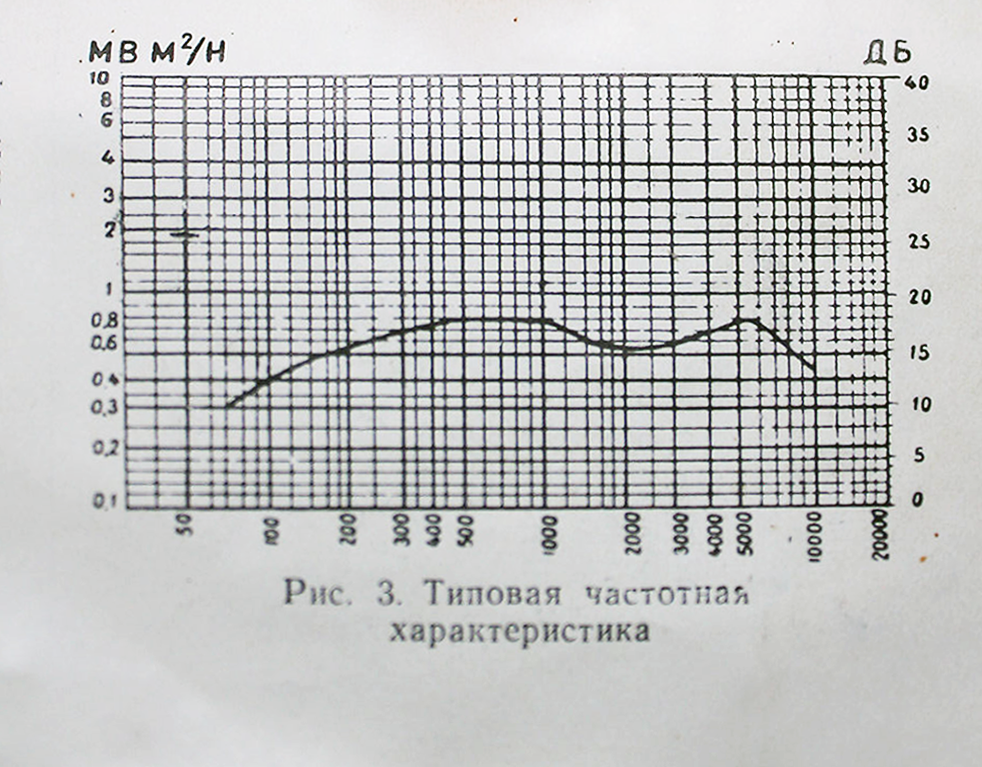
- Frequency response: 70–12000 Hz.
- Impedance: 250 ohm.
- Connector: Original models used a Soviet-era connector, but most units available today have been modified to use standard XLR.
- Servicing needs: Vintage units typically require professional servicing to sound their best. This often includes cleaning the internal components, replacing a fabric cloth over the rear acoustic chamber, and re-ribboning. Without this service, the microphone can sound excessively mid-rangey.
- Sound characteristics: When properly serviced, the ML-17 is known for its warm, soft sound with a controlled low-end and a smooth upper-midrange. It is well-regarded for capturing vocals, strings, and other acoustic instruments.
The cardioid pattern was achieved using an acoustic maze system behind the ribbon motor, similar to the principle used in some RCA microphones. The internal design is much like a miniature RCA KU3.
Frequency Response: