RCA KU-2A
Manufacturer:
RCAModel:
KU-2ACountry of Manufacture:
United StatesMicrophone Type:
RibbonPolar Pattern:
CardioidProduction Start Year:
1940Rarity:
4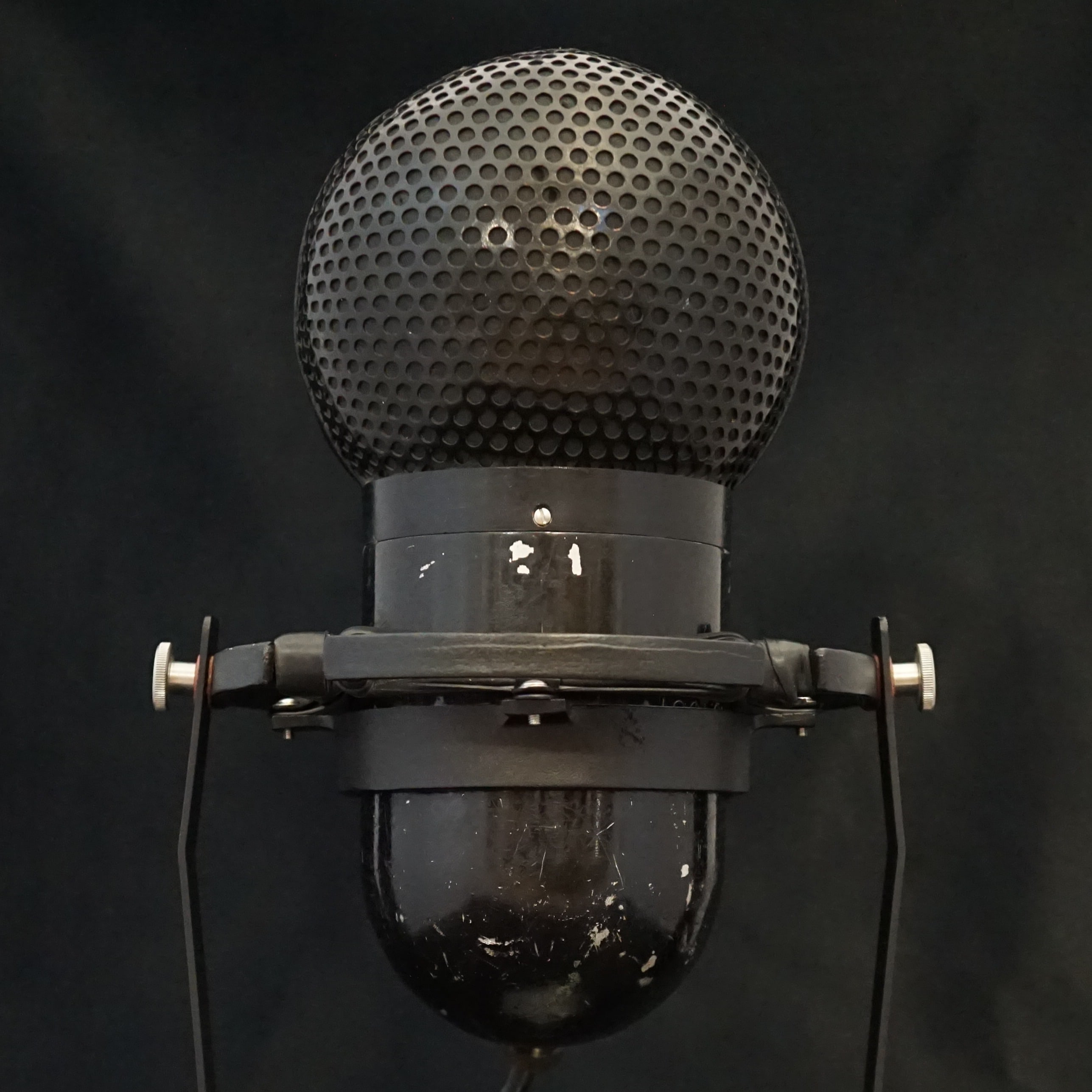
Microphone History:
Stewart's view from the Xaudia blog
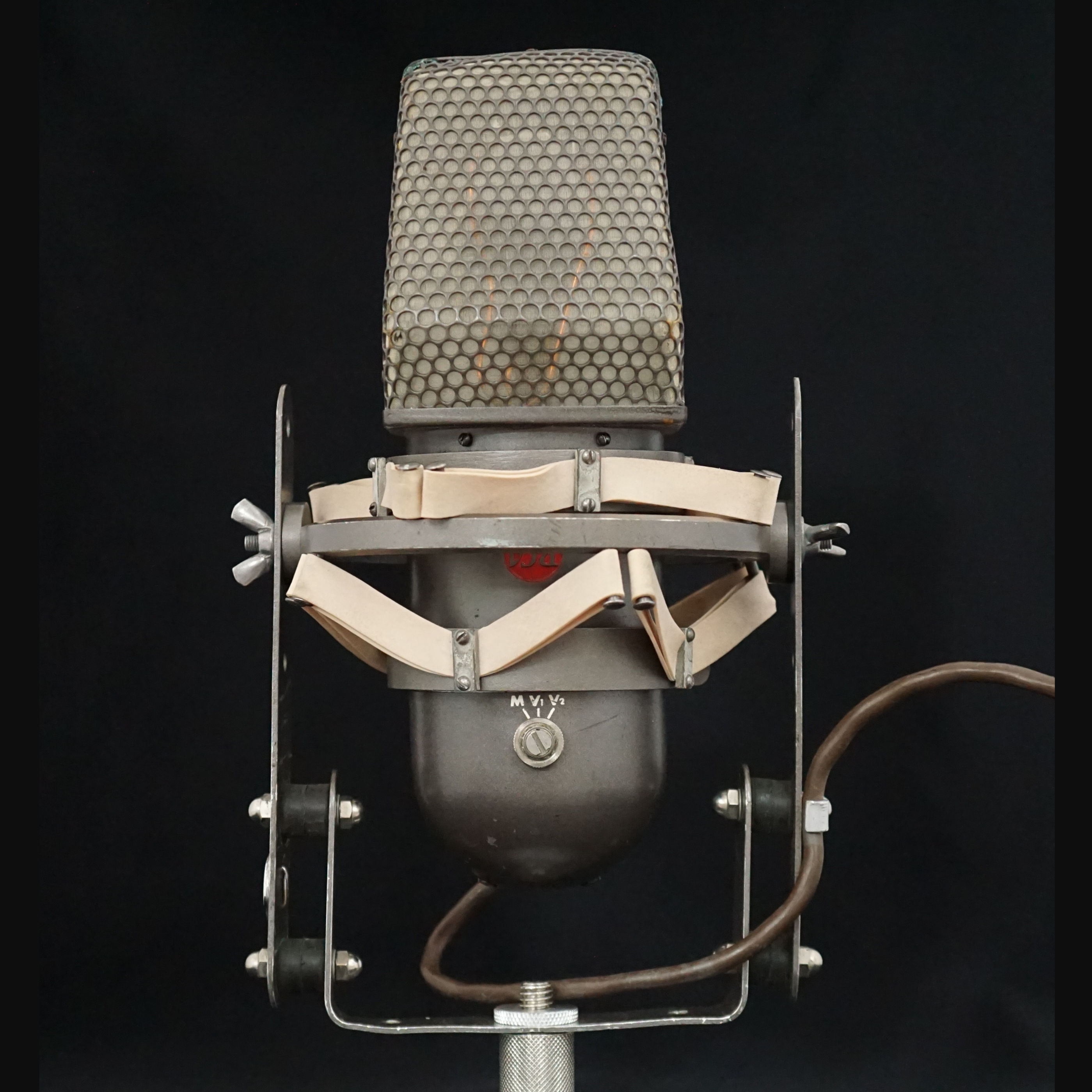
"The RCA KU-2A, which was one of the earliest unidirectional ribbon microphones. The KU-2A is often known as the 'Skunk', because of the distinctive white stripe along the rear of the microphone grill. Marking the rear of the mic may seem a little counterintuitive, but this gave the boom-operator a clear indication of where to point the microphone, aligning the stripe with the actors or other sound source.
Unidirectional microphones were a real challenge for the early film industry because the common transducers of the day were generally bi-directional ribbons, or omnidirectional carbon or dynamics.
In the KU-2A, directionality is achieved in a cunning manner. The ribbon is divided into two, with the top half acting as a normal figure-8 ribbon microphone. The lower half is sealed at the rear and is connected to an acoustic chamber, which makes the ribbon behave as a pressure transducer, with omnidirectional characteristics. These elements combine together to give a cardioid directional pattern.
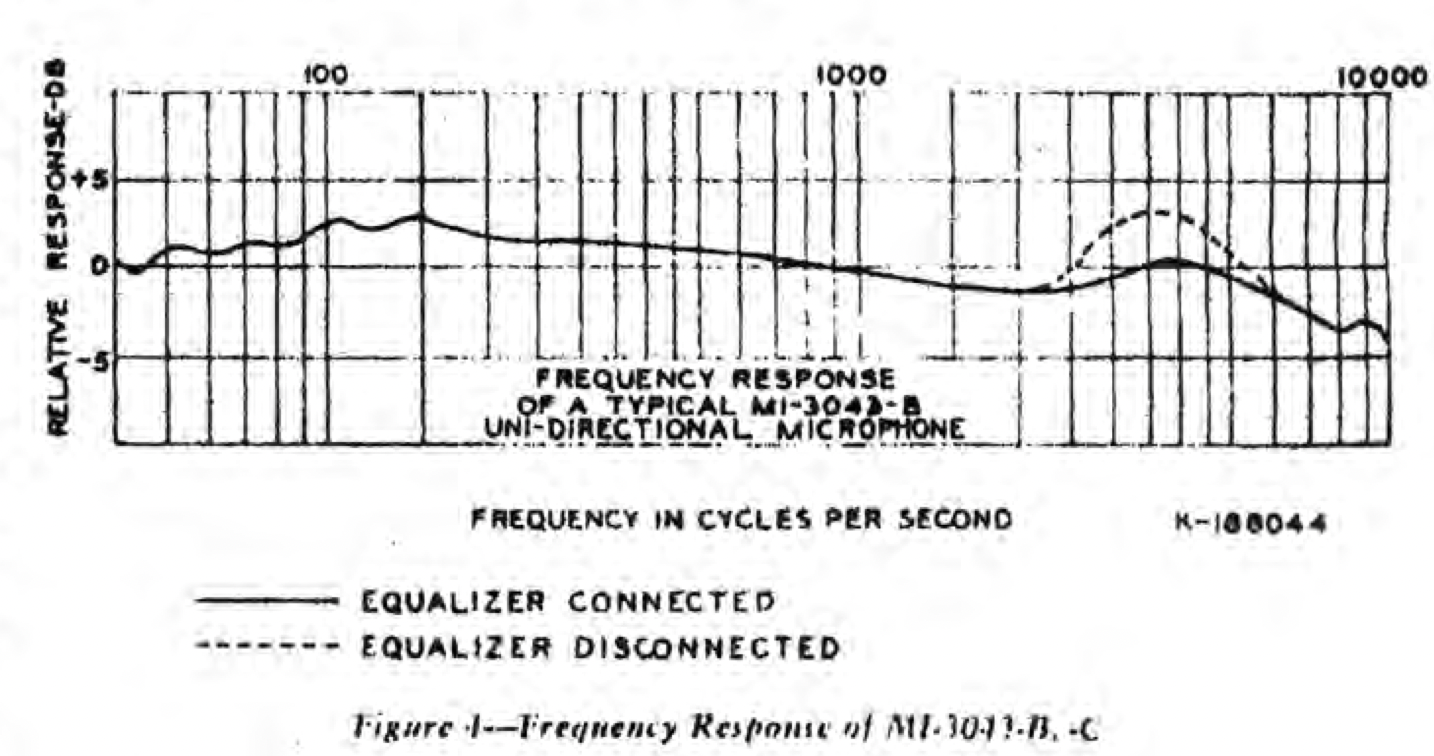
This approach causes a bump in the frequency response at around 5kHz, which is attenuated, to a degree, by use of an RLC filter network, which is housed in the base of the microphone. The manufacturer's frequency response chart shows the effect of the filter.
The transformer also contains the inductor for the filter, with a capacitor wired beside it."
Note that the KU-2A does not appear in either the 1939 or 1941 RCA catalogues, but it was advertised in 1940 under the RCA-Photophone name. Photophone usually suggests that the product was made for the movie industry.
From a contemporary advertisement in International Projectionist Magazine, August 1940:
"This new RCA Uni-Directional Microphone was developed to meet the exacting requirements of Hollywood sound engineers. As compared with the original type introduced in 1935 * it features such advancements as 2½ times the signal output, considerably lighter weight and smaller size, and a special finish which reduces light reflection to a minimum. High sensitivity improves signal-to-noise ratio, and special spherical shaped wind screen reduces noise caused by air currents and secures optimum acoustic performance."
* The 'original type introduced in 1935' refers to the RCA 77-A, which has a similar motor design to the KU-2A.
Thanks to Marco at Vintage Microphone World for sharing his thoughts on dating RCA microphones.
Technical Description:
DESCRIPTION from the RCA data sheet.
The MI-3043-B (and -C) uni-directional microphone consists of two ribbon type microphone units suspended in a common air gap. One of the units is open to sound waves both in front and back and operates on the pressure gradient principle. It is known as a velocity microphone. The other unit has a tube connecting with a damped acoustical labyrinth, sealed on the back side of the air gap. and responds to pressure variations in the sound wave. It is known as a pressure microphone. The outputs of the two microphones are connected in series and the vector addition of the voltages generated by the two microphones produces a directional characteristic.
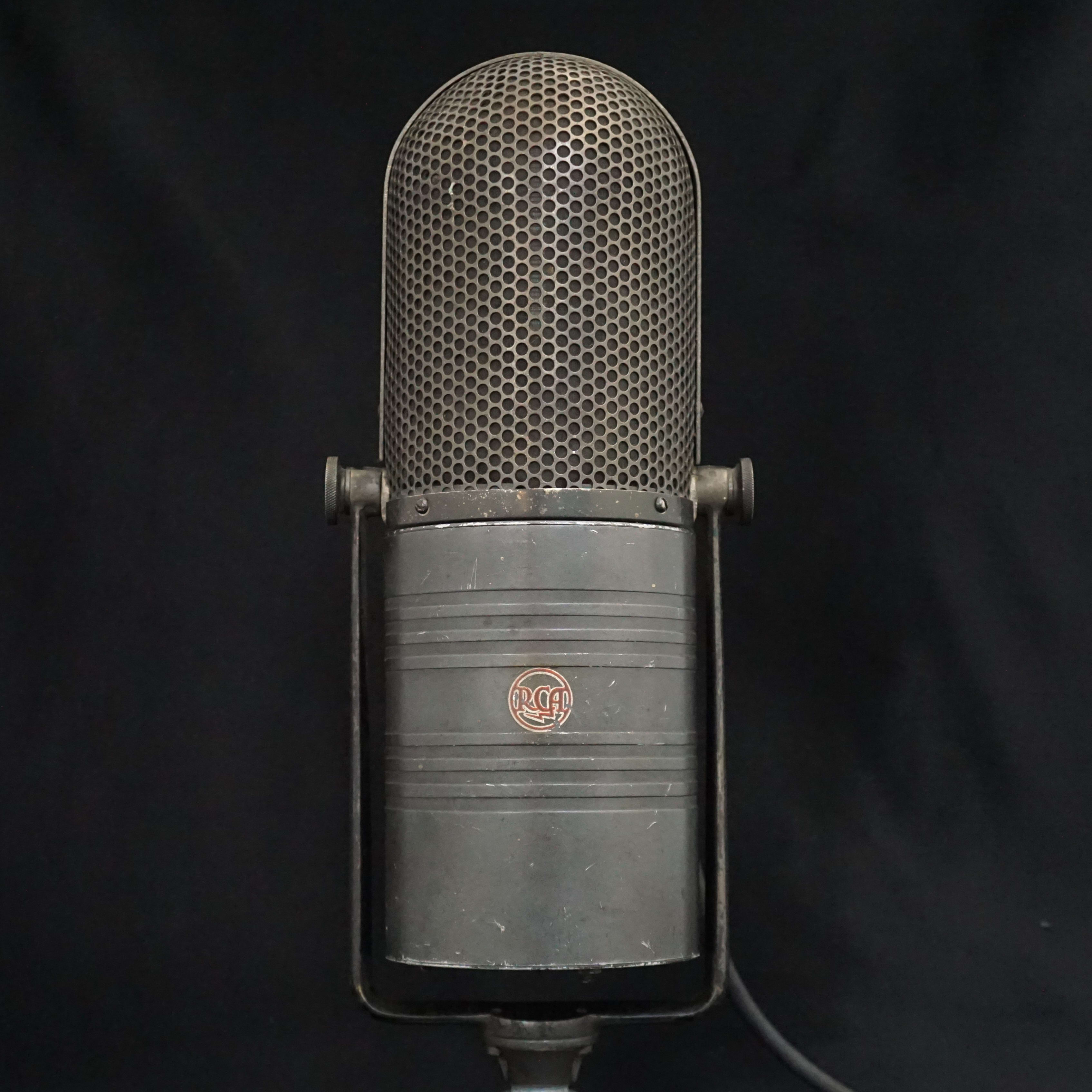
The MI-3014-B and MI-3043 C are identical except for the difference in the connector plugs as stated in the title, The ribbon and magnet assembly is enclosed in a perforated housing. This housing provides protection against dust and mechanical injury, and, to a certain extent, reduces wind noises. The acoustical labyrinth (or folded tube associated with the pressure microphone section is contained in the cylindrical centre part of the microphone.
The impedance matching transformer and a compensating network is mounted in the hemispherical shell at the end of the microphone.
SENSITIVITY
The sensitivity of these microphones is of the same order as that of other high quality microphones used in sound recording. By connecting the microphone output for twice the impedance, for which the amplifier input was designed, the microphone output level may be raised by 3 db.
RESPONSE
The Uni-Directional Microphone has practically uniform response within its operating range. When the microphone is located less than two feet from the source of sound, the low frequency response is increased somewhat although not to the same extent as with a velocity microphone. For sound sources more than three feet from the microphone this effect is negligible.
The frequency response is not appreciably affected by changes in the angle of incident sound over an angle of 75 degrees each side of the axis of maximum response on the front of the microphone. An increase in high frequency response may be obtained by disconnecting the high frequency equaliser.
Frequency Response: