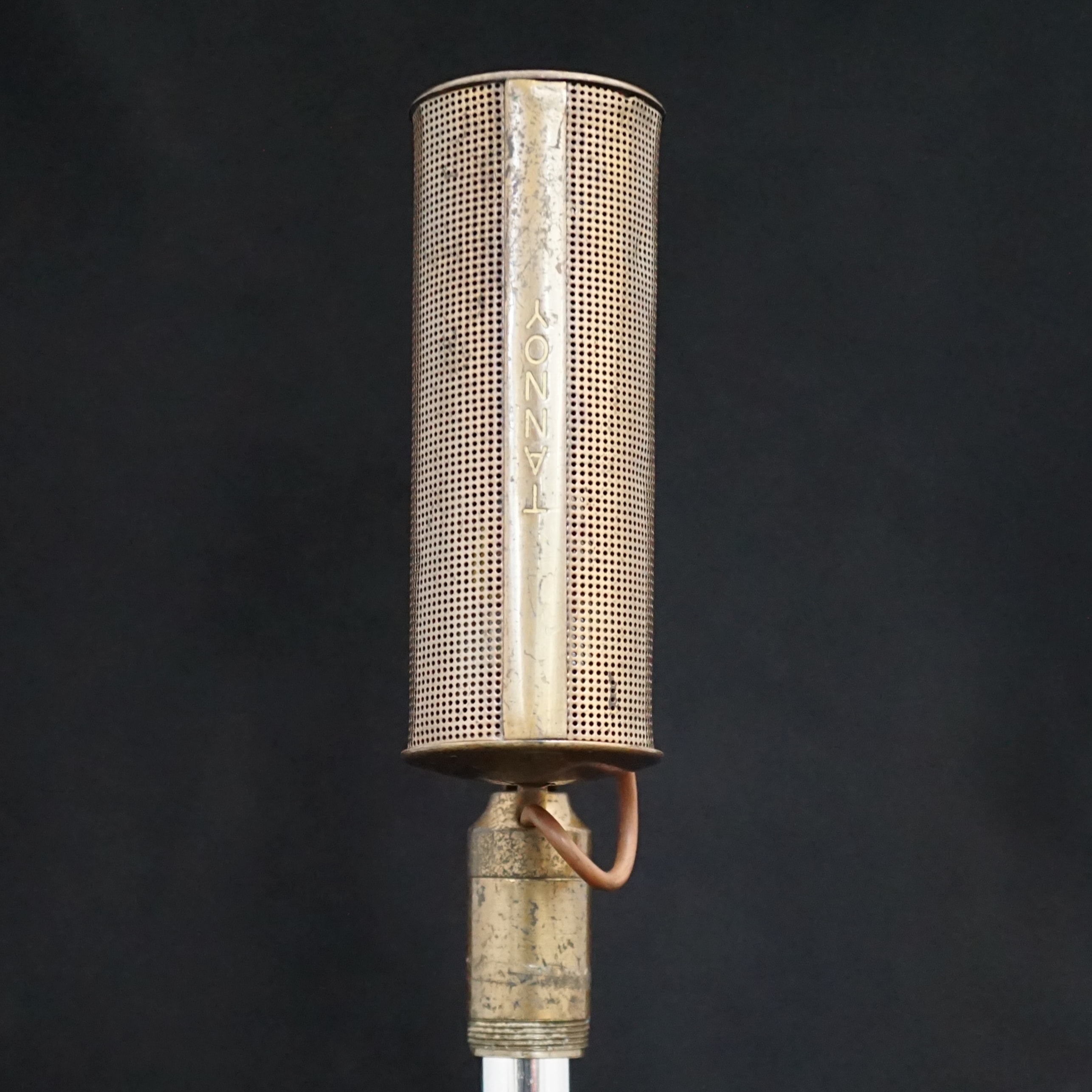
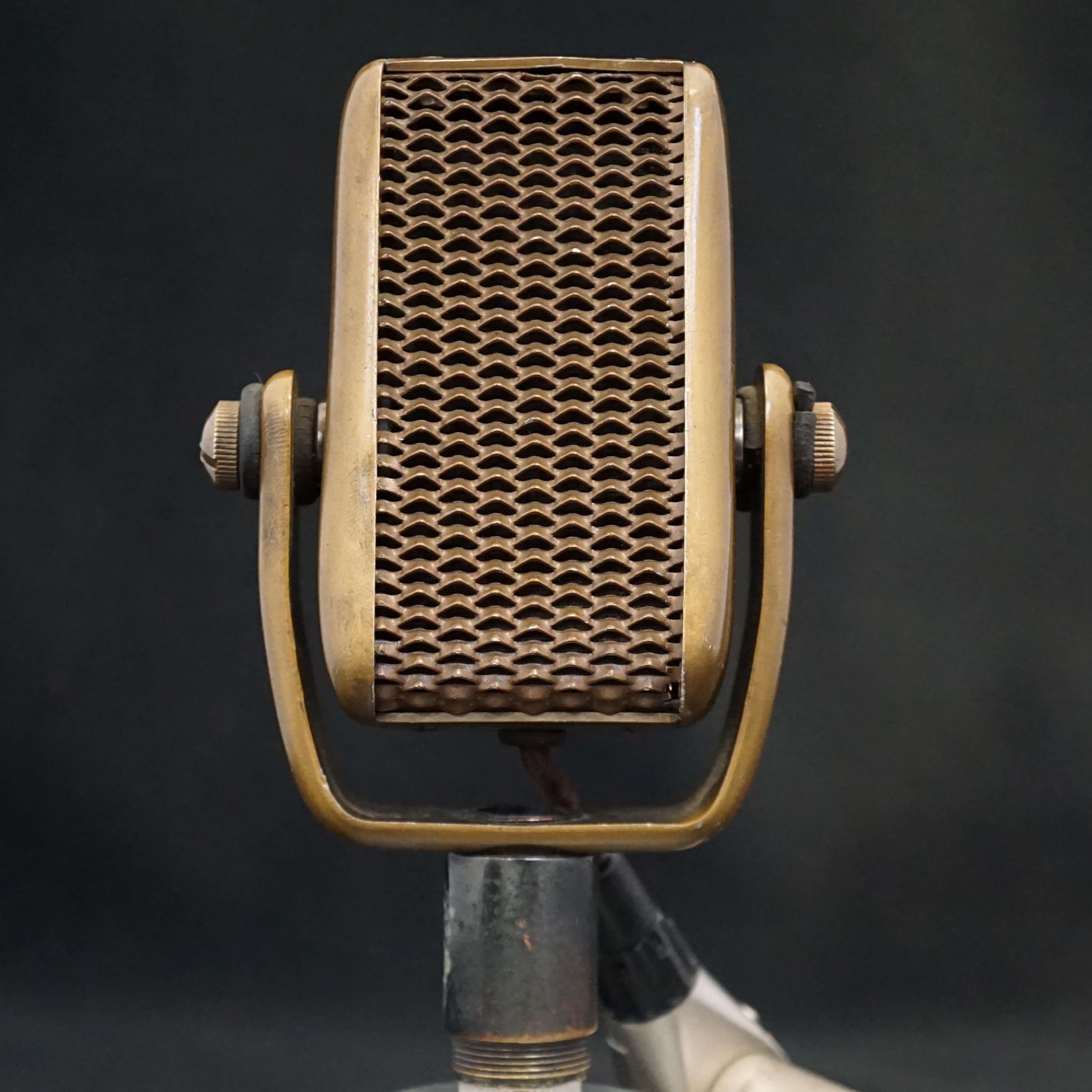
Tannoy Slendalyne
Manufacturer:
TannoyModel:
SlendalyneCountry of Manufacture:
United KingdomMicrophone Type:
RibbonPolar Pattern:
Figure 8Production Start Year:
1962Rarity:
4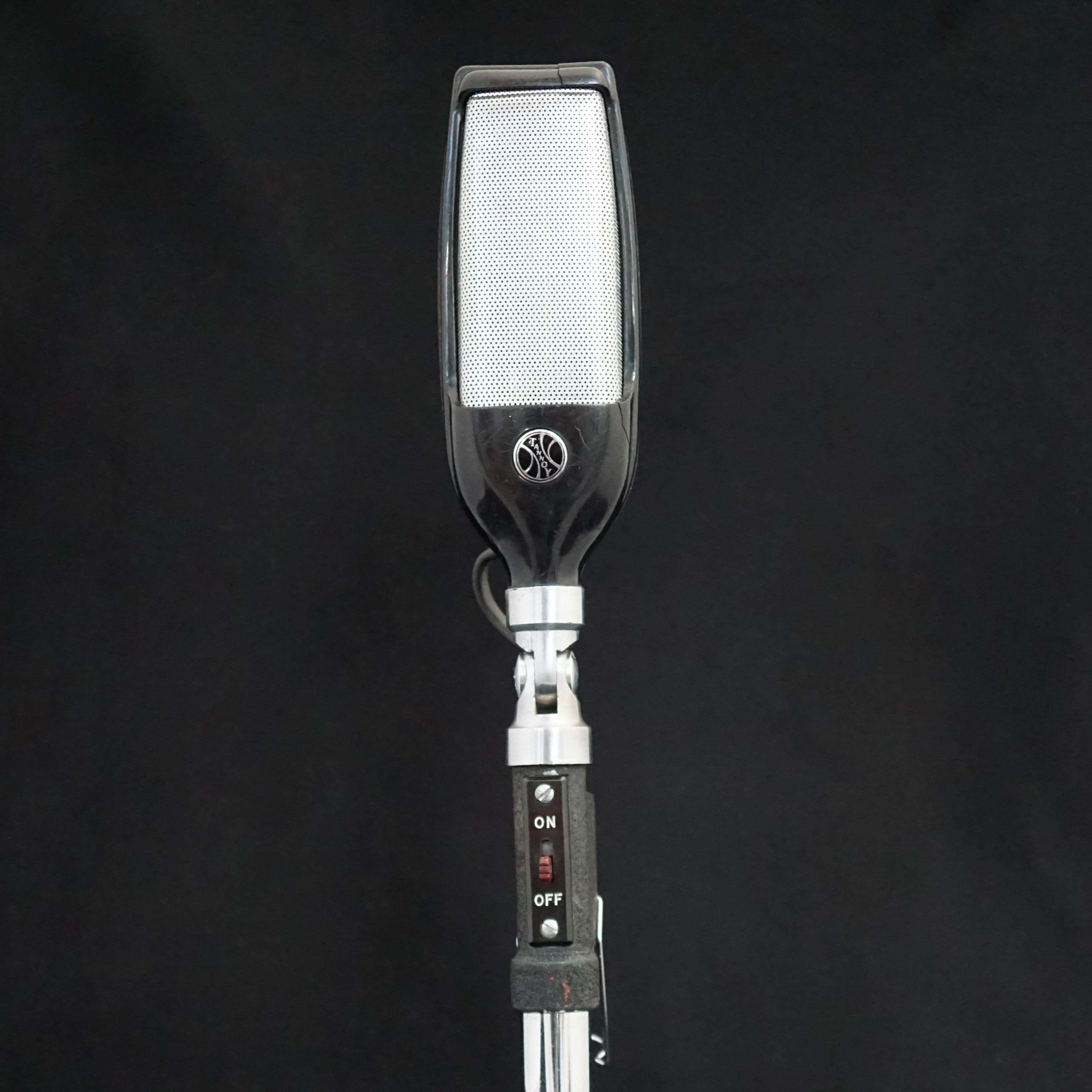
Microphone History:
These mics are smaller again and use a lot of plastic in the body, which can be prone to cracking. The grills are stamped metal, and the connector is a simple DIN plug without a locking ring. They are a lot less common than the types 1 and 2, although perhaps not as rare as has been suggested by some sellers. The magnets in these mics are made from a ceramic material which allows a smaller, lighter microphone than its predecessors.
Technical Description:
From Hi-Fi Yearbook, 1963
Slendalyne. Velocity Ribbon. Figure of eight.
Sensitivity - 76 dB. Imp. 600 ohms.
Transformer fitted. Good damping and shock resisting. Price £10. 10s.
Further Reading:
From Wireless World, June 1962
"The most noticeable development in microphones was the widespread emergence of new ribbon designs, of which several were in the low-price category. Improvements in the magnetic system by use of new materials were responsible for one trend. The traditional soft-iron pole pieces with massive energizing magnets at the ends, or covering one face of the ribbon, have disappeared and in their place are bar magnets, magnetized across their width. The result is generally a smaller slimmer structure with, consequently, a better frequency response. Tannoy's Slendalyne and Slendalyne Cardioid use metallic magnets, and the cardioid polar response is obtained by coupling to the back face of the ribbon a tuned and loaded cavity."
From The International Audio Festival and Fair Programme (April 1962)
"For more than 25 years Tannoy have been manufacturing high quality microphones of all types, and this vast accumulation of development and manufacturing experience is behind the new range introduced this year. It comprises a sing1e element cardioid, a miniature bi-directional ribbon and the "Slendalyne'' moving coil pressurre operated omni-directional microphone. All units have a frequency range of 25-14,000 Hz, high sensitivity, and are of rugged con&truction. Their performance .recommends them to both the professional user and serious amateur."