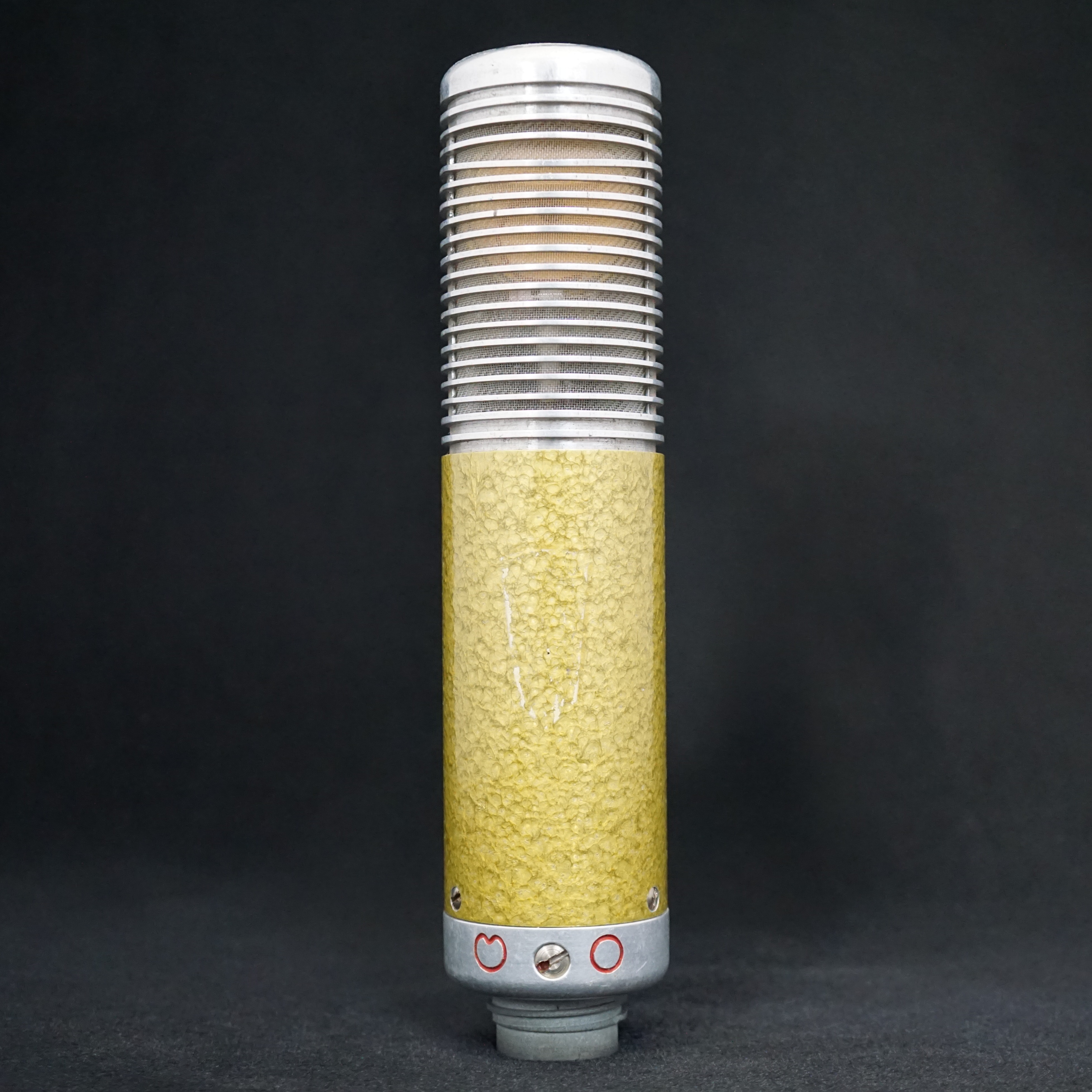
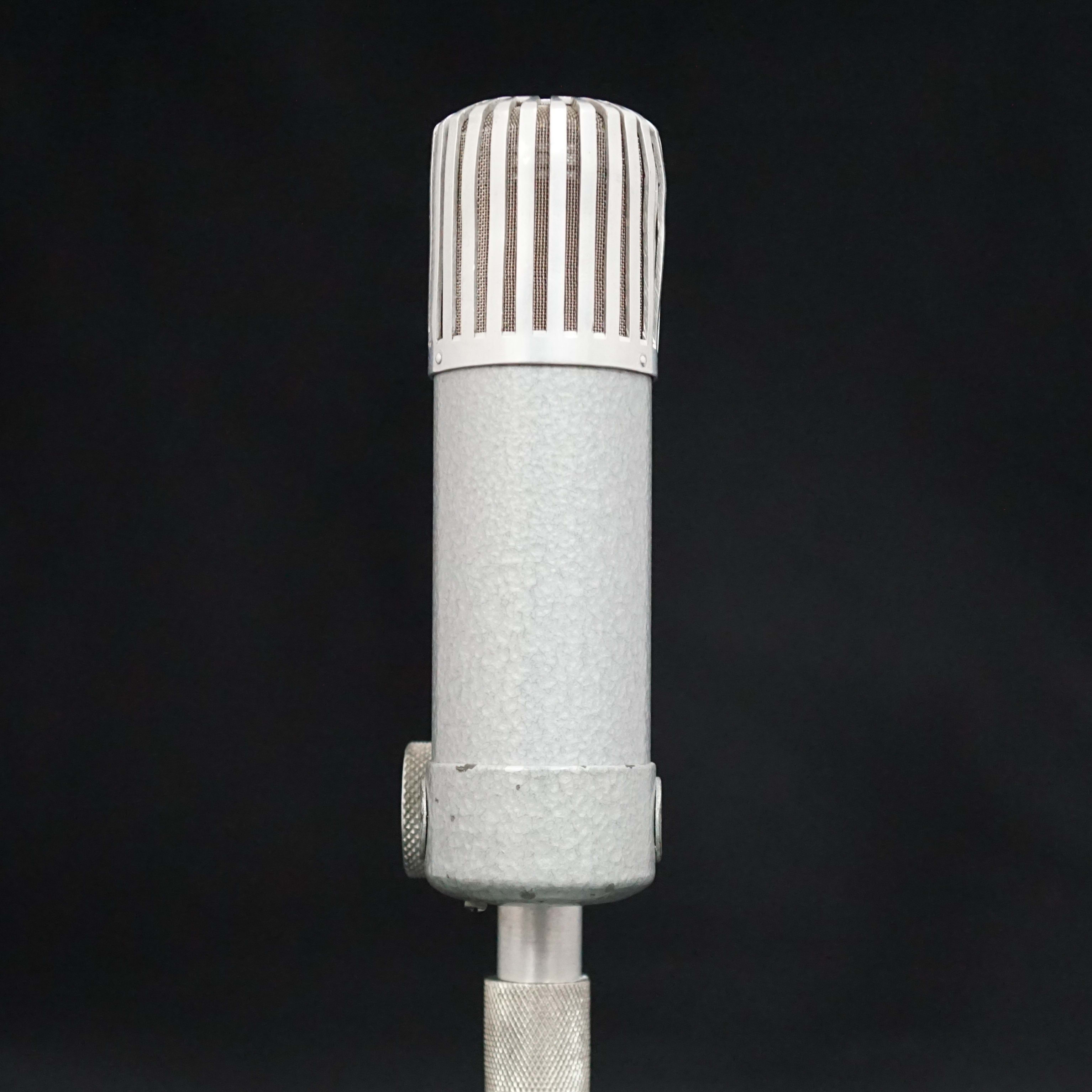
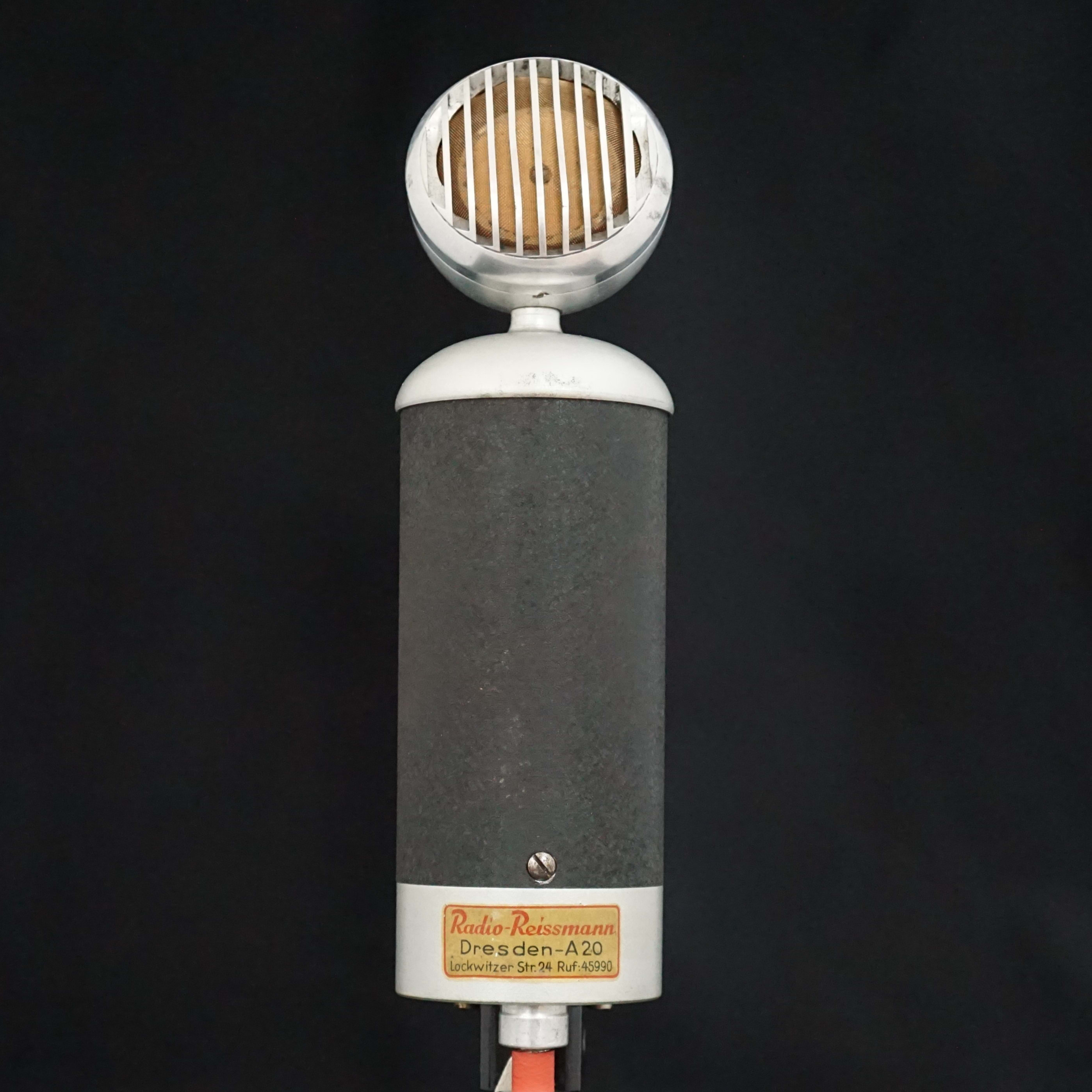
Thiele M4
Manufacturer:
ThieleModel:
M4Country of Manufacture:
GermanyMicrophone Type:
CondenserPolar Pattern:
Multi-PatternProduction Start Year:
1957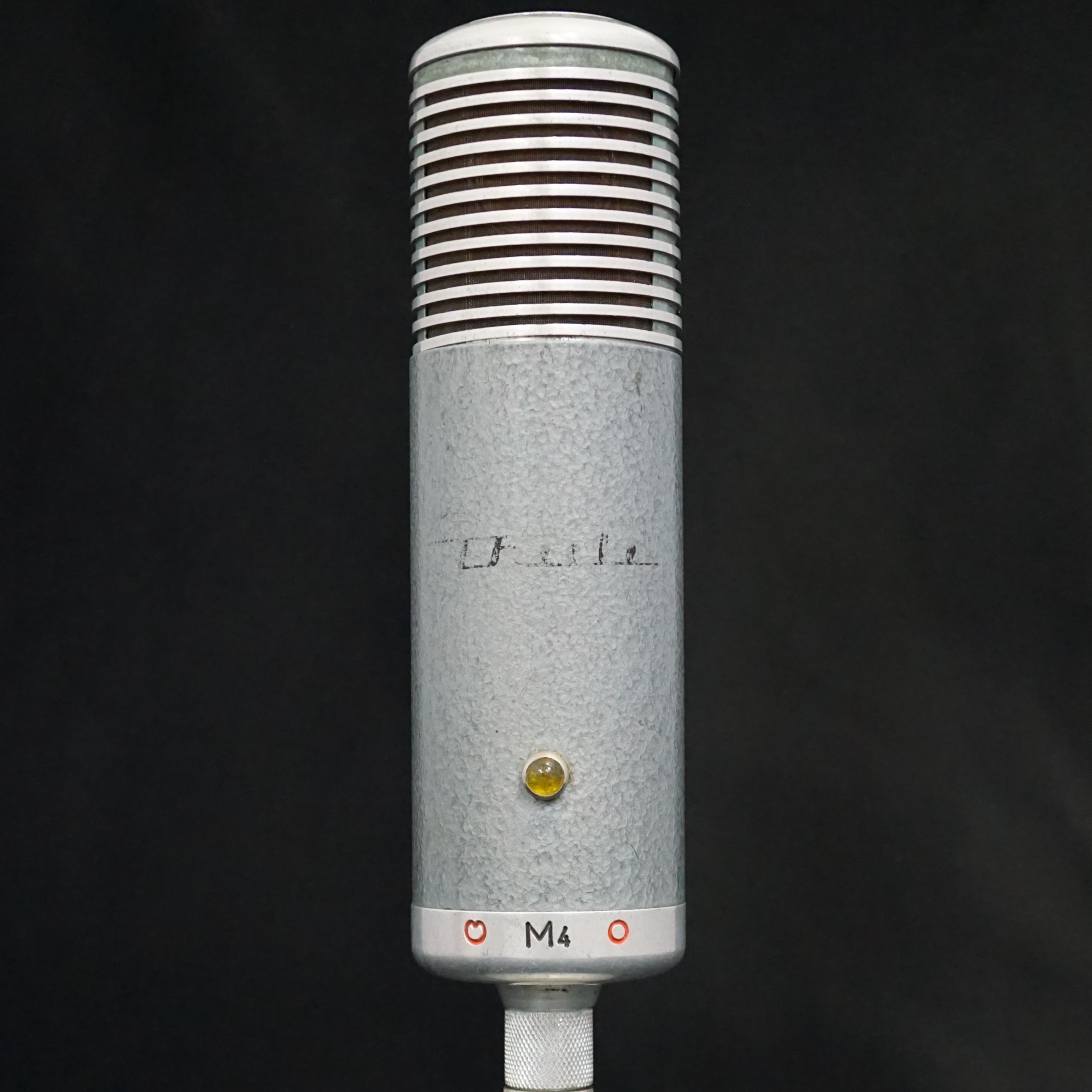
Microphone History:
Translated from MikroSammler website (originally in German)
"Werner Thiele ran a small microphone company in Leipzig, from after 1945 until approximately 1960. Initially, he manufactured bottle microphones for the Schneider company in Merseburg. In 1955, Thiele released his first model under the Thiele name – the M1. This was a bottle microphone without the attached torpedo-shaped capsule – the capsule was built directly into the microphone. In 1957, the Thiele M4 was introduced. These were available in various colors. Simultaneously, he developed the Thiele M5 which was the first model with a separate power supply. The M5 was significantly smaller but visually similar to the M4. Around 1960, Werner Thiele left East Germany, and his employees continued the business. To prevent nationalization, they founded a cooperative (PGH Elektro-Medizin & Vakuum-Technik) and continued manufacturing and distributing the microphones under this label."
MoMics note:
The Thiele M4 packs a lot in to its relatively large size. The microphone did not need an external supply and plugged directly into the mains via a twin core cable, whilst a second unbalanced screened cable carried the audio signal. Inside the M4 is a mains transfomer as well as the necessary smoothing capacitors. And it also carried an indicator lamp and a mechanical switching system which ran from the bottom of the microphone up to near the top. This necessitated placing the ECC83 vacuum tube directly behind the capsule, which was skinned with a PVC membrane. All this meant that the pickup from the rear was different from the front, so the Omni pattern was less than perfectly symmetrical. The heat from the tube could cause the membrane to crack or loose tension.
Hum from the mains transfomer could be nulled by adjustment of two potentimeters at the base of the microphone, which injected a little bit of AC voltage from the heater supply into the audio signal!
These shortcomings, along with the age of these microphones, means that they usually need to be completely re-built if they are to be used in a modern recording context. Usually the mains transfomer is removed to make way for an output transformer, and the tube inverted and kept away from the capsule.
Technical Description:
From the Thiele M4 owner's manual:
- Polar pattern: Switchable (omni - cardioid)
- Cardioid cancellation: ~10 dB (180°)
- Sensitivity: 3 mV/mB
- Average output voltage: ~100 mV
- Frequency range: 30–15000 Hz
- Deviation: ±3 dB
- Impedance: 200 Ω
- Mains voltage: 220 V
- Power consumption: 10 VA
- Tube complement: ECC 83
- Indicator lamp: 10 V / 0.05 A
- Weight: 850 g
- Height: 216 mm
- Diameter: 60 mm
- Thread (stand): 1/2"
- Maximum permissible cable length: 100 m
"Your M4 condenser microphone can be used for all purposes thanks to the built-in switch. Pressing the left button changes the polar pattern to cardioid, meaning the microphone primarily picks up sound from the front, while noises arriving from the rear are only reproduced at a reduced level.
This means that, for example, the cardioid polar pattern should be used for loudspeaker transmissions where the loudspeakers are in the same room or nearby, or in noisy environments. The omnidirectional polar pattern is used where there is no interfering background noise or where loudspeakers could produce acoustic feedback (whistling). In this position, the microphone picks up sound from all directions almost equally. It is therefore not possible to filter out a disturbing noise source. In this position, the microphone is used in the studio for recording tapes or for transmitting a conversation from a round table, where it is important to have equally good sound reproduction from all directions. The right-hand "ball" button does not lock into place, but only releases the other button, so that both buttons protrude when in the "omni" position.
We have found the low impedance of 200 ohms and the resulting low output voltage (Lavisiarke) to be advantageous, as this allows for the connection of long cables made of simple wire without compromising transmission quality.
If a cable longer than 10 meters must be run alongside power cables, this may result in hum. In this case, we recommend using shielded cable (e.g., crystal microphone cable). If the hum is too high, it can be reduced by carefully turning the two hum suppressors built into the base (alternately). It is best to have this adjustment performed by a professional if necessary, as there is a risk of over-tightening the hum suppressors.
Therefore, we do not accept liability for damaged hum suppressors. Finally, a few handling instructions: The microphone is extremely robustly constructed. Nevertheless, it is sensitive to impacts and shocks. When not in use, it is best stored in its case. When speaking or singing in front of the microphone, please maintain a distance (at least 25 cm), as moisture can cause interference. If you follow these brief instructions, you will have a reliable microphone."
Further Reading:
A post at the Xaudia blog about the Thiele M4 and M5, with links to manuals and schematics.
History of the Thiele company, photos (including other models) and schematics at the MikroSammler website (German language).
The Thiele M4 was clearly an aesthetic inspiration for the LeWilson range of microphones.