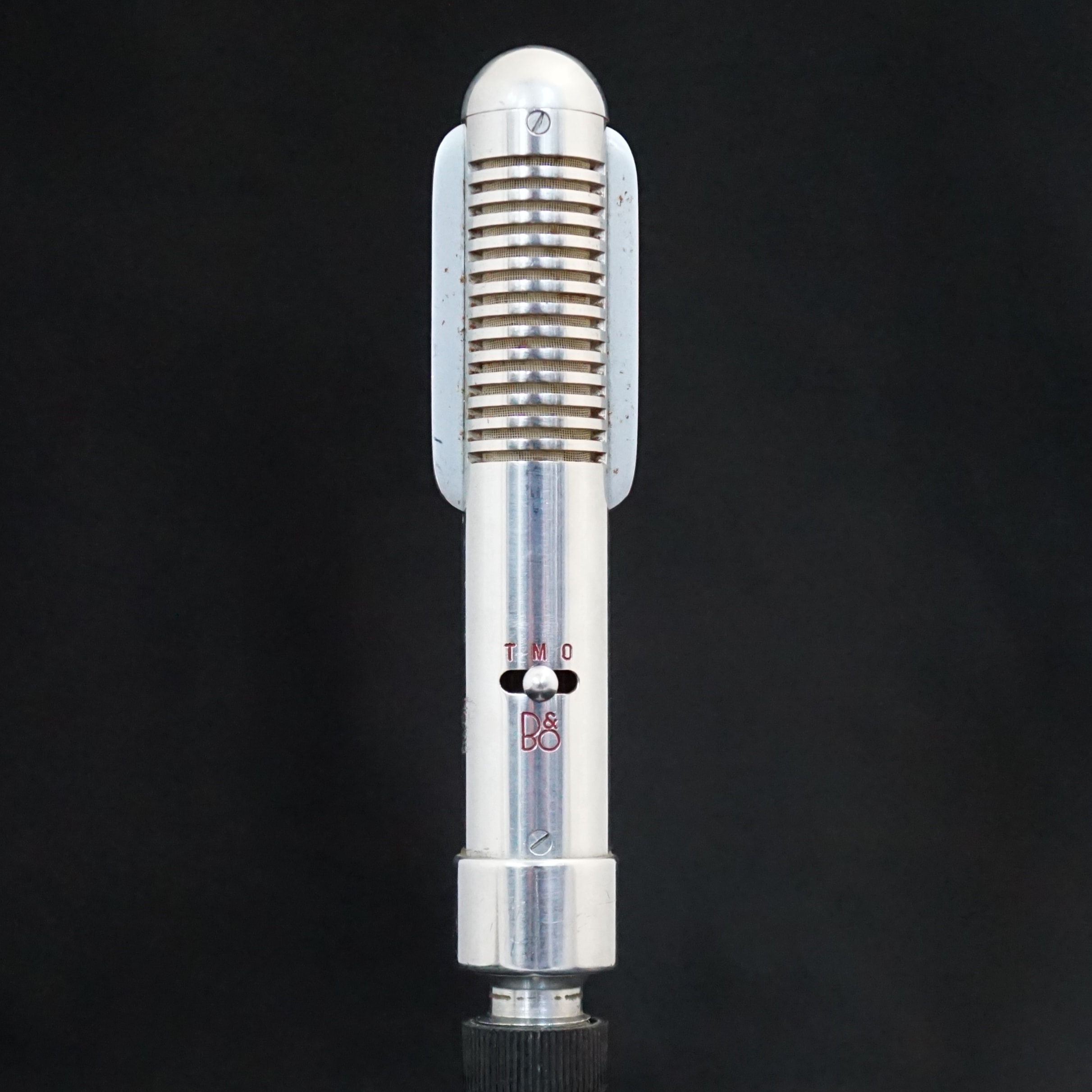
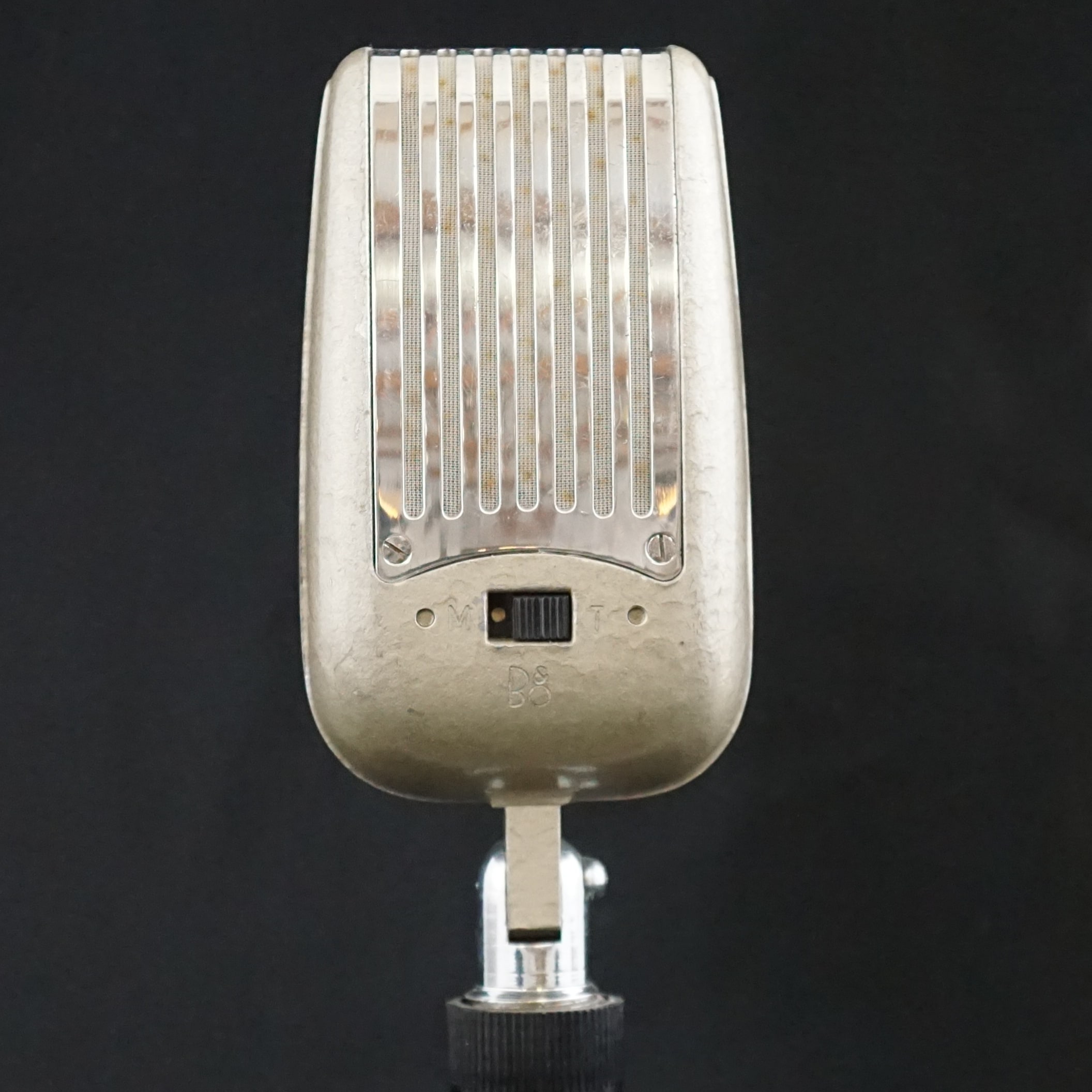
Bang & Olufsen BM3
Manufacturer:
Bang & OlufsenModel:
BM3Country of Manufacture:
DenmarkMicrophone Type:
RibbonPolar Pattern:
Figure 8Production Start Year:
1956Production End Year:
1964Rarity:
2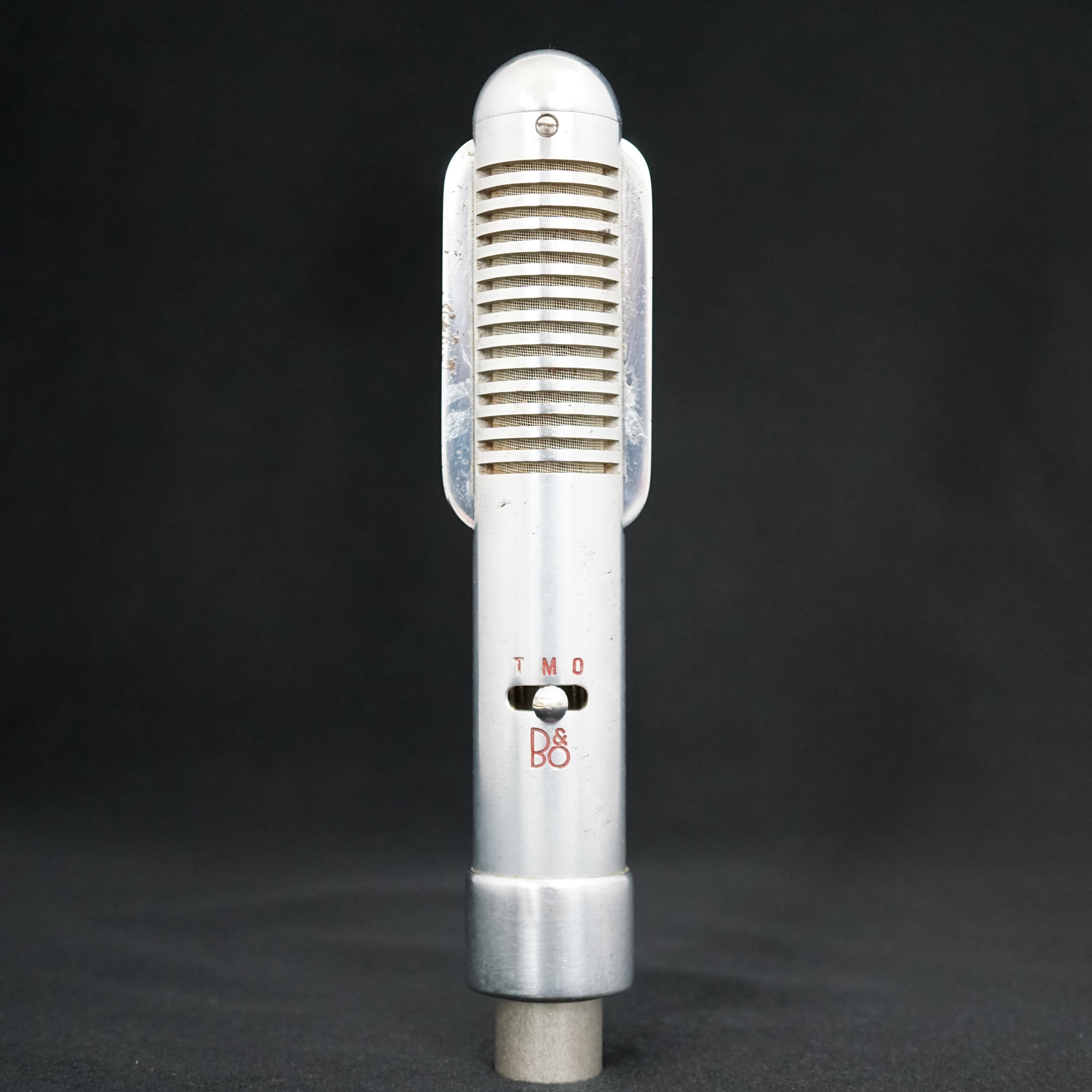
Microphone History:
Note that the BM3 shown in our collection has been converted to standard XLR output. It would originally have had a proprietary three pin plug which was also used on the BM2 and BM4 models.
Back in 1954, Bang and Olufsen BM3 ribbon mics were installed in the United Nations building in New York. B&O were justifiably proud of their mics being chosen for the UN - here is a press release from B&O.
And a translation from the Danish….
"As we previously mentioned to you, we have received a message from our US representative, Fenton in NY, that the UN uses our BM3 microphones throughout the UN building in NY. They chose the B&O mic and an American mic because only they, out of several hundred different manufacturer products that were tested, did not give rise to any acoustic feedback in the several hundred loudspeakers that are mounted in the ceiling of the UN general assembly building. Our mic also had an advantage over the US product as it didn't hide the speaker's face, which is important with regards to film and TV reporting. The microphones have been in use in the UN since 1st October this year. The newspaper 'Information' recently had an article with a picture that depicted the Canadian foreign minister , Lester B. Pearson , at the podium in front of B&O microphones when he presented his suggestion for involvement in Egypt. Via our advertising bureau we managed to send out a press release under the title "Danish microphones at the UN podium", and a whole selection of magazines included the picture and advertisement. We have attached the picture for your information - Next time you see the program AKTUELT in TV with recordings from the UN building, take note of our microphones, they are clearly visible.
"Our American representative has also undertaken an investigation that shows B&O microphones are used at, amongst others: Mercury, ABC and Decca. We have large orders from Fenton company for microphones and pick-up units, and the advertising that Fenton performs in the American technical journals has the effect that we receive requests from other countries. This has resulted in that we have recently sent 10 samples to Australia and samples to Hong Kong, and other countries are also showing interest.
"Likewise we have significant orders for AC motors from Norway, where we compete with German and English manufacturers, and samples of this product has been sent to other countries."
30th Nov. 1956
Technical Description:
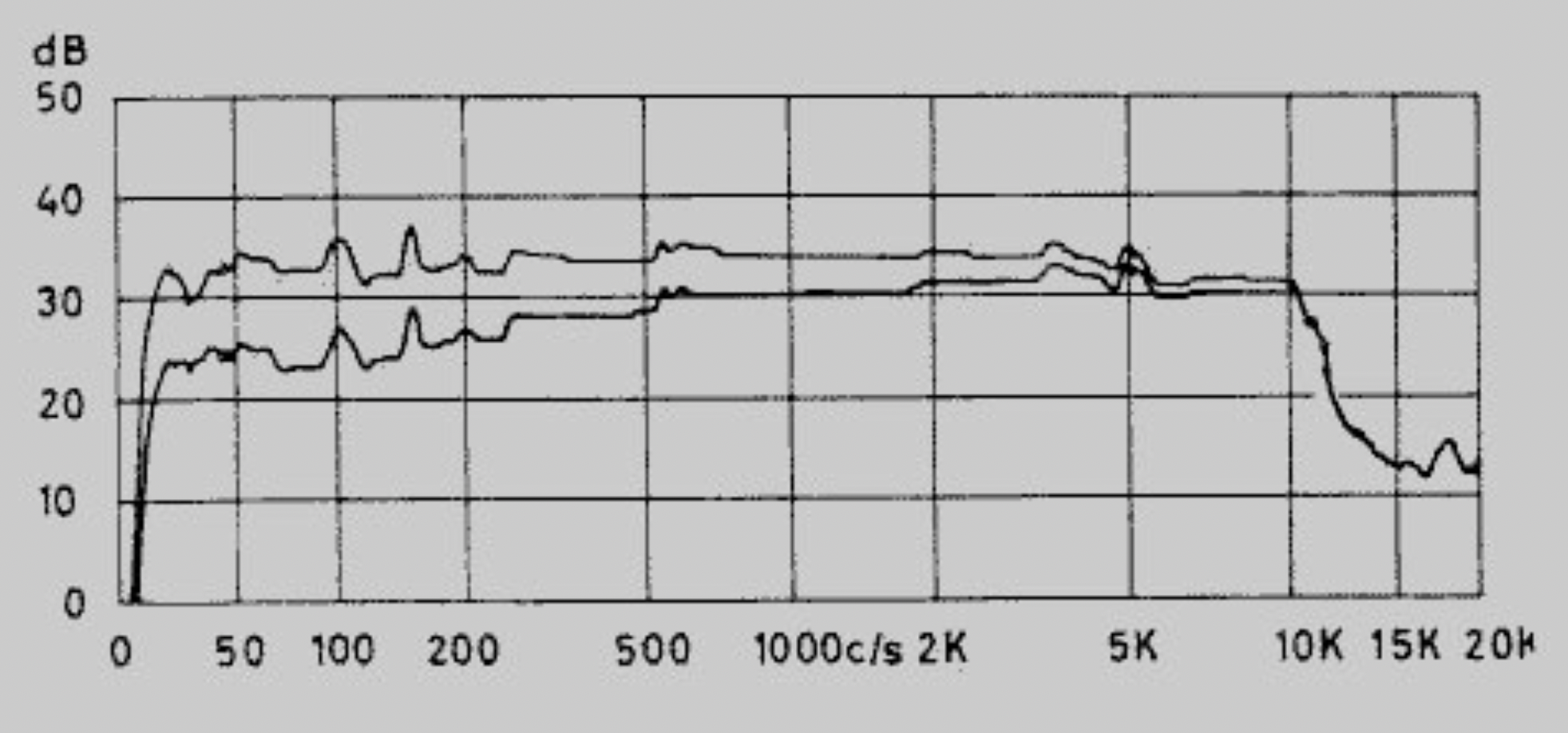
Frequency range: M setting: 20-11,000 Hz +/- 2.5 dB.
T setting: 10 dB lower at 100 Hz.
Sensitivity: M setting, 50 ohm: 88 dB under 1 V/ubar.
T setting: 4 dB lower.
Impedance: 50 ohm balanced.
Dimensions: 195 mm high, diameter 30 mm.
Frequency Response:
Further Reading:
The BM3 and BM4 at the BeoWorld website.
From the Xaudia microphone blog:
The BM3 and BM4 look very similar to one another, and used an evolution of the motor assembly in the BM2, this time in conjunction with a steel tube body. This design set the style for all their later ribbon mics, and also inspired Speiden and Royer microphones. In the case of the BM3, the ribbon motor frame is larger than the diameter of the tube and sticks out from the sides of the mic, giving it the look of a long face with ears, or perhaps Doctor Who's Cybermen. It has a three way selector switch which provides M (music - full range), T (talk - HPF) and 0 (off) positions.
The BM4 looks the same as the BM3, but with an additional switch at the rear for selecting 50, 250Ω, or high impedance output. The BM3s were fixed at 50Ω (and benefit from a matching transformer or upgrade). Occasionally you see these badged as "Fentone", although, oddly enough, they kept the B&O name on the mic too.