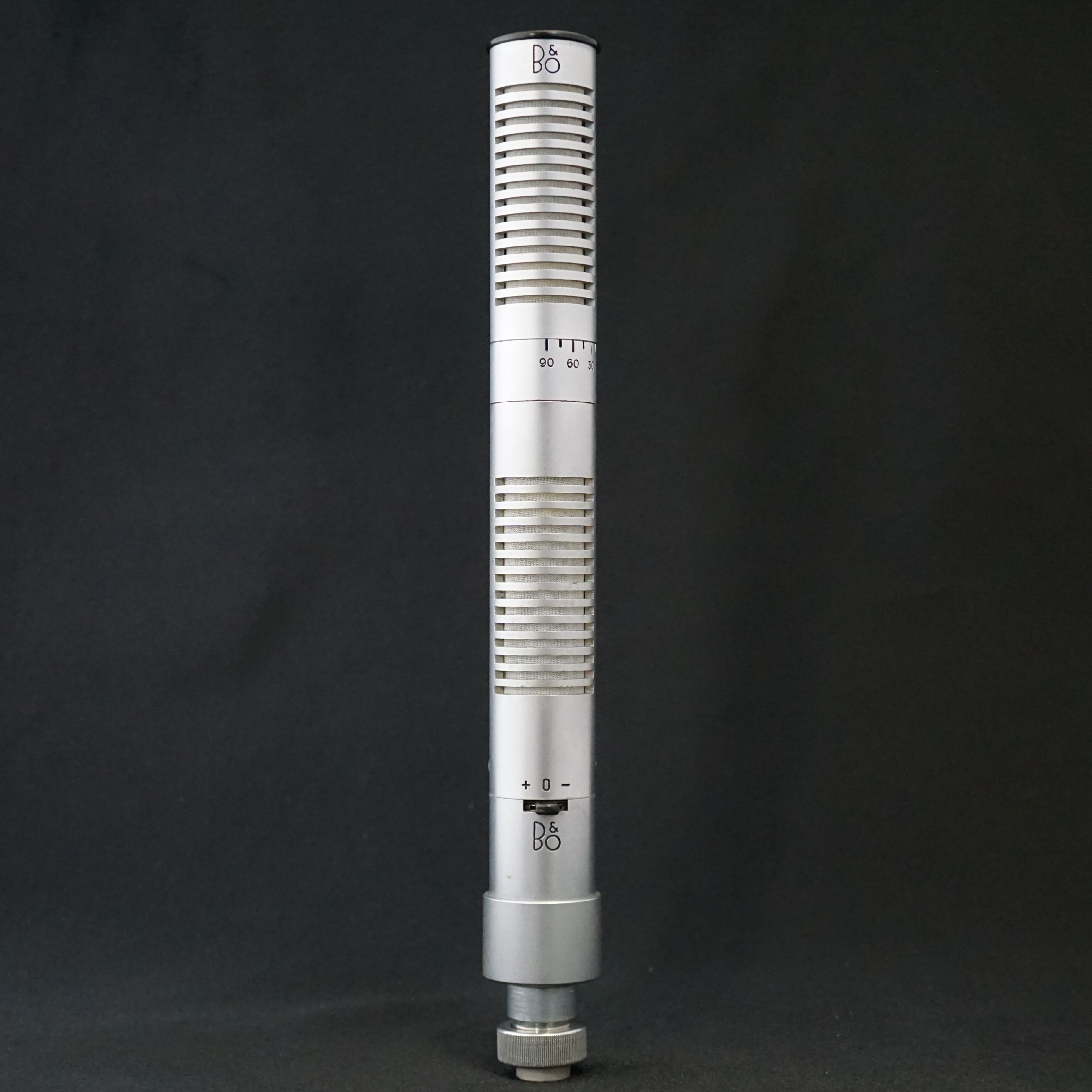
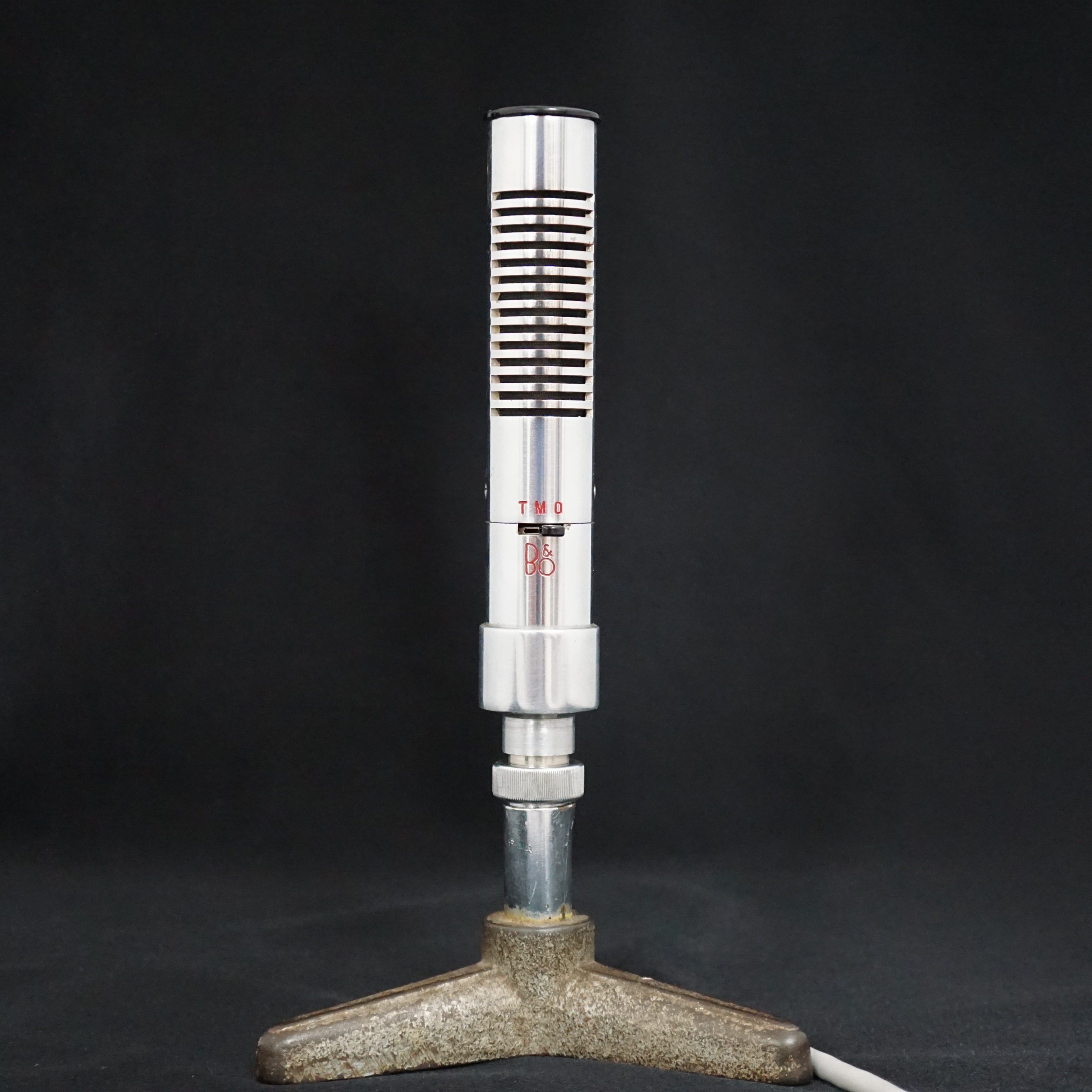
Bang & Olufsen BM4
Manufacturer:
Bang & OlufsenModel:
BM4Country of Manufacture:
DenmarkMicrophone Type:
RibbonPolar Pattern:
Figure 8Production Start Year:
1959Production End Year:
1964Rarity:
3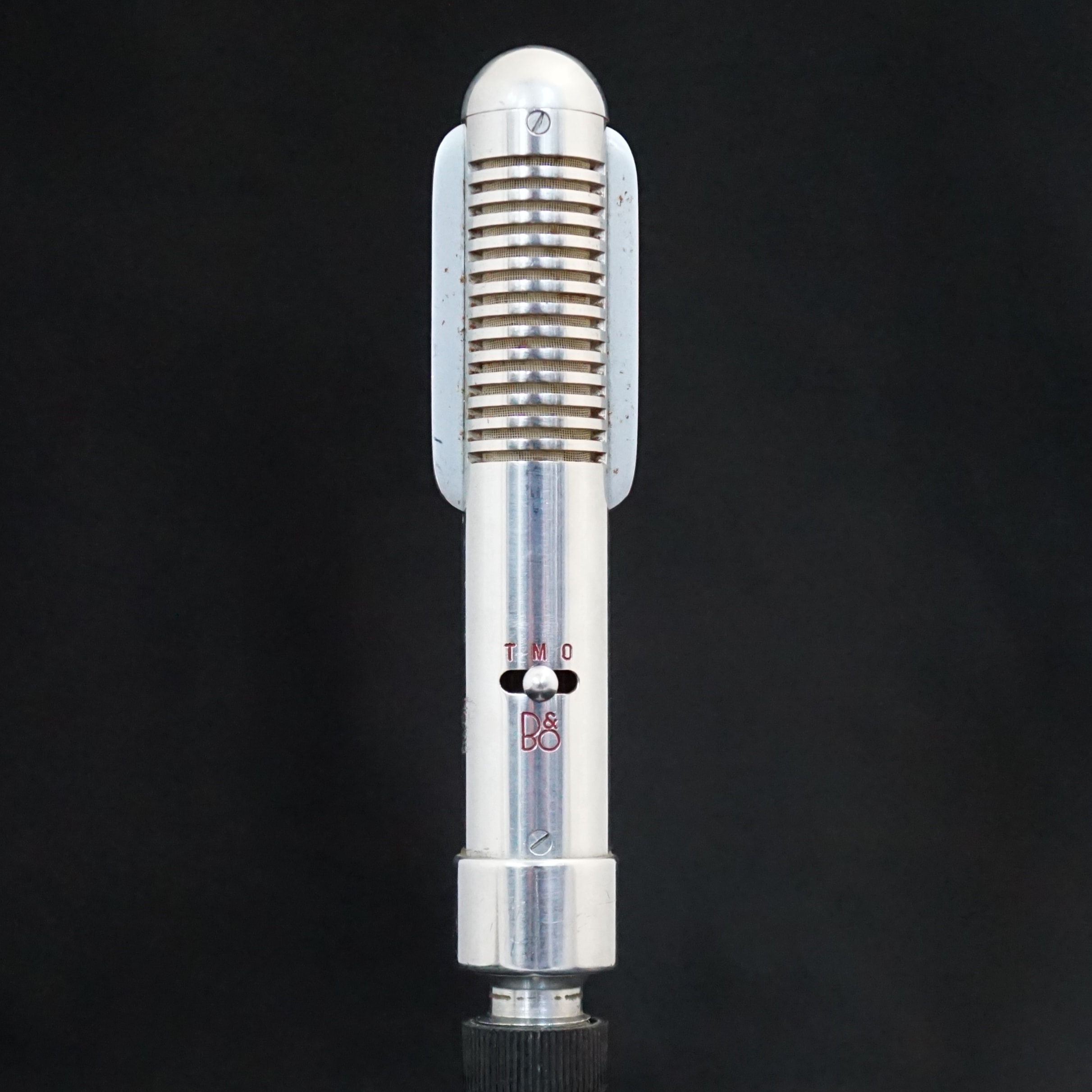
Microphone History:
From the Xaudia microphone blog:
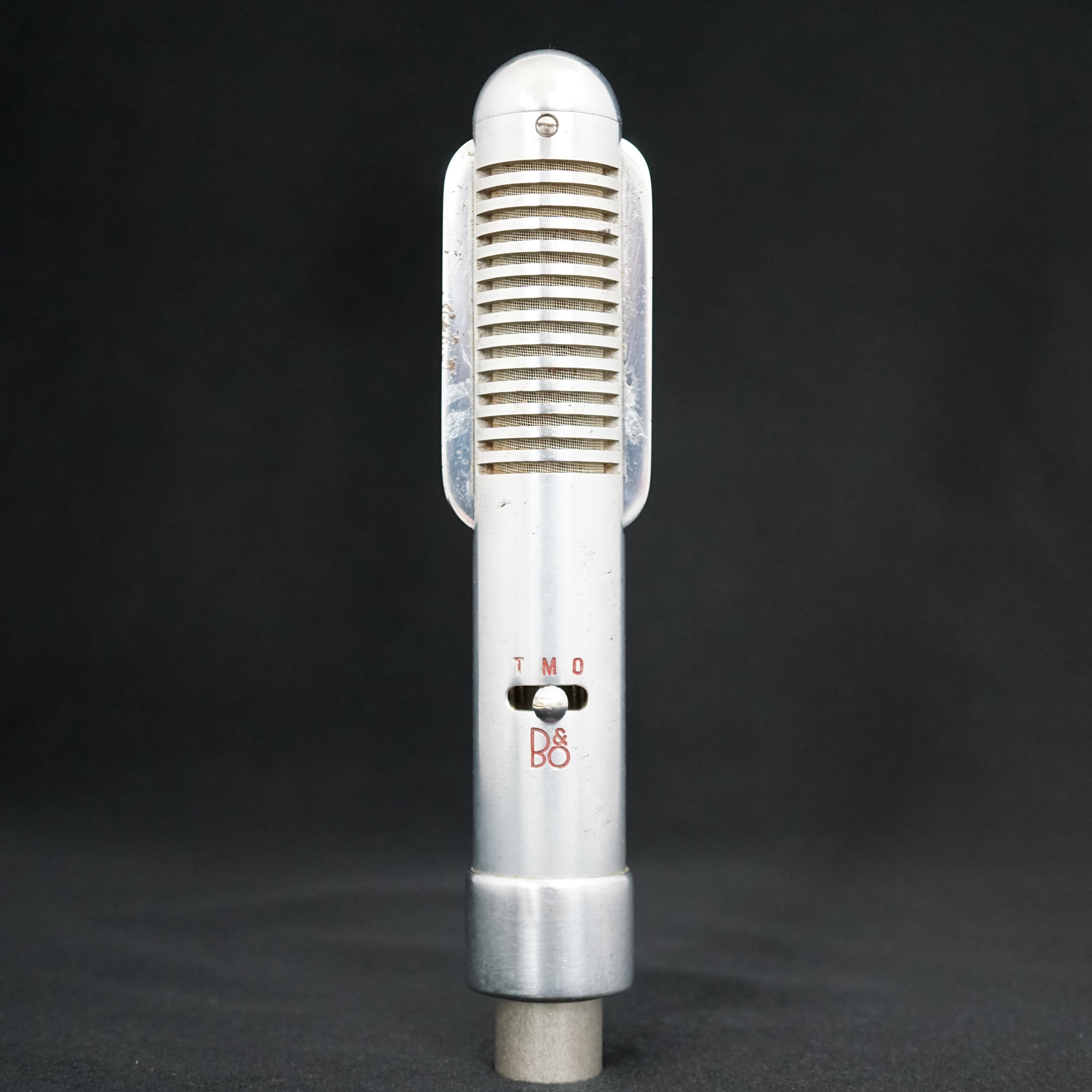
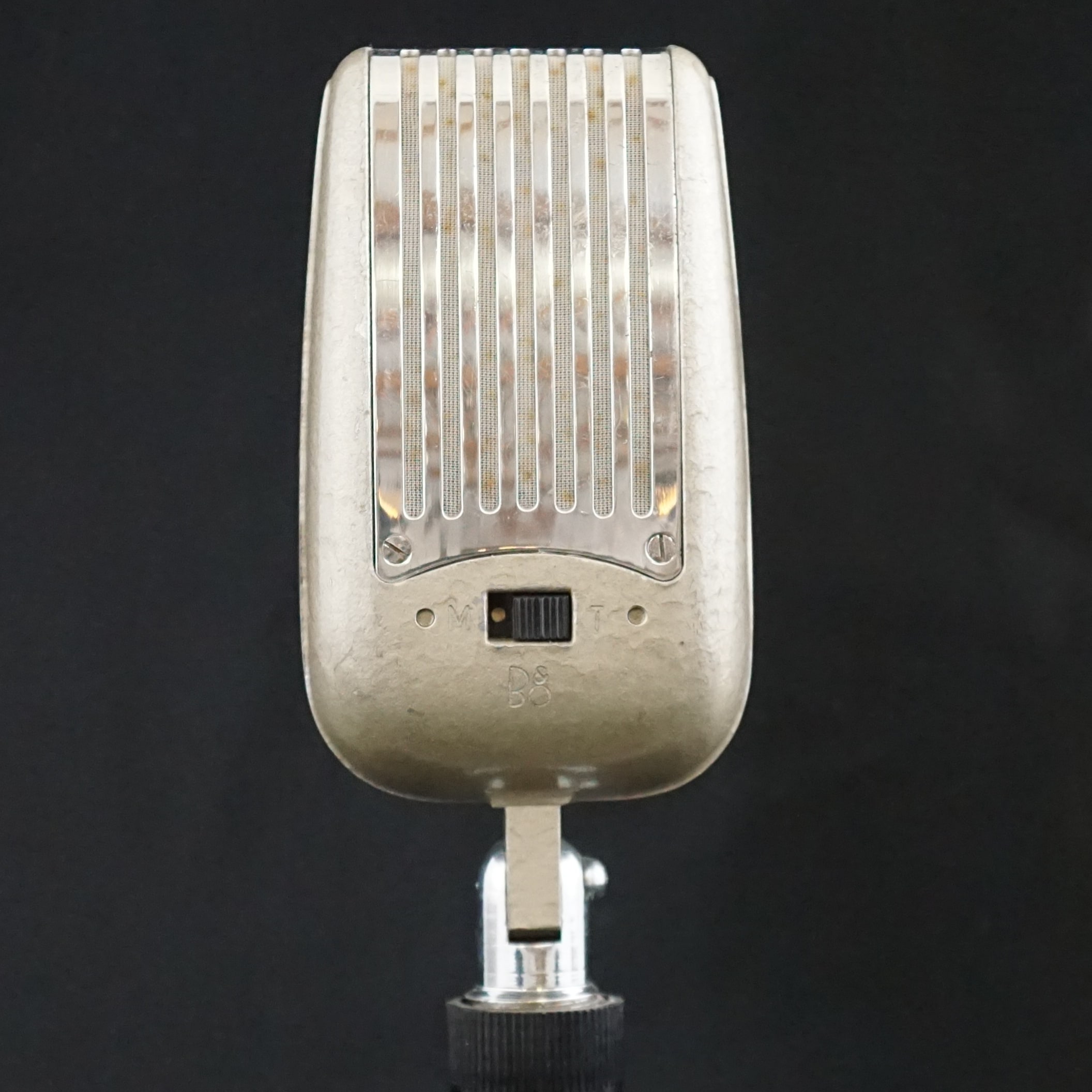
The BM3 and BM4 look very similar to one another, and used an evolution of the motor assembly in the BM2, this time in conjunction with a steel tube body. This design set the style for all their later ribbon mics, and also inspired Speiden and Royer microphones. In the case of the BM3, the ribbon motor frame is larger than the diameter of the tube and sticks out from the sides of the mic, giving it the look of a long face with ears, or perhaps Doctor Who's Cybermen. It has a three way selector switch which provides M (music - full range), T (talk - HPF) and 0 (off) positions.
The BM4 looks the same as the BM3, but with an additional switch at the rear for selecting 50, 250Ω, or high impedance output. The BM3s were fixed at 50Ω (and benefit from a matching transformer or upgrade). Occasionally you see these badged as "Fentone", although, oddly enough, they kept the B&O name on the mic too.
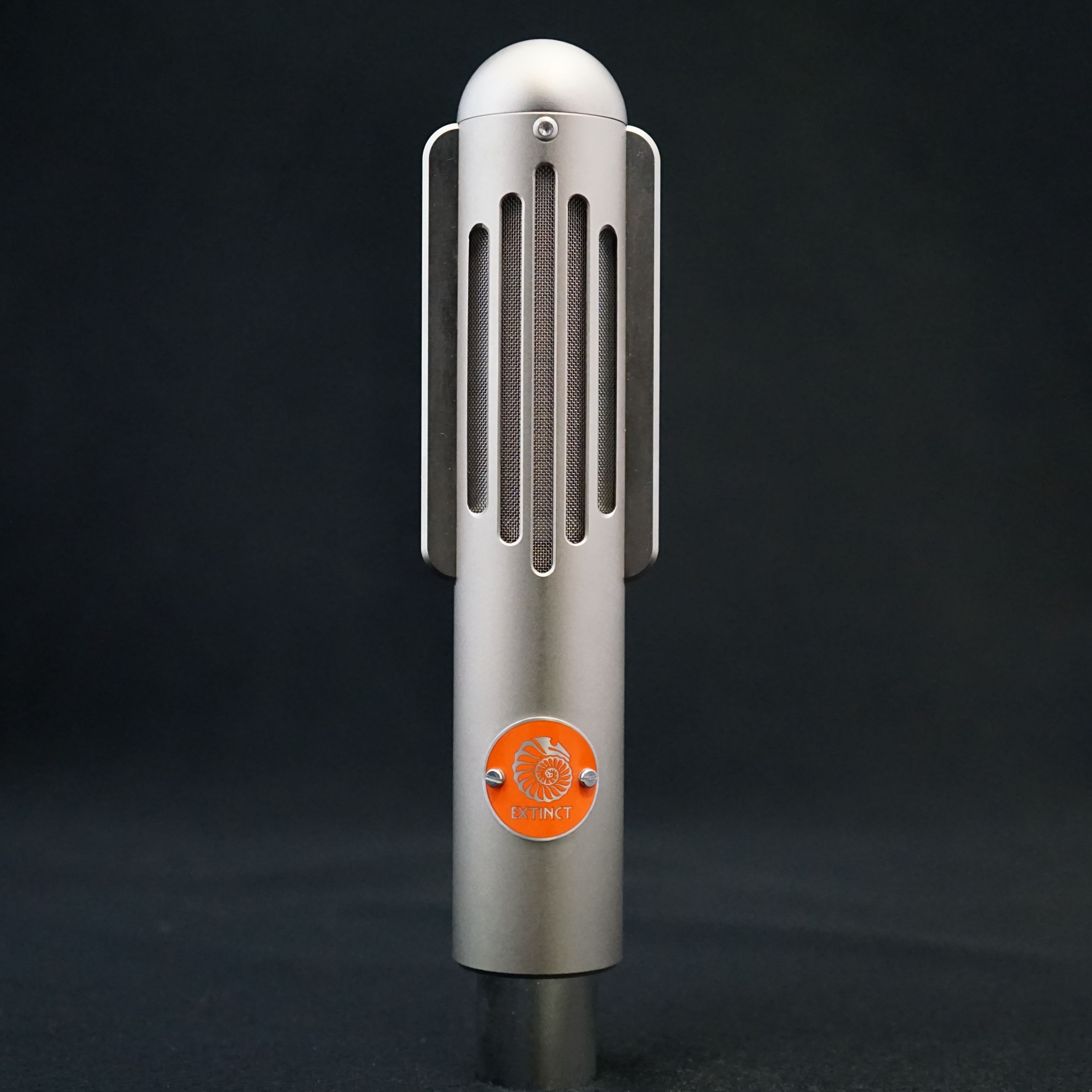
Our friends at Extinct Audio now manufacture the BM9 studio ribbon microphone, which shows the influence of the B&O designs.
About the BM4 at the BeoWorld website:
"Bang & Olufsen Beomic 3 (50 ohms) and Beomic 4 (multi- impedance) models were pressure-gradient full-bass microphones with a perfect figure-eight directional pattern.
Features: No resonance peaks. Extremely smooth response. Bi-directional – no side pickup. No frequency discrimination, front to back. High efficiency mu-metal transformer placed in microphone housing. Switch for muting and voice/music conditions. The miniature non-corrosive duralumin ribbon was only 0.0001″ thick and its weight only 1.3 mg. This negligible mass prevented any resonance within the audio range. Shock and blast proof. Ball swivel for tilting to any position."
MoMics note:
Although BeoWorld refers to these as 'Beomics', that term was not in use when the BM3 and BM4 were in production. The contemporary data sheets instead refer to them as Bandmikrofon, which means ribbon microphone in Danish. It therefore seems more likely that the BM models refers to Bandmikrofon rather than Beomic. Indeed, there is no BM8 but they did make an MD8, which is a dynamic microphone. The term Beomic appeared around 1971 when models 1000 and 2000 were launched.
Technical Description:
- Technical Specification:
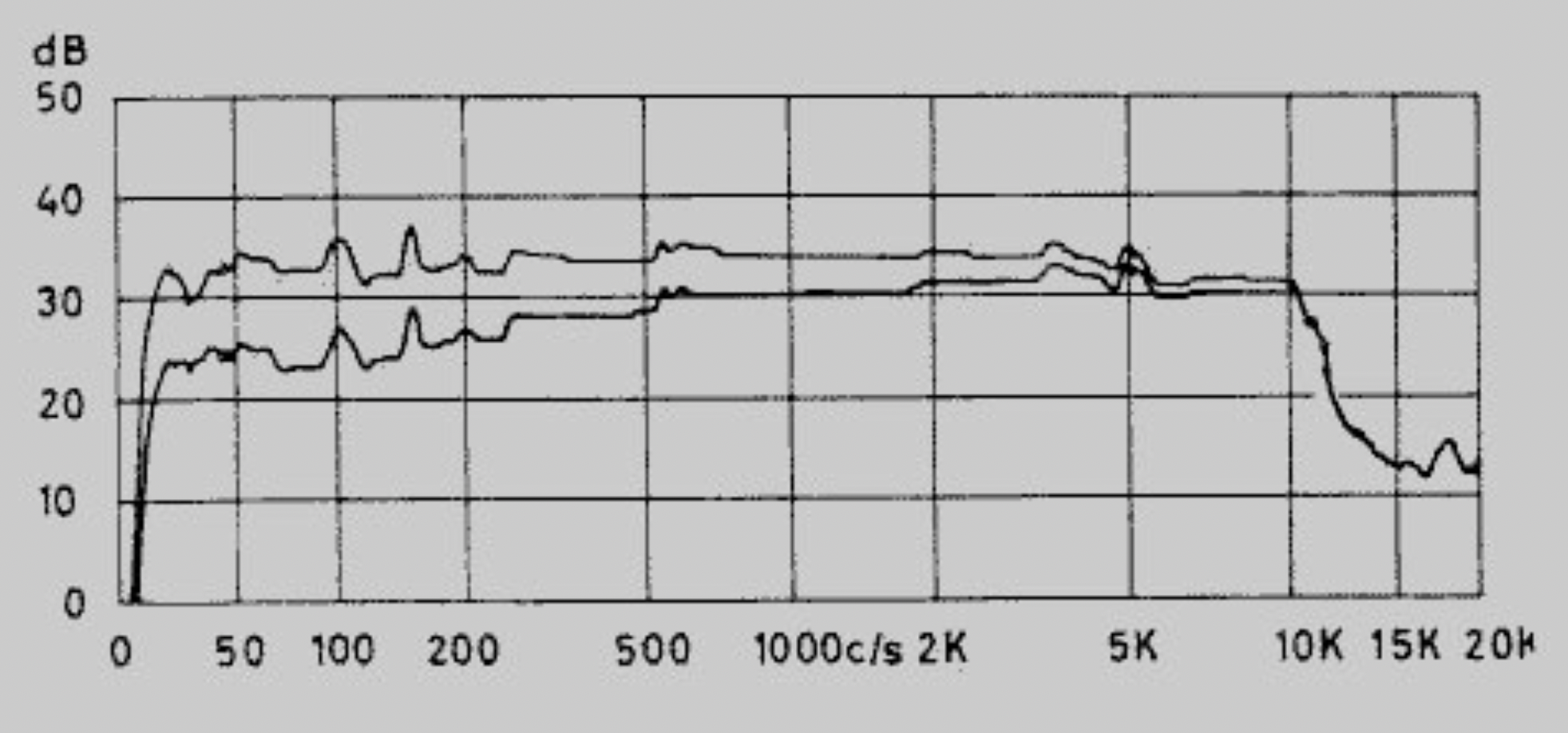
- Frequency Response
- M (Music) Position: 20 – 11,000 c/s (Hz) ± 2.5 dB
- T (Close Talk) Position (8–16 in): Rolled off below 100 c/s by approx. 10–12 dB
- Sensitivity (re. 1 V/µbar)
- M Position:
- 50 Ω: –88 dB
- 250 Ω: –81 dB
- 40 kΩ: –60 dB
- T Position: 4 dB lower than M position
- RTMA Ratings
- GM (Microphone Sensitivity): –158 dB
- GH (Hum Sensitivity): –145 dB
- RTMA Standard SE–105, BM 3
- Open-Circuit Voltage Level (OdB = 1 V/µbar)
- L Position: –88 dB
- M Position: –81 dB
- H Position: –60 dB
- Output Impedance (at 1000 c/s)
- L Position: Nominal 100 Ω; Rating 150 Ω
- M Position: Nominal 450 Ω
- H Position: Nominal 60 kΩ; Rating 40 kΩ
- Switchable Impedance Options:
- 50 Ω, 250 Ω, and 40 kΩ (balanced)
- Rating Impedance
- 150 Ω nominal
Frequency Response: