Beyerdynamic M160
Manufacturer:
BeyerdynamicModel:
M160Country of Manufacture:
GermanyMicrophone Type:
RibbonPolar Pattern:
HypercardioidProduction Start Year:
1957Rarity:
1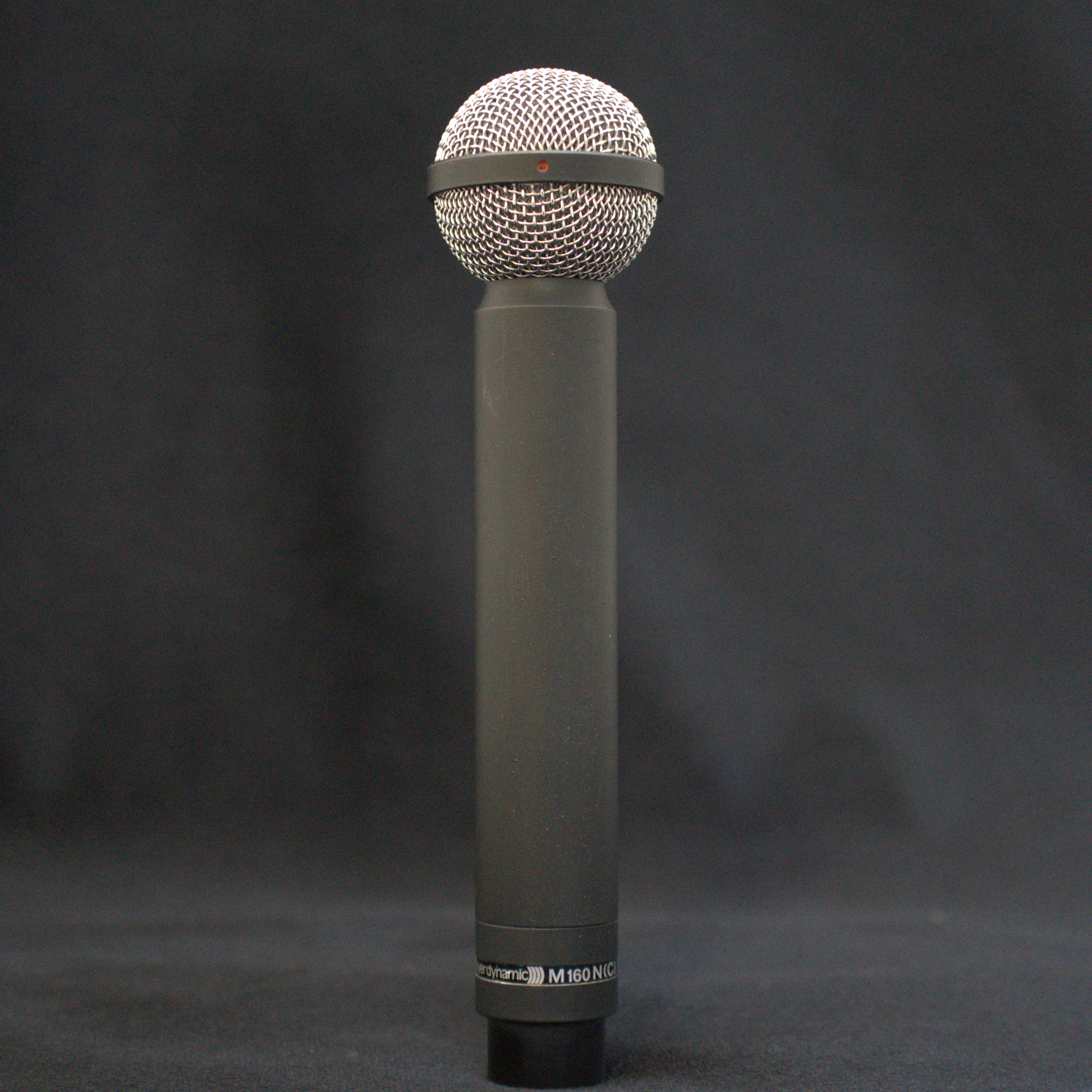
Audio Recordings:
Nylon string guitar recorded with a coincident pair of Beyer M160 ribbon microphones. (Carlo Domeniconi: Die Rose im Garten)
Multiple quality options available
Nylon string guitar recorded with a coincident pair of Beyer M160 ribbon microphones. (Sleepsafe by Slash Bikini)
Multiple quality options available
Microphone History:
From a nice article by Sam Inglis in Sound on Sound magazine:
"Introduced in 1957, the beyerdynamic M 160 ribbon microphone is the oldest product in the company’s current line‑up. When it was developed, it incorporated several technological breakthroughs that are still unique today. By stacking two short ribbons on top of each other, beyerdynamic were able to make the ribbon motor very small without sacrificing sensitivity. A unique corrugation process allowed the ribbons to move pistonically in response to vibration, while the addition of a plastic waveguide further increased sensitivity and improved the high‑frequency response. And by connecting the back of the ribbon motor to an acoustic labyrinth, beyerdynamic were able to modify its native figure‑8 polar pattern to give a hypercardioid response."
The M160 has had some famous users over the years. Eddie Kramer famously used M 160s for Jimi Hendrix's vocals and amps to reduce bleed. Andy Johns used them to capture John Bonham's massive drum sound on "When the Levee Breaks" by Led Zeppelin, and David Bowie used one for vocals for much of the Young Americans album.
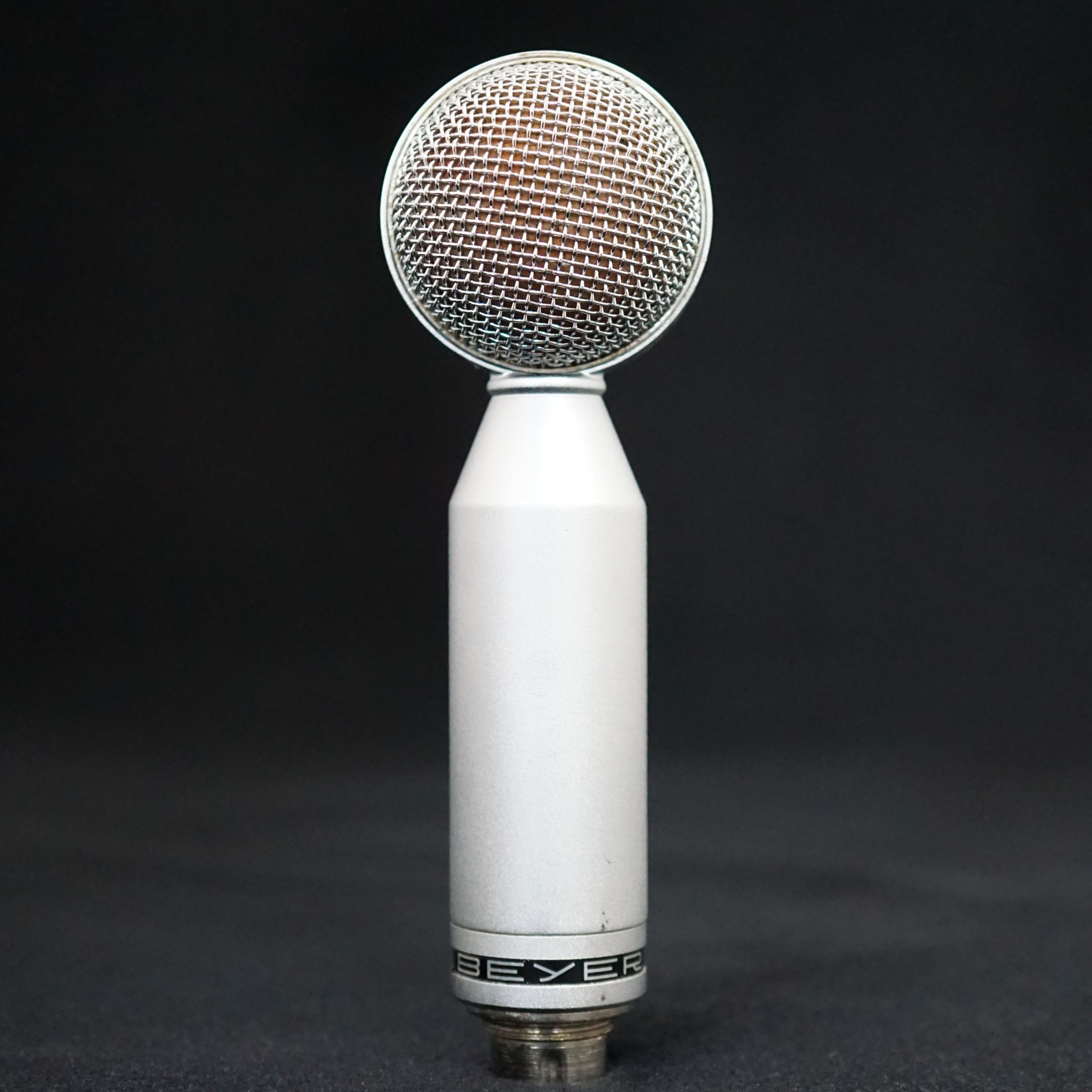
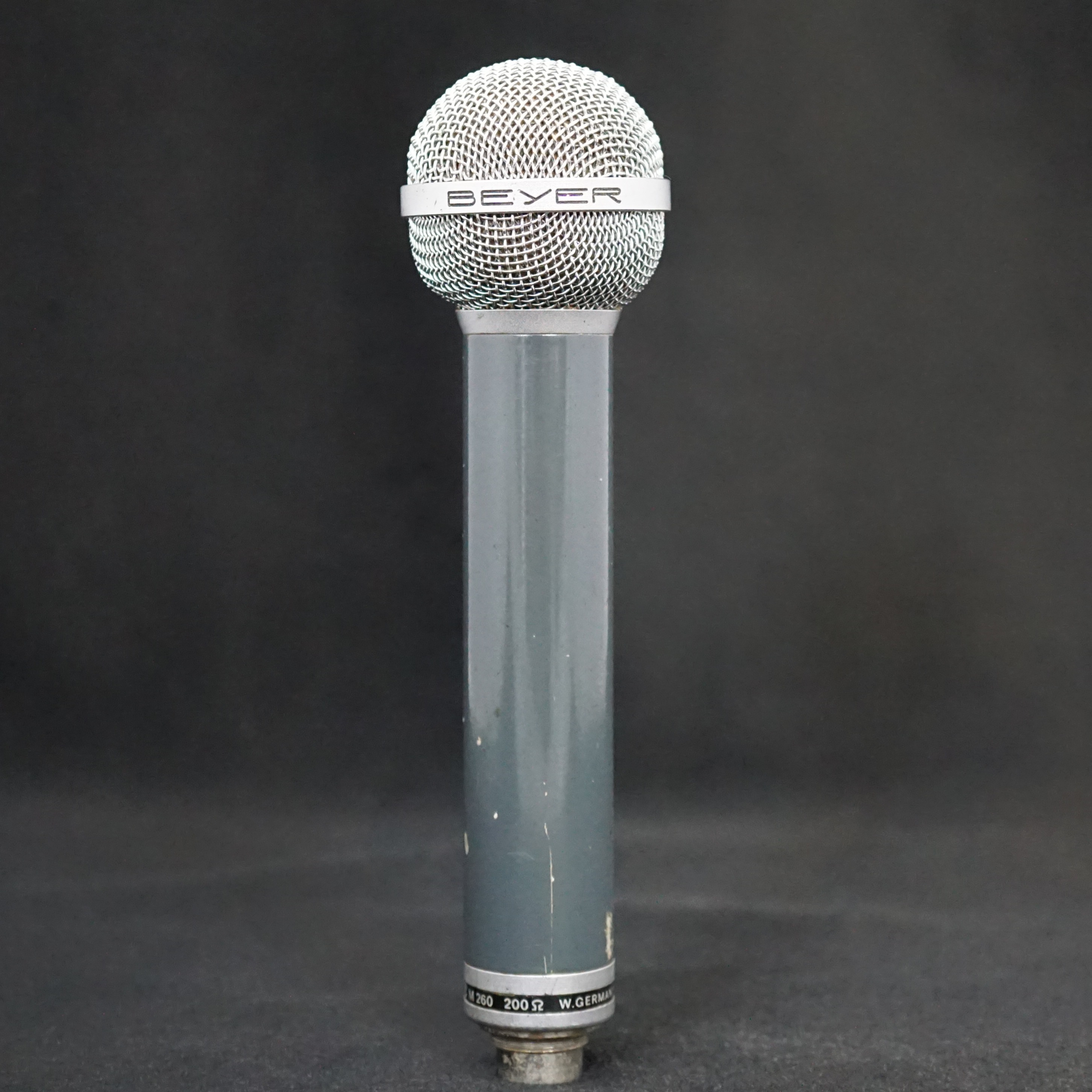
The M160 has evolved a little bit over the decades. Early versions had a silver finish with a DIN output socket. Later models were black with an XLR socket. Current production M160 microphones have two small neodymium magnets either side of the ribbon, whereas the older microphones used alnico magnets throughout.
Technical Description:
Transducer type: Dual dynamic ribbon
Operating principle: Pressure gradient.
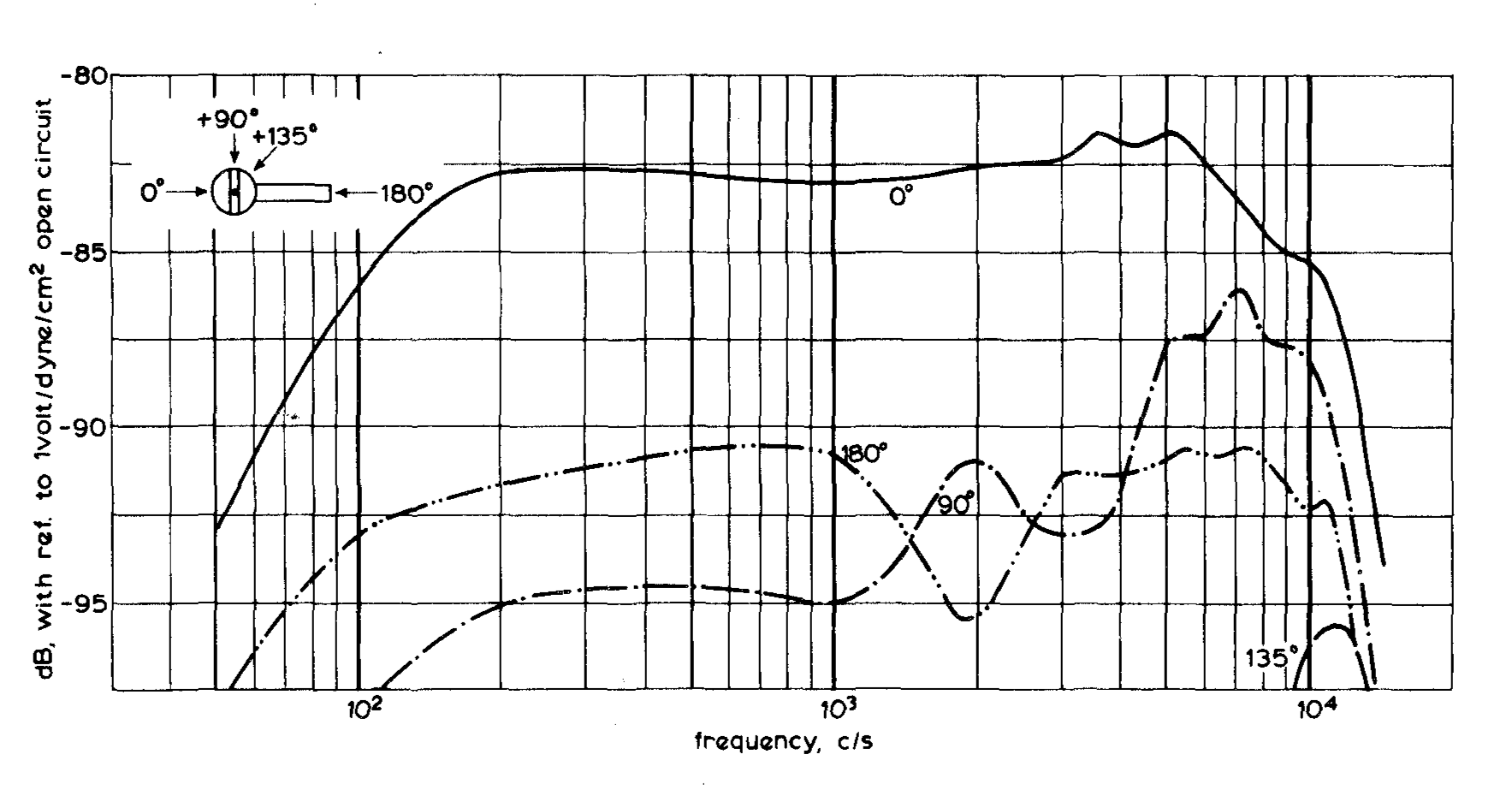
Frequency response: 40 - 18,000 Hz
Polar pattern: Hypercardioid
Side attenuation at 110° (1 kHz): > 25 dB
Open circuit voltage at 1 kHz: 1.0 mV/Pa
Output level: - 59 dBm (0 dBm ⧋ 1 mW/Pa)
Nominal output impedance: 200 ohms
Load impedance: ≥ 1000 ohms
Diaphragm: Pure aluminum
Case: Brass
Case finish: Shaft - matte black chromium plating. Top - chrome mesh
Frequency Response: