BBC Marconi Type B (8559A)
Manufacturer:
BBC MarconiModel:
Type B (8559A)Country of Manufacture:
United KingdomMicrophone Type:
RibbonPolar Pattern:
Figure 8Production Start Year:
1937Rarity:
4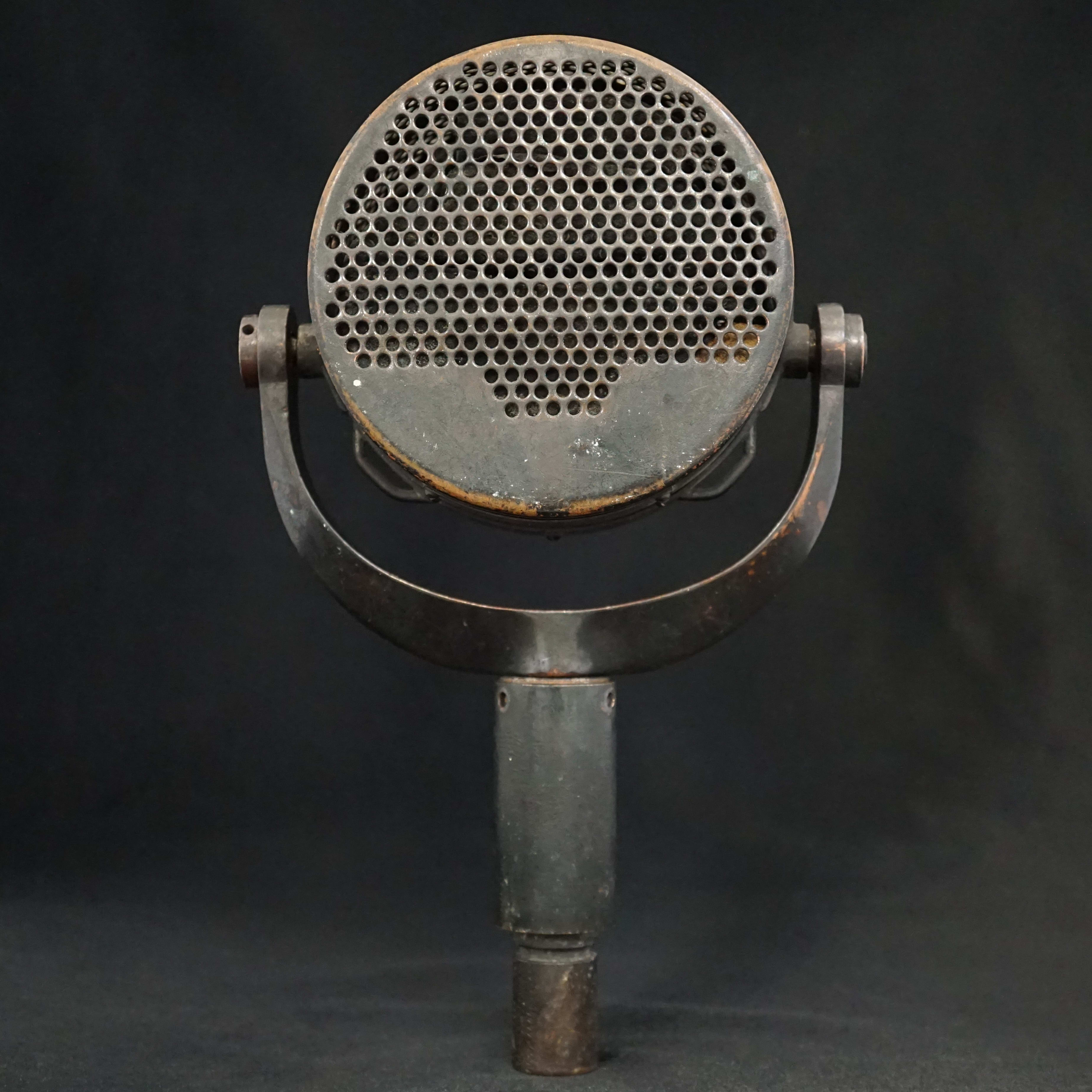
Audio Recordings:
Speech (male) recorded with a BBC-Marconi model B ribbon microphone.
Multiple quality options available
Nylon string guitar recorded with the BBC Marconi type B ribbon microphone. (mono)
Multiple quality options available
Stereo recording of a nylon string guitar recorded with an XY pair of BBC Marconi type B ribbon microphones. (Birds Flew Over the Spire, composed by Gary Ryan)
Multiple quality options available
Microphone History:
The BBC-Marconi Type B ribbon microphone was introduced in 1937 as a more compact alternative to the earlier Type A series (AX, AXB, AXBT), which had been produced from around 1935. Its development was made possible by the use of Alnico alloy magnets, which allowed for a smaller circular magnet to replace the bulkier horseshoe magnet of its predecessors.
The microphone became widely used by the BBC, especially for outside broadcasts and sports commentary. Its lightweight cylindrical body made it suitable for mounting on a breastplate worn by a commentator, keeping the microphone oriented towards the speaker even as they turned their head. While this setup had limitations with users, it directly influenced the development of the L1 lip microphone later that same year. The breastplate concept continued to be used in a modified form, with a harness to support the L1, allowing for hands-free operation.
Technical Description:
Despite being commonly referred to as the BBC-Marconi Type B, the microphone's nameplate is stamped with the serial number p.s. 8559A. It shares its motor assembly design with the earlier Type A models, without the ribbon tension adjustment mechanism and making use of a more compact magnet assembly, made possible by the use of alnico alloy magnets.
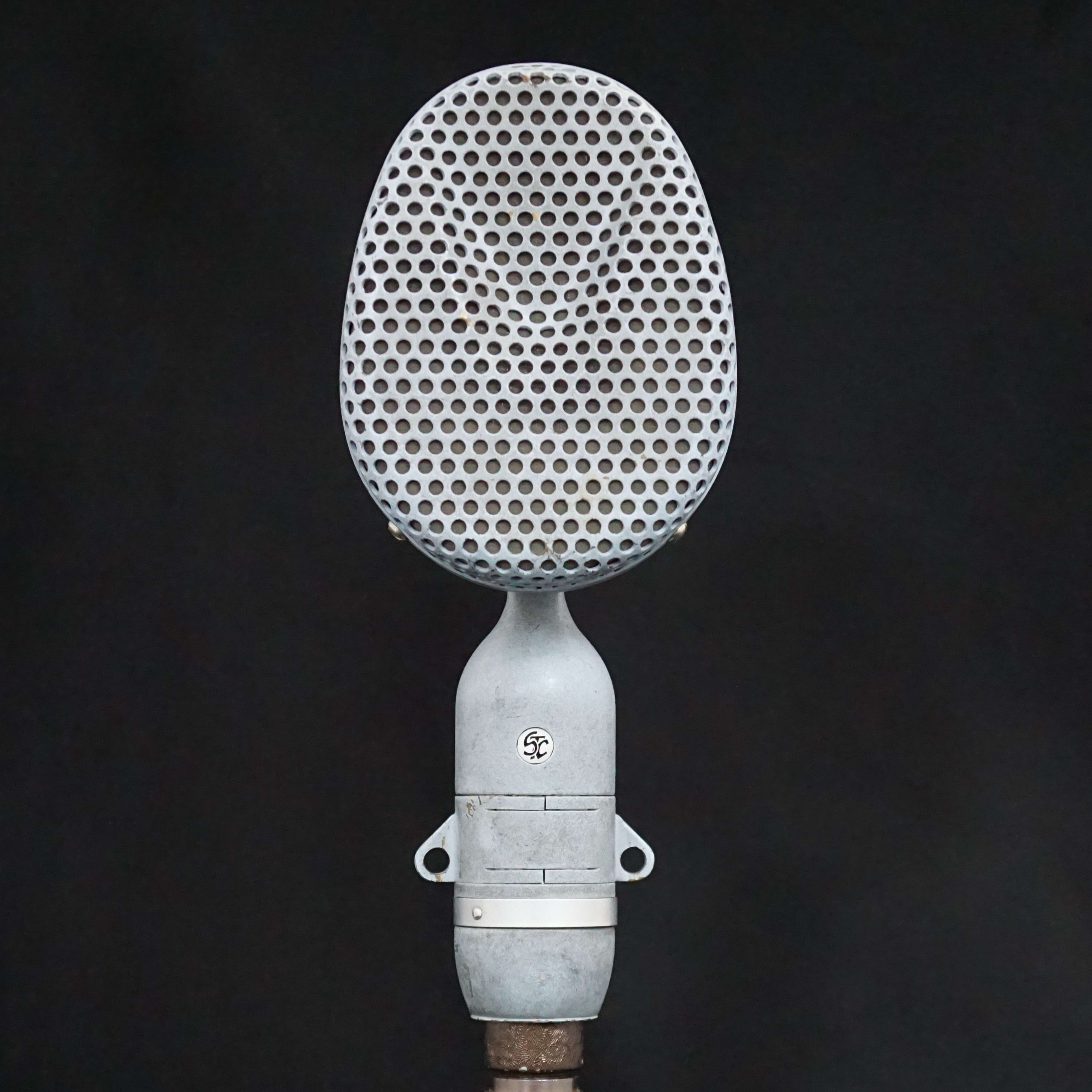
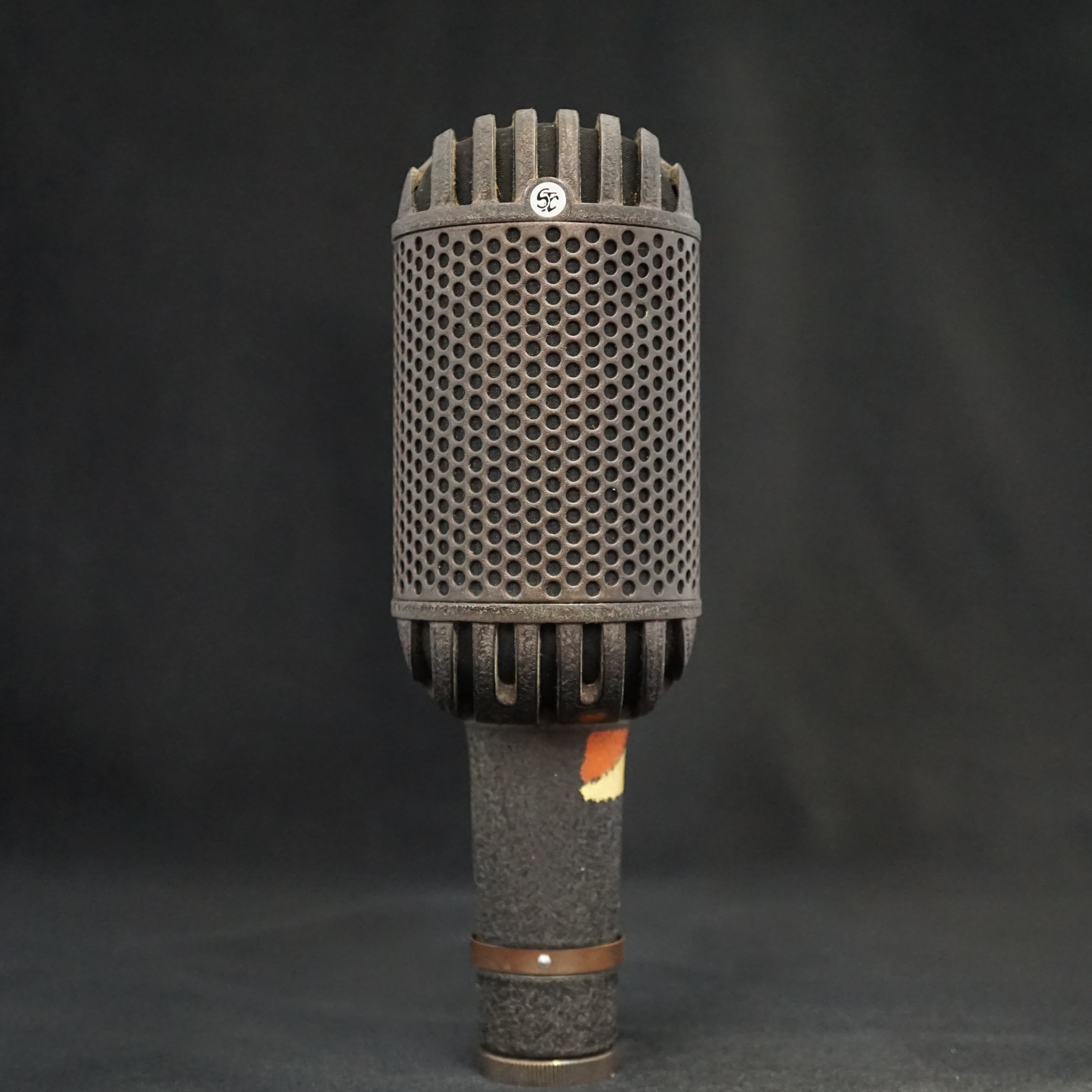
The microphone features a cylindrical metal body with an external grille and two additional internal windshields, offering protection from wind and dirt. The smaller magnet, made from Alnico alloy, enabled reduced housing size compared to the earlier Type A models. The ribbon element and magnet assembly are supported internally by foam rubber mounts, providing both stability and vibration isolation.
At the base of the back of the microphone, there is a distinctive square bulge that houses the transformer. Electrical connections are made via three screw terminals located at the rear.
According to the BBC, the output impedance is approximately 300 ohms, which is in accordance with the examples we have seen here.
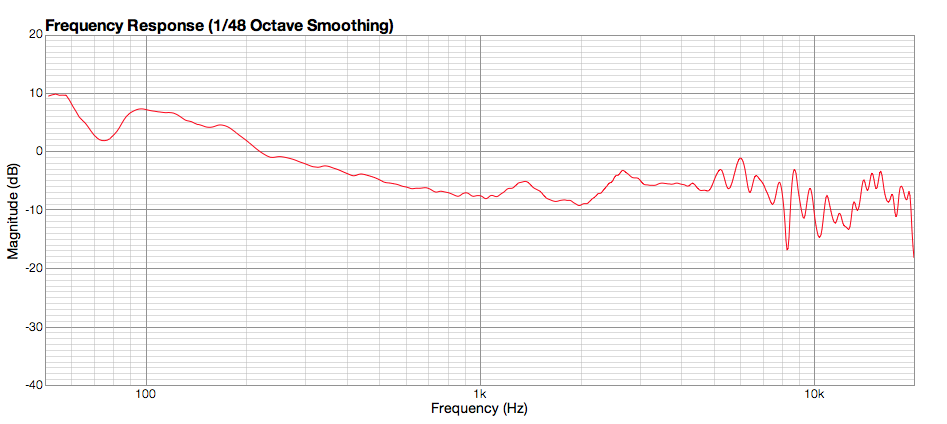
Frequency Response:
Impulse Response File:
Impulse Response file of the BBC Marconi type B ribbon microphone.
BBC_B_IR.aiff
Further Reading:
The attached BBC technical report includes the following:
- Description of preliminary work and experiments
- Documentation of the design requirements
- Design of prototype and production model
- Technical drawing of the developed magnet system
- Frequency and polar response graphs
Marco has written about the Marconi Type B at Vintage Microphone World