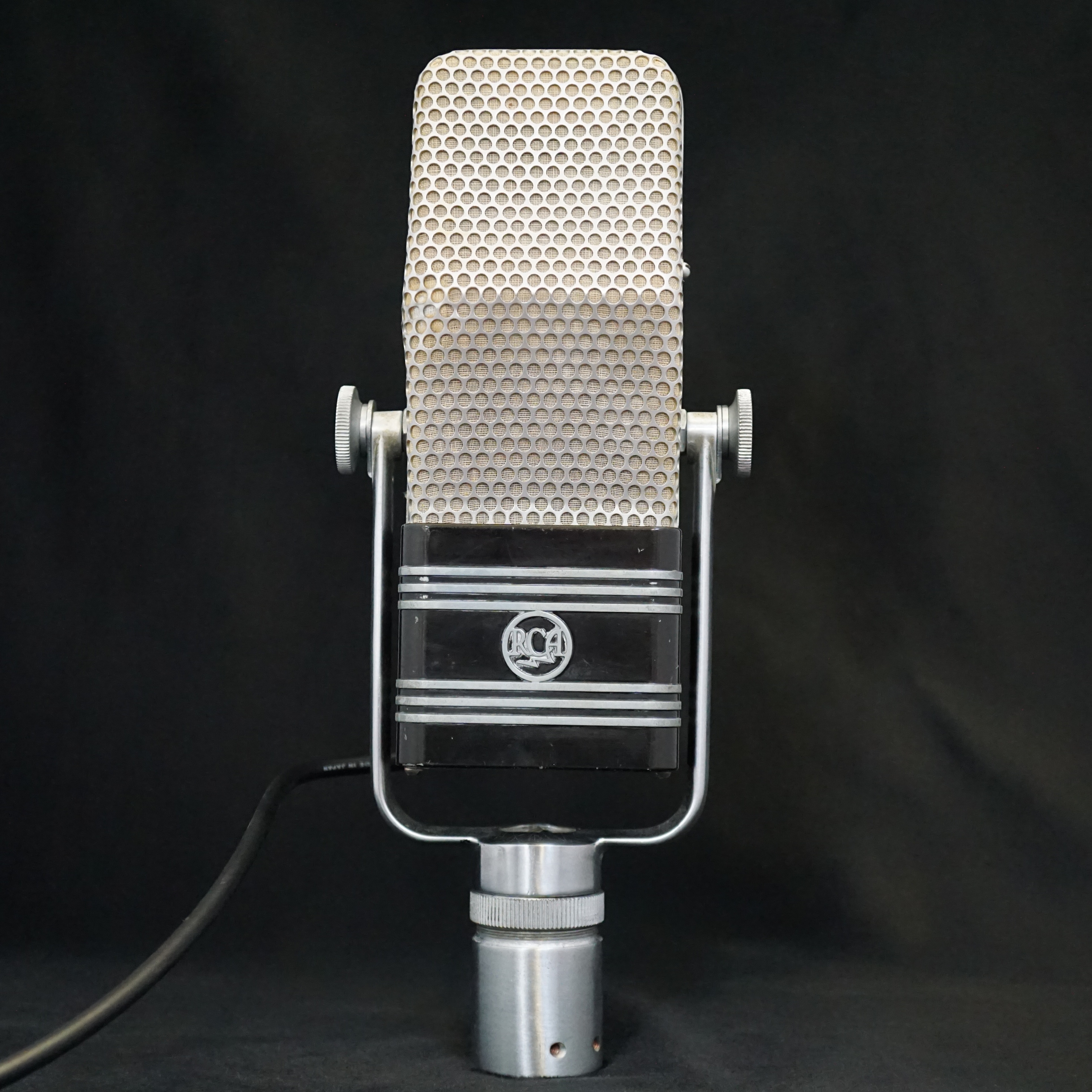
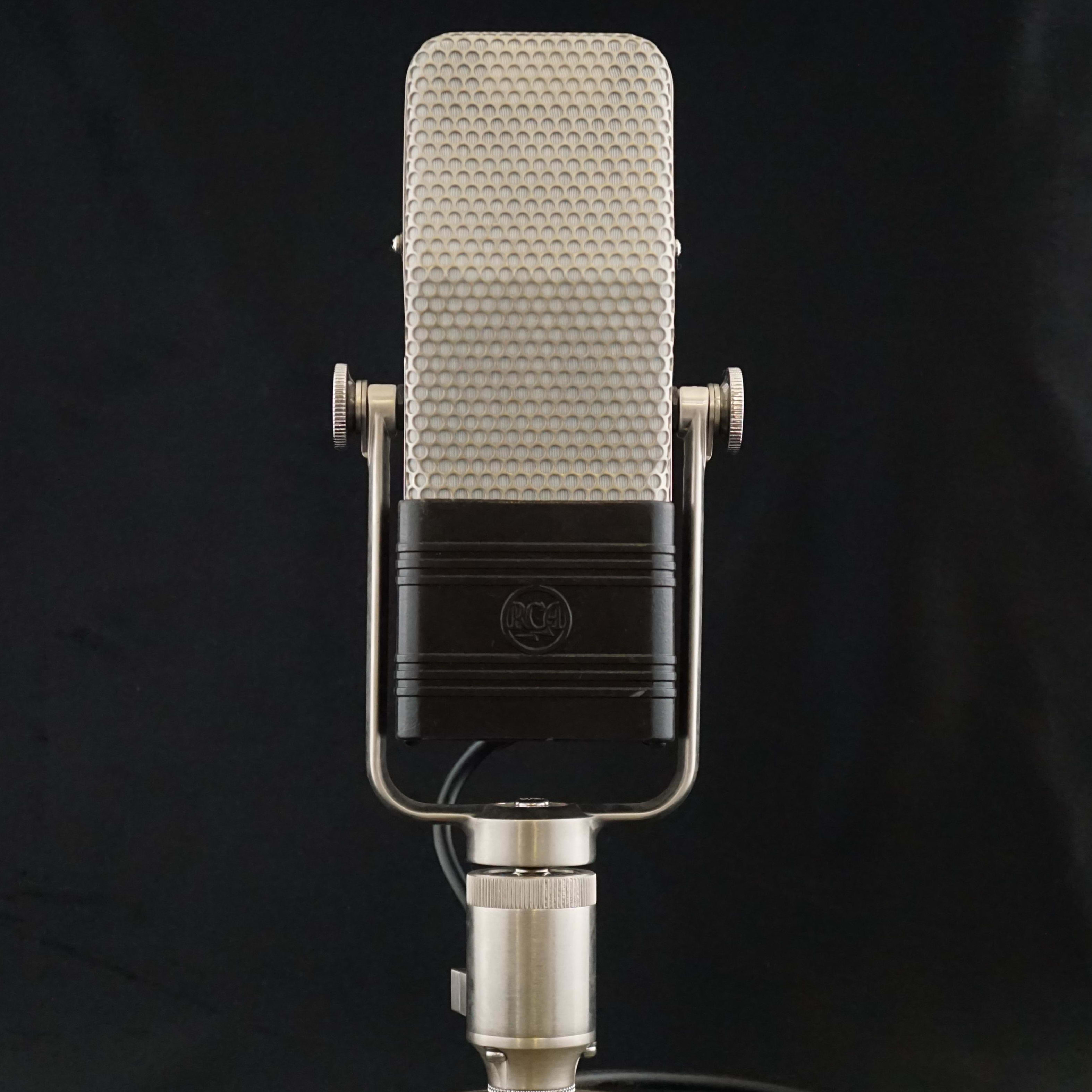
Melodium 42B
Manufacturer:
MelodiumModel:
42BCountry of Manufacture:
FranceMicrophone Type:
RibbonPolar Pattern:
Figure 8Production Start Year:
1940Production End Year:
1960Rarity:
3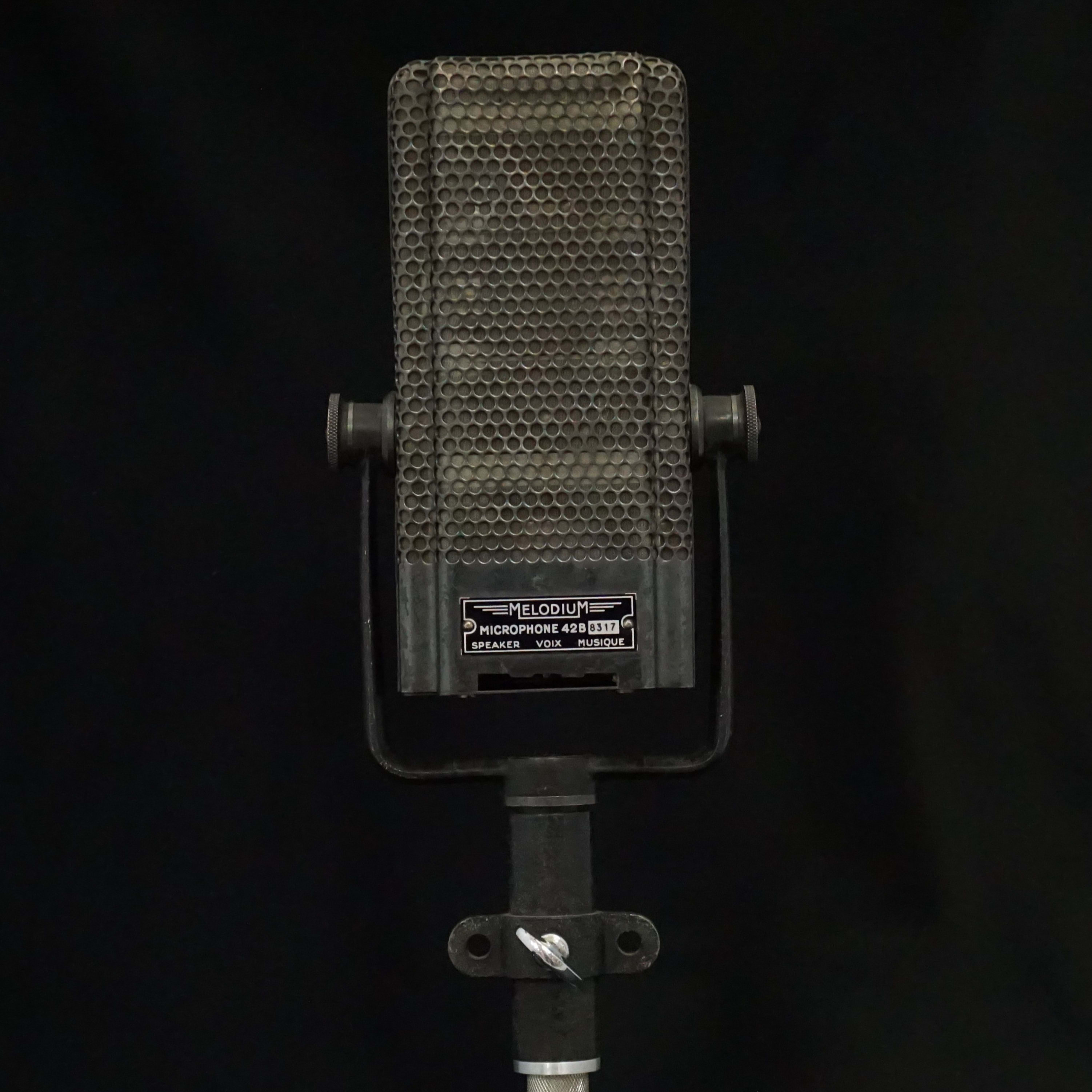
Audio Recording:
Nylon string guitar recorded with a Blumlein pair of Melodium 42B ribbon microphones in 'Musique' position.
Multiple quality options available
Microphone History:
Originally developed by Émile Furn and Charles Boutelleau.
From the 1954 Melodium catalog (translated)
MELODIUM Ribbon Microphone Type 42B with Built-in Locking Plug
The 42B MELODIUM ribbon microphone is a bidirectional doublet velocity or pressure gradient microphone, with both sides of the ribbon exposed to the sound waves. It consists of a flat perforated brass housing decorated with oxidized silver.
The motor consists of a very light and virtually inertialess embossed duralumin ribbon, approximately 2 microns thick, with both sides free. This ribbon moves freely under the action of sound waves between the poles of an extremely powerful magnet developing a field of approximately 10,000 gauss in the air gap. Its movement is dependent on the magnetic field. The 42 B MELODIUM microphone, which is based solely on the pressure difference exerted by the air on its opposite faces, creates, at its ends, an electromotive force proportional to the speed of movement. The specially designed damping guarantees, at all frequencies, a constant vibration speed for the same energy of the incident wave. As a result, the response curve is practically linear (±2 dB from 30 to 15,000 Hz), regardless of the angle of incidence relative to the ribbon.
This construction makes the 42B MELODIUM microphone a high-quality device with no cavity effect or diaphragm. Sound waves directed in the plane of the ribbon have no effect on it, resulting in a bidirectional microphone pattern. This particularity largely eliminates the feedback effect by orienting the plane of the ribbon in the direction of the disturbing source. Inside the housing, a balanced and shielded transformer raises the ribbon's output impedance to 50 ohms.
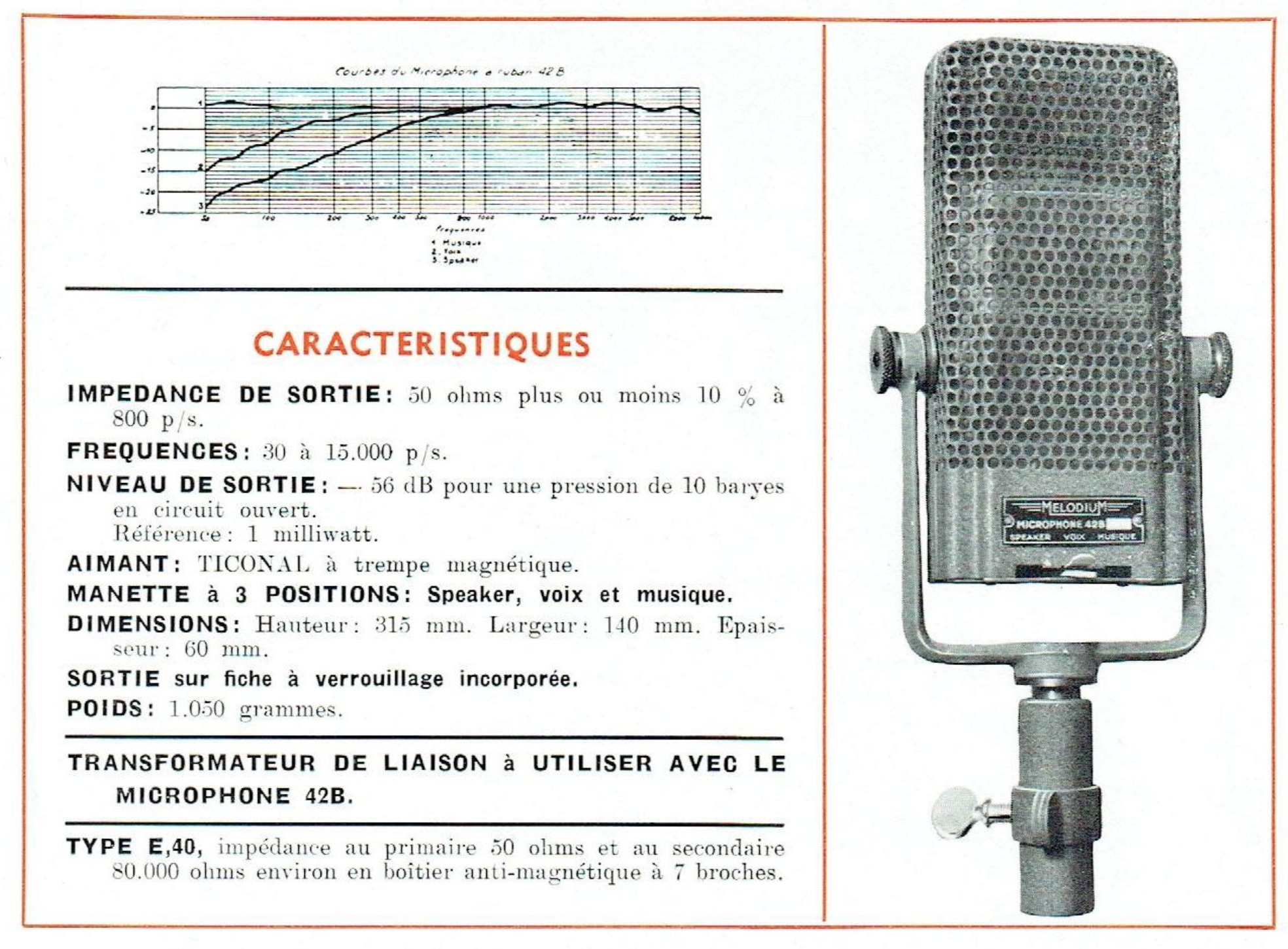
A three-position switch controls the sensitivity to low frequencies without changing the level. The "speaker" position is used for sound close to the microphone, the "voice" position for speech at a distance of about one meter, and the "music" position when the sound source is more than one meter from the microphone.
The assembly is mounted on a horizontally adjustable bracket, while the microphone body is vertically adjustable. The bracket has a smooth support at its base, which can be adapted (on request), allowing the use of a floor stand. The 42B MELODIUM ribbon microphone is particularly recommended for all high-quality indoor sound recordings, studio recordings and loudspeaker acoustic measurements. Its response curve is by far the most perfect and straightest of all microphone types.
Technical Description:
Manufacturer Specifications:
- Output Impedance 50 ohms +/- 10% at
- Frequency Responce: 30 Hz - 15,000 Hz
- Sensitivity: -56 dB (at a pressure of 10 bars, output 50 ohms, open circuit reference of 1 mW)
- Magnet: TICONAL with magnetic hardening.
- 3-Position Switch: Speaker, voice, and music.
- Dimension: Height: 315 mm. Width: 140 mm. Thickness: 60 mm.
- Output on a built-in locking plug.
- Weight: 1,050 grams.
Technical Description:
The 42b has a three-position switch on the front which is used to select "Speaker", "Voix", and "Musique" modes. In the first two positions an inductor is switched in parallel with the output transformer which causes the lower frequencies to be rolled off.
Over the many years the Melodium 42b was produced, the design was adapted with changes including:
- Changes in the grill, with the holes becoming larger, and a solid unperforated band appearing across the bottom of the microphone (see comparison photo)
- Later microphones have a three pin connector at the rear, whist early models are hard-wired.
- Earlier models have U-shaped magnets above and below, whereas the later microphones have four block magnets, arranged in pairs and connected by metal plates to complete the magnetic circuit.
For a more detailed account of the design changes seen in various iteraltions of the Melodium 42B, please follow the link to the Xaudia blog.
Frequency Response:
Further Reading:
The original Melodium brochure is available to download from Professor Stan Coutant's excellent website.
https://www.doctsf.com/melodium/m3484
A good description of the 42B and its variations at the Xaudia blog.