Bang & Olufsen BM6
Manufacturer:
Bang & OlufsenModel:
BM6Country of Manufacture:
DenmarkMicrophone Type:
RibbonPolar Pattern:
Figure 8Production Start Year:
1965Production End Year:
1973Rarity:
2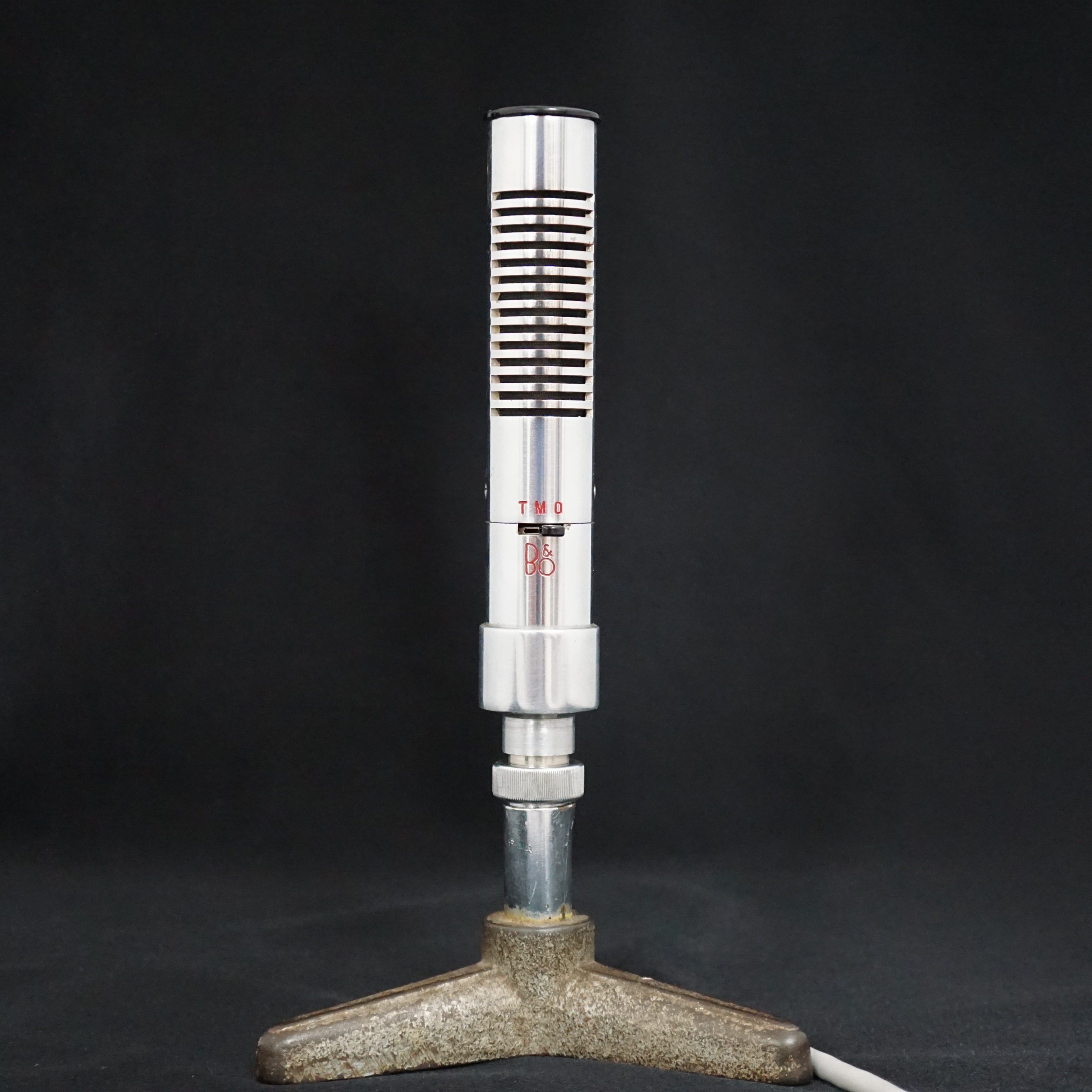
Microphone History:
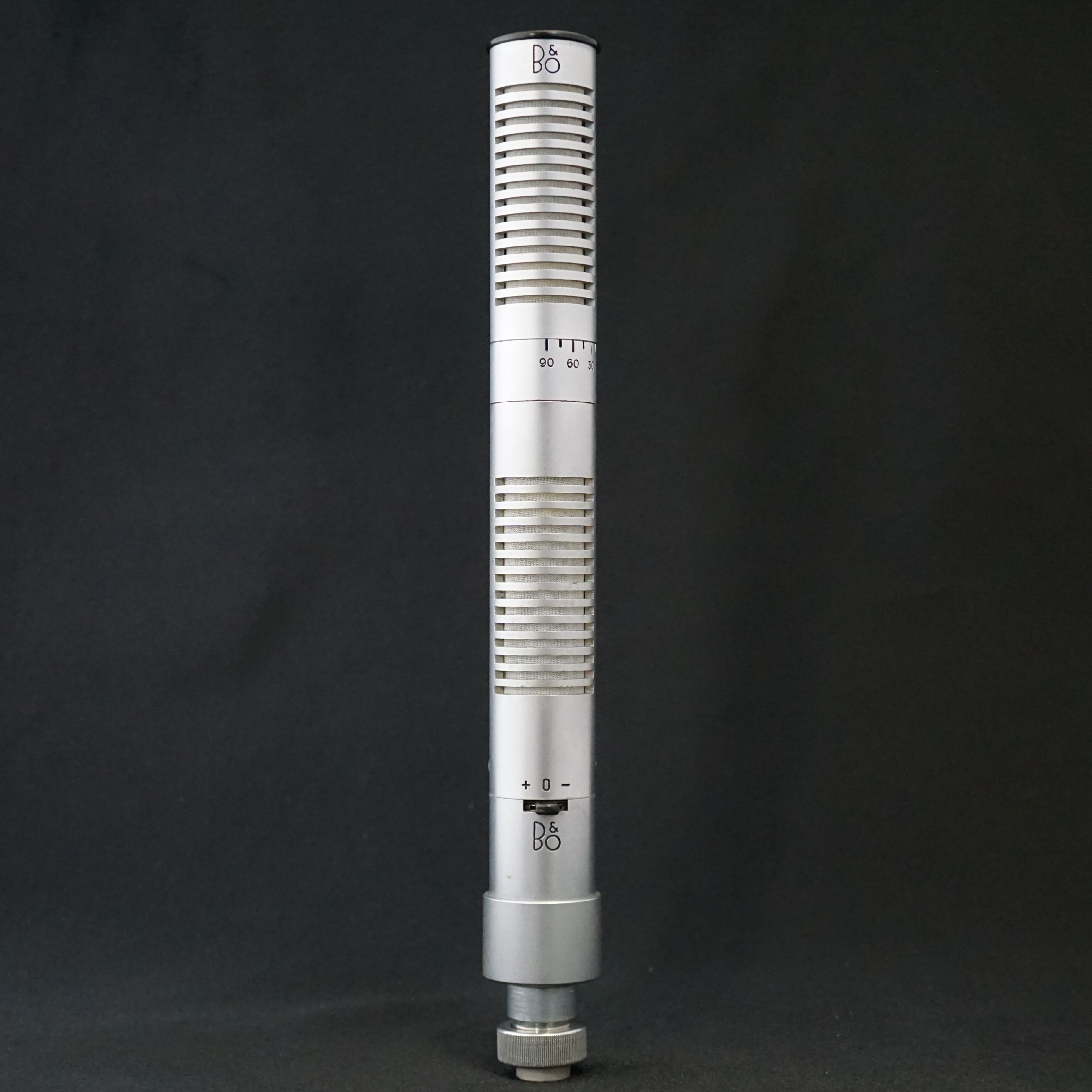
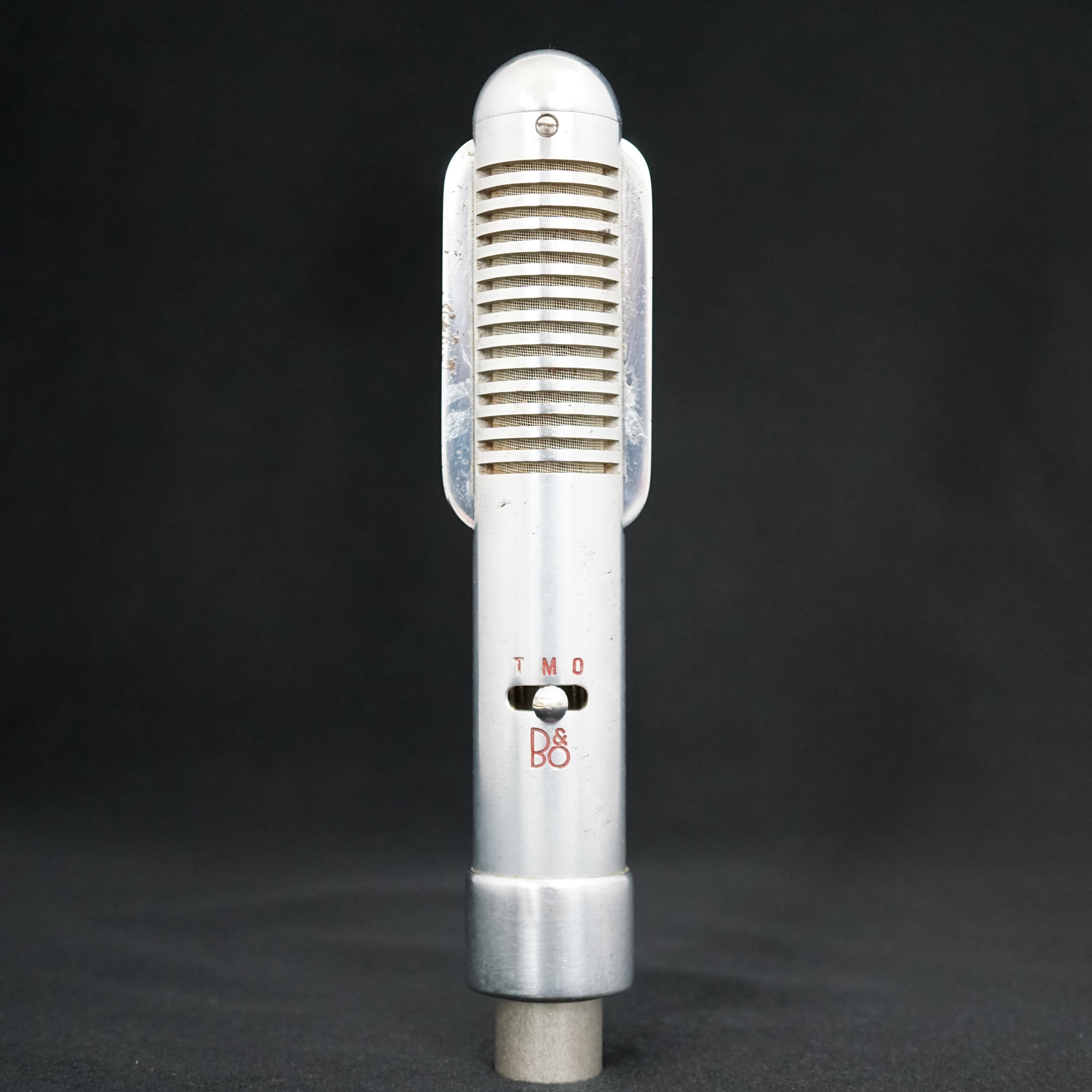
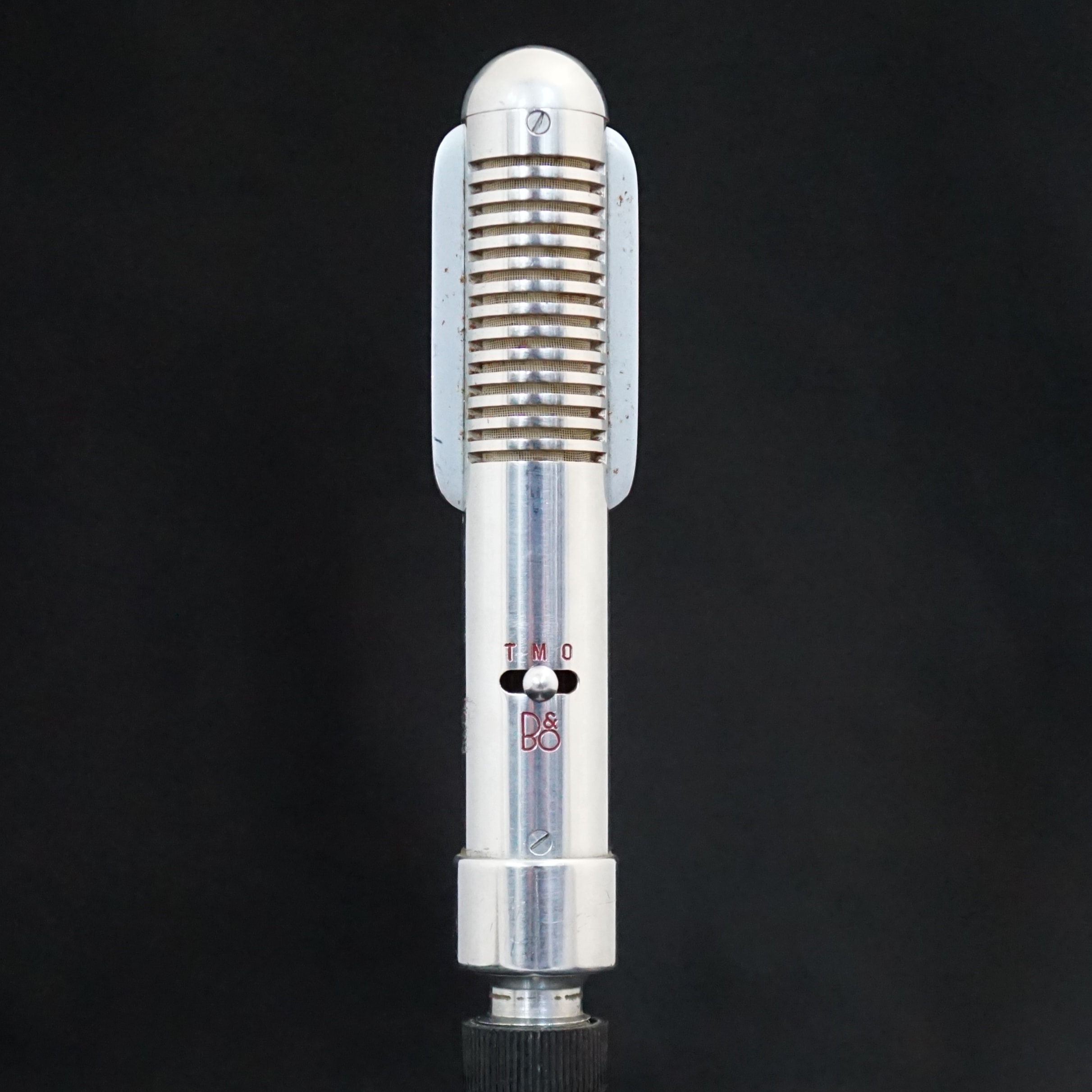
The B&O BM6 model was originally launched as part of the SM5/ BM5 stereo microphone. The lower and upper halves of the stereo set can be separated and were available to buy separately, with the lower microphone named the BM6 and the upper half being the BM7. The BM6 works alone as a mono microphone and owners could later upgrade to stereo by purchasing the BM7. Some examples were plated with a bright chrome finish with red lettering, whilst others had a matte nickel finish and black script.
Technical Description:
Response Frequency Characteristic:
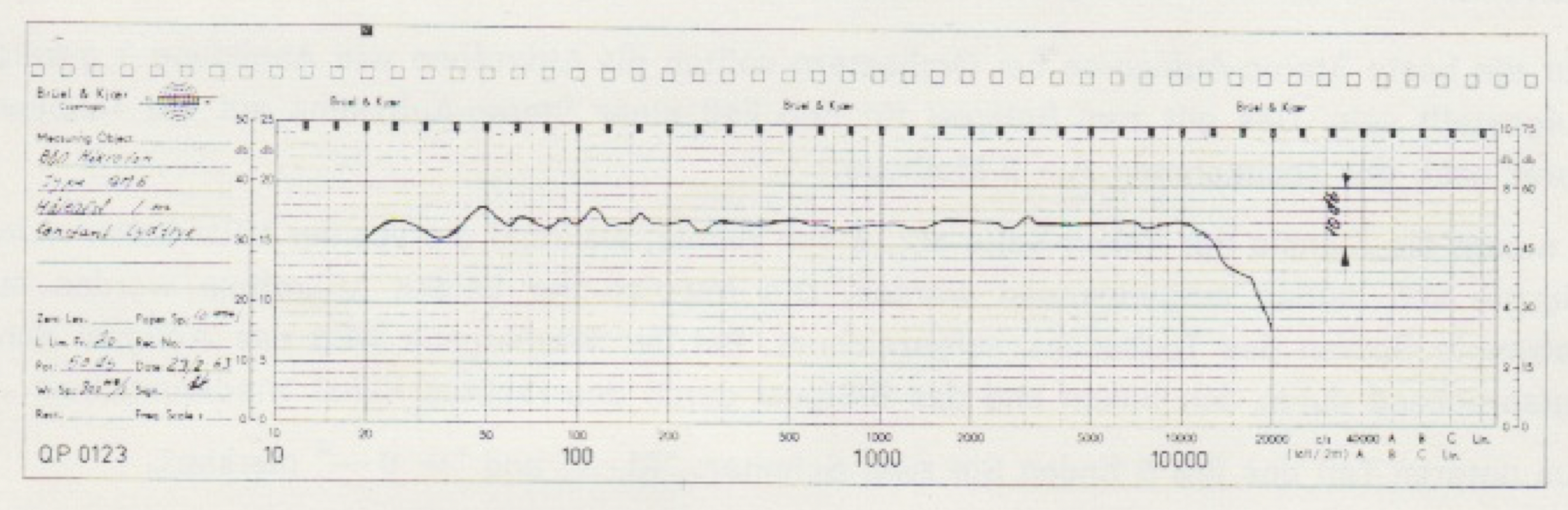
"M" (Music) Position: From 30 to 13.000 Hz +/- 3 dB.
"T" (Close talk) Position (8-16"): rolled off below 1000 Hz; at 100 Hz: - 10 dB.
Open Circuit Voltage Level: - 85 dB. (0dB = 1 Volt per Microbar; RTMA Standard SE -105)
Sensitivity: GM = -159 dB.
Hum Sensitivity: GH = -153 dB.
Output impedance: Nominal at 1000 c/s: 150 Ohms; Rating Impedance: 150 Ohms.
Frequency Response:
Impulse Response File:
Impulse Response file of restored BM5 ribbon microphone.
B&O_BM5_IR.wav
Further Reading:
The BM5 is made up of a BM6 and a BM7 - See the BM6 data sheet. See the BM7 data sheet.
The BM5, BM6 and BM7 came later and formed a family of mics. The BM5 is the stereo model, and when rotated to 90 degrees, it is perfect for Blumlein pair recordings. The bottom half of the BM5 was available separately as the mono BM6, and the top was called the BM7, although it could not be used by itself.
The design was an evolution of the BM4, but by this point the ribbon frame and been replaced by plastic mounts, and the cyber-ears have gone. The magnets are also slimmed down, with a semicircular or triangular cut-out, presumably in an attempt to increase the high frequency response. In these mics the body of the mic is made from steel and also acts as the magnetic return path, which helps to increase the output from the weak Alnico magnets.
Like all of Bang and Olufsen ribbon mics, the BM5/6/7 family have a pistonic ribbon, which is gently curved in the middle and deeply corrugated at each end. The ribbons were made from Duralum alloy, which contains copper in addition to aluminium, to improve the strength and stiffness. However, the alloy is more prone to corrosion than pure aluminium, and it is quite rare to find ribbons that are in perfect condition.
From a technician's perspective, these later mics are less robust than the BM3/4. To me they feel more of a hi-fi design than one for a busy working studio. Although the sound is excellent, they are delicate in places and some of the plastic parts deteriorate with age, most noticeably the rotating ring in the top part of the mic. The switch tips also have a tendency to come off. The latter can be replaced with a standard bayonet DIN if the cable is missing.
All the B&O mics used bespoke connectors, which can be hard to find. The BM2, 3 and 4 have a 3 pin connector only found on B&O equipment, whereas the BM5 and 6 used 5-pin DIN connectors but with their own threaded locking ring.