Telsen Type 37
Manufacturer:
TelsenModel:
Type 37Country of Manufacture:
United KingdomMicrophone Type:
CarbonPolar Pattern:
OmnidirectionalProduction Start Year:
1935Rarity:
4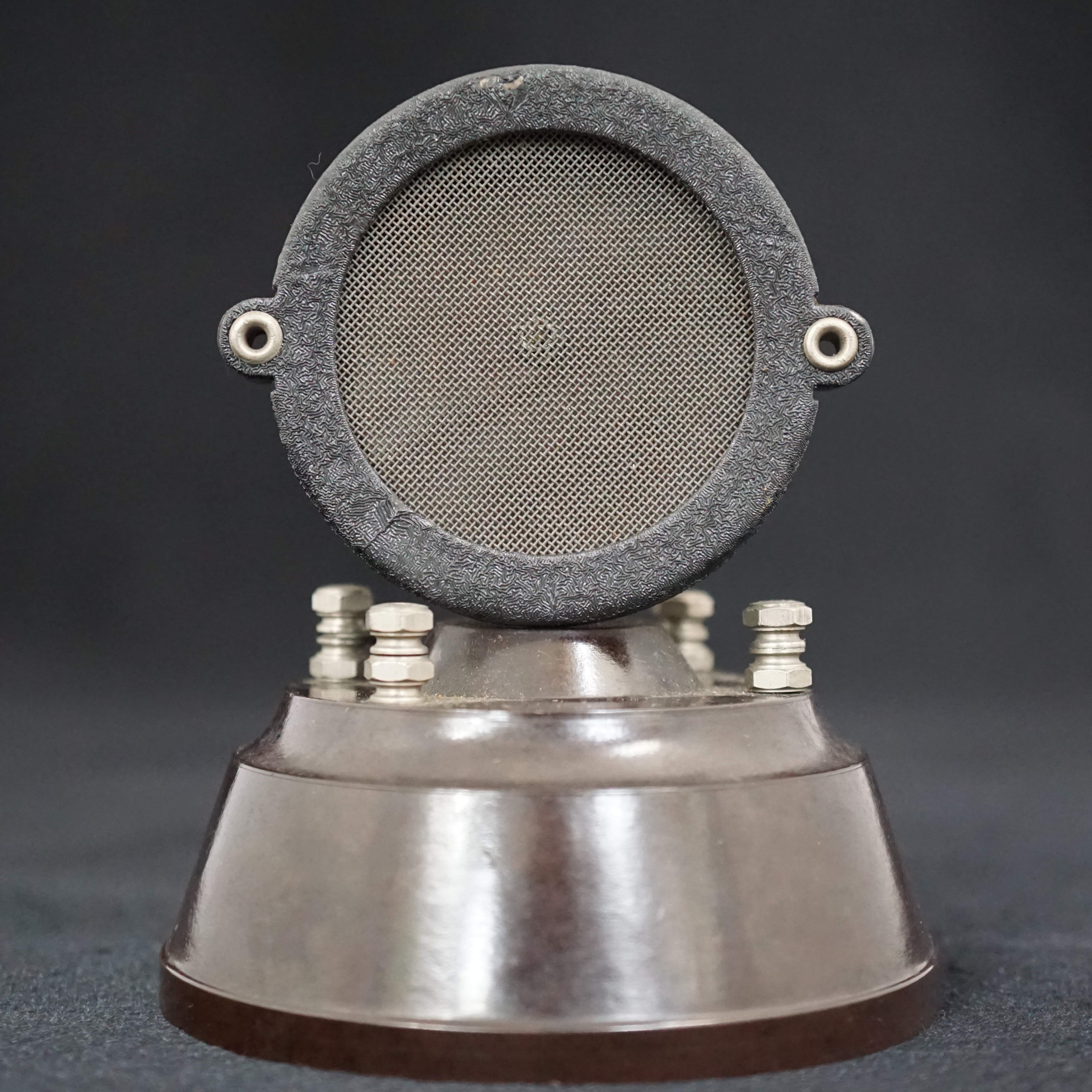
Audio Recording:
Speech (male) recorded with the Telsen Type 37 carbon microphone.
Multiple quality options available
Microphone History:
The Telsen Electric Company was founded in 1924 by A. Macnamara, at 207 Aston Road, Birmingham. However, it was not incorporated as a limited company until 1933. During that era, Teslen advertised widely in magazines such as Practical Wireless and Wireless World, selling electrical components made both in house and supplied by other companies.
Between 1934 and 1935, Telsen produced their own magazine for radio enthusiasts, to encourage readers to build or improve their own radio sets - and of course to buy Telsen parts in order to do so. None of the six issues of Telsen Radiomag include advertising for microphones. Our Type 37 model is a small compact model for home use and likely dates from after that period rather than prior to it.
Technical Description:
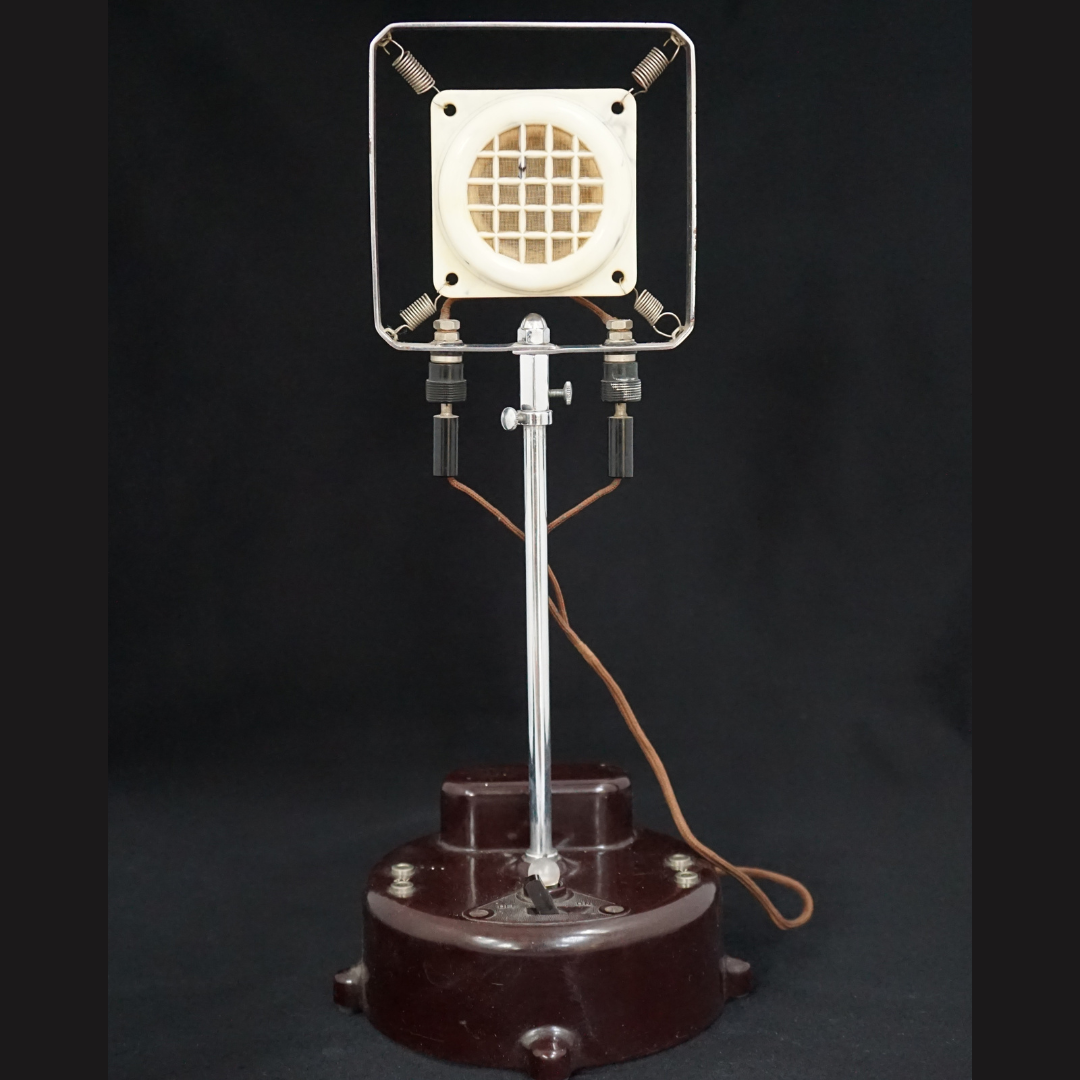
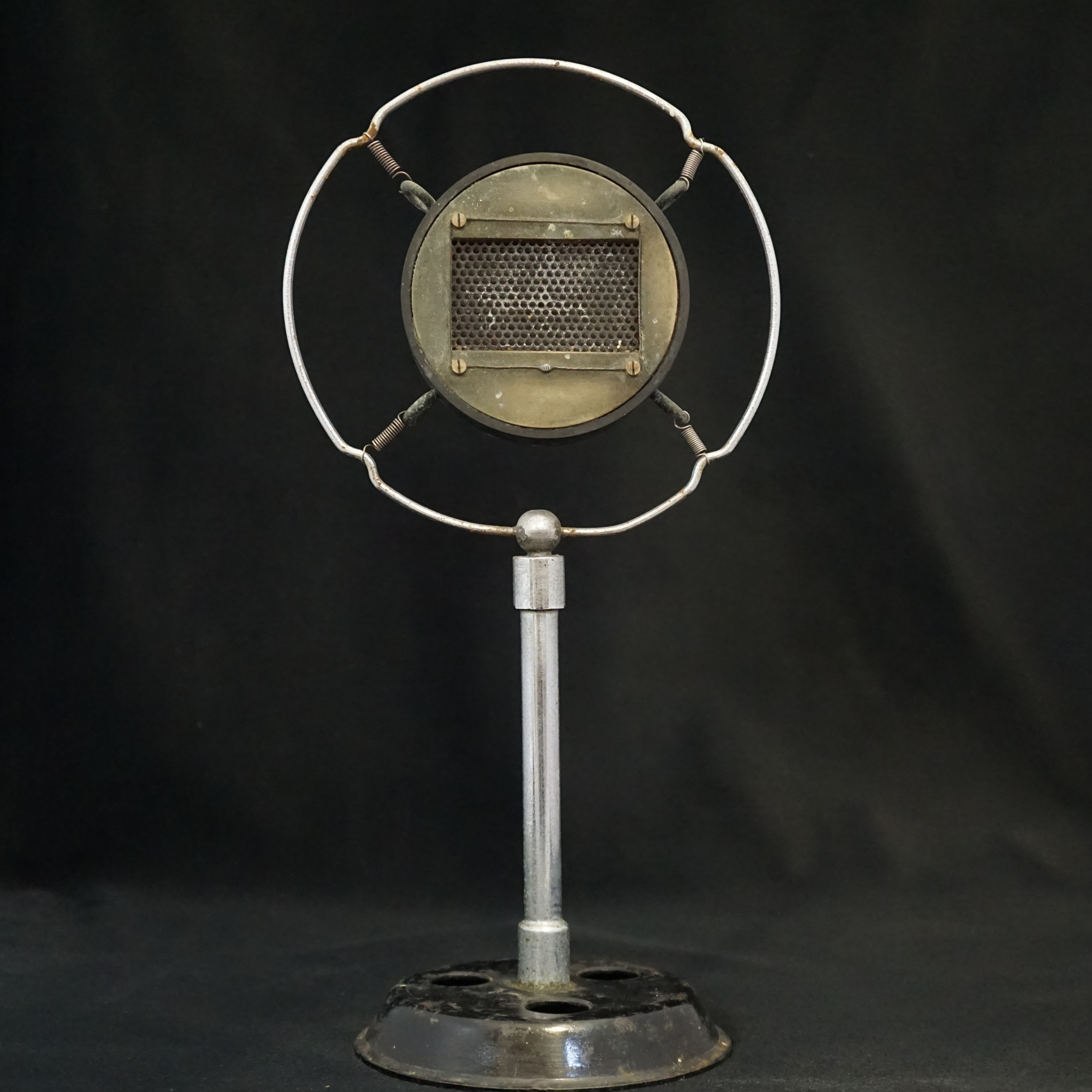
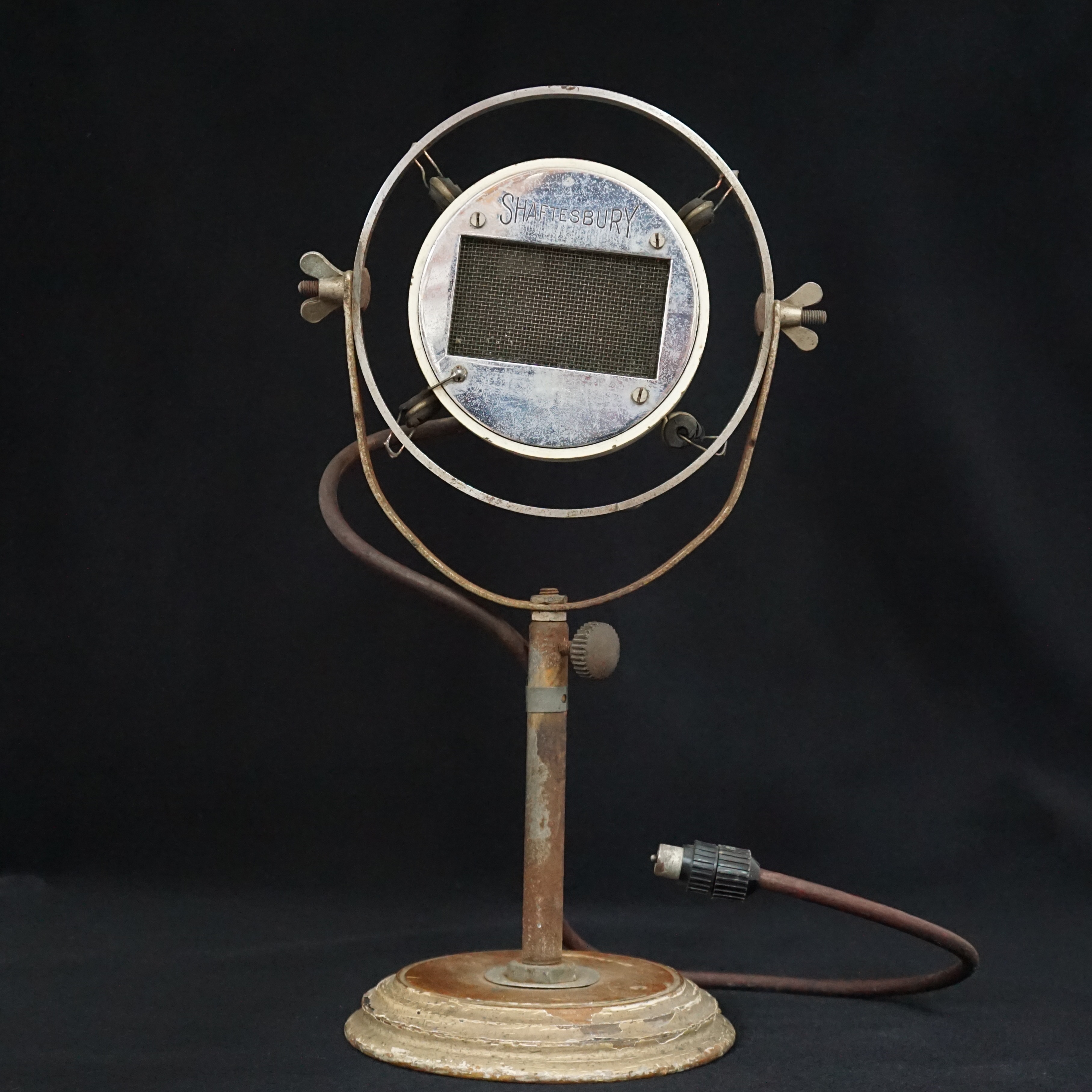
The Type 37 microphone has a small carbon capsule with a painted front grill, attached to a bakelite base that houses a small transformer, wound around a cylindrical core, which is presumably ferrite. The base has two pairs of screw terminals, to connect a battery and output wires respectively.
From the owner's manual:
The complete microphone with transformer incorporated in the base should be connected as follows: Terminals marked "Battery" to a flash lamp battery; Terminals marked, "Output" to the pickup terminals of radio set.
Turn switch on set to "GRAMOPHONE" position and with the set switched on, speak in a conversational tone close to the microphone.
Best results are obtained when the microphone is taken some distance from the loudspeaker, preferably to another room. To do this, the microphone leads are extended to the required length and should you wish to interrupt the broadcast program someone should switch to "GRAMOPHONE" thus cutting in the microphone.
This microphone is a carbon granule instrument similar in principle to that used in some of the large Broadcasting Stations. If the microphone is too sensitive and howls, it can be controlled in either of the two ways shown in diagrams A & B. The variable resistance in "A" should be about 15 ohms maximum while for "B" it should be a 50,000 ohms Potentiometer or volume control:
Should the microphone appear insensitive, gently shake, it or tap the front with the finger nail.
If your set is an old type not fitted with "Pick-up", terminals your local wireless shop will sell you a valve-holder adaptor. In the event of being unable to obtain an adapter, wire the two output terminals of the microphone to the filament negative, and grid terminals of the detector valve holder.
This microphone will pick up all sounds made in a room. and it can be concealed without impairing its performance.
A pair of headphones connected to the output lead, which should be extended as far as required, will enable you to overhear all that takes place in the room where the microphone is placed. When this method is employed no valve amplifier or mains connection is required, but the battery must be connected. Increasing the battery voltage to about 9 volts when so used the microphone will greatly enhance sensitivity.
Further Reading:
The Science Museum have a Telsen 'Ace' carbon microphone in their collection, which has a similar base to our example. They estimate the date of manufacture to be between 1930 and 1939.